Boston Sports Medicine and Performance Group, LLC Blog

BSMPG Partners With Stop Sports Injuries

Posted by Boston Sports Medicine and Performance Group on Wed, May 11, 2011 @ 07:05 AM

basketball resources


FOR IMMEDIATE RELEASE

Keep Kids in the Game for Life Through the STOP Sports Injuries Campaign

Healthcare and, Business Leaders, and Professional Athletes Join Forces to Help Young Athletes Play Safe and Stay Healthy

Boston MA –– Today, leaders at The Boston Sports Medicine and Performance Group are coming together with the American Orthopaedic Society for Sports Medicine, American Academy of Orthopaedic Surgeons, American Academy of Pediatrics, American Medical Society for Sports Medicine, National Athletic Trainers’ Association, National Strength and Conditioning Association and Safe Kids USA to promote the STOP Sports Injuries campaign. 

The campaign educates athletes, parents, trainers, coaches and healthcare providers about the rapid increase in youth sports injuries, the necessary steps to help reverse the trend and the need to keep young athletes healthy. The STOP Sports Injuries campaign highlights include teaching proper prevention techniques, discussing the need for open communication between everyone involved in young athletes’ lives, and encouraging those affected to sign The Pledge to be an advocate for sports safety. The campaign website and pledge are available at www.STOPSportsInjuries.org.

Sports injuries among young athletes are on the rise.  According to the national Centers for Disease Control and Prevention (CDC), high school athletes, alone, account for an estimated two million injuries, 500,000 doctor visits and 30,000 hospitalizations every year. 

“BSMPG is committed to providing leaders in both Sports Medicine and Sports Performance the skills and information necessary to reduce the risk of youth sport injury during training and sport competition.”

- BSMPG Leadership Board

The high rate of youth sports injuries is fueled by an increase in overuse and trauma injuries and a lack of attention paid to proper injury prevention. According to the CDC, more than half of all sports injuries in children are preventable.

“Regardless of whether the athlete is a professional, an amateur, an Olympian or a young recreational athlete, the number of sports injuries is increasing – but the escalation of injuries in kids is the most alarming,” said Dr. James Andrews, former president of the American Orthopaedic Society for Sports Medicine (AOSSM) and STOP Sports Injuries Co-Campaign Chair.  “Armed with the correct information and tools, today’s young athletes can remain healthy, play safe, and stay in the game for life.”

Supporting the STOP Sports Injuries campaign are the country’s leading sports medicine organizations along with professional athletes and business leaders who have signed on as members of the campaign’s Council of Champions. This Council will help raise additional awareness about this growing epidemic of youth sports injuries.  Some of the founding members of the Council include former Olympic champions Christie Rampone, Eric Heiden and Bonnie Blair, professional golfer Jack Nicklaus, NFL Hall of Fame quarterback Bart Starr, MLB baseball player John Smoltz, NFL Hall of Fame defensive end, Howie Long, and Heisman Trophy winner and St. Louis Rams quarterback Sam Bradford.

 # # # 

The Boston Sports Medicine and Performance Group was formed in 2007 and is comprised of a number of health care professionals, including  athletic trainers, strength coaches, and physicians, in and around the Boston area.  Our goal is to enable coaches, sports medicine professionals, and athletic training sp

Topics: Basketball Related, athletic training conference, boston hockey summit, boston hockey conference

The Agenda by Seth Godin

Posted by Boston Sports Medicine and Performance Group on Mon, May 9, 2011 @ 06:05 AM

 basketball resources


The agenda

The job of the CEO isn't to check things off the agenda. Her job is to set the agenda, to figure out what's next.

Now that more and more of us are supposed to be CEO of our own lives and careers, it might be time to rethink who's setting your agenda.


Topics: basketball resources, basketball conference, basketball training programs, athletic training conference, boston hockey summit, boston hockey conference, Jonas Sahratian, sports medicine conference, Jim Snider, Seth Godin

The Flip Side by Seth Godin

Posted by Boston Sports Medicine and Performance Group on Fri, May 6, 2011 @ 07:05 AM

 basketball resources


The flip side

It's impossible to have a coin with only one side. You can't have heads without tails.

Innovation is like that. Initiative is like that. Art is like that.

You can't have success unless you're prepared to have failure.

As soon as you say, "failure is not an option," you've just said, "innovation is not an option."


Topics: Basketball Related, basketball performance, basketball conference, athletic training conference, athletic training, boston hockey conference

Turning The Habit Of Self-Criticism Upside Down by Seth Godin

Posted by Boston Sports Medicine and Performance Group on Wed, May 4, 2011 @ 07:05 AM

basketball resources


Turning the habit of self-criticism upside down

Perhaps this sounds familiar:

When it's time to write a resume or talk to a boss or discuss a project glitch with colleagues, the instinct is to spin, to avoid a little responsibility, to sit quietly. Put a best face forward, don't set yourself up.

When reviewing just about anything you've done with yourself (in your head), the instinct is to be brutal, relentlessly critical and filled with doubt and self-blame.

What if they were reversed?

What if the habit of the project review meeting was for each person to put their worst foot forward, to identify every item that they learned from? What if we took responsibility as a way of getting more authority next time?

And the flip side--when talking to ourselves, what if we were a little more supportive?

It's not an easy habit, but it works.


Topics: basketball conference, athletic training conference, athletic training, Seth Godin

Seats are Filling Fast - Early Bird Deadline Extended

Posted by Boston Sports Medicine and Performance Group on Mon, May 2, 2011 @ 09:05 AM

Early Bird Deadline has been extended a few days but is is fast approaching.  Register for this year's conference by May 4th and enjoy the early bird price.  After May 4th the early bird price is gone forever.

Join Shirley Sahrman, Tom Myers and Clare Frank along with the very best Hockey and Basketball performance coaches and therapists from across the country all in one building - or choose our Sports Medicine and Rehabilitation track and learn from the nations best physical therapists.

Due to classroom size and availablility seats are limited so sign up today to avoid disappointment.


basketball resources


b

The Problem With Problems

Posted by Boston Sports Medicine and Performance Group on Mon, May 2, 2011 @ 07:05 AM

athletic training


If you look hard enough, everyone has problems. In the sports performance profession, problems provide easy targets for coaching, training, and interventions. Explicitly stated or not, problems make the physical therapist, athletic trainer, strength and conditioning coach, and sport psychology consultants’ jobs easy. The athlete that needs to be “fixed” provides a clear target for intervention. The athlete that is pretty well-rounded without any glaring weaknesses can be a lot more intimidating to help. Easy targets for coaches and trainers however may not be what is best for the athlete.

This is not the only problem with problems however. Athletes pride themselves on their strength and abilities to intimidate and dominate. Few embrace being weak and even fewer enjoy being stigmatized as someone with a “problem.” This reality can lead to hesitancy on the path towards improvement. So many performance specialists slip into the trap of highlighting athlete weaknesses in efforts to advance an athlete’s training régime. Not a compelling sales pitch to someone whose self-image is enshrouded in strength.

Perhaps this problem with problems is best illuminated when considering development of one’s mental game. Too often working on one’s mental game is neglected because sport psychology may be seen as being for the mentally weak or mentally unbalanced. These perceptions are fair. Psychology (and much of medicine) has spent much of its history labeling illness and treating problems. Upon reflection however, one would be hard pressed to suggest that an athlete that gets a bit anxious when taking a penalty shot, walking the back nine of a major golf tournament, or toeing the foul line for a game tying free throw has a “problem.” Distraction, doubt, and stress are normal in the quest towards high performance. A motivated athlete would be remiss not to make deliberate efforts to develop one’s mental game. Presenting this work on one’s game as fixing “problems” or healing a wounded psyche certainly stigmatizes a necessary part of player development.

The problem with problems is not unique to the mental game however. Coaches and trainers that spend majority of their time reminding an athlete of his weaknesses rarely lead the athlete to commitment or excellence. It can be argued that the coach’s ego needs are fulfilled as the athlete with inadequacies cannot thrive without them. Yet the truth is, all athletes have one problem or another and regardless of these things they strive quite successfully. The most successful performance coach does not challenge the athlete’s desire of strong perceptions of self, but rather builds upon them… encouraging a normal human being to strive towards super-normal. Muscle imbalances are not a problem, but rather an opportunity to train for higher performance. Distracting performance anxiety is not a problem, but rather an opportunity to find a next level of mental fortitude. Poor cardio is not a problem, rather an opportunity to develop wire to wire dominance.

Injury that takes you out of practice for a while, depression that inhibits performance in the classroom and on the playing field, and clinical nutrition issues that sap wellness and energy are problems that need to be treated as such. A heavily problem-focused practice however loses athlete enthusiasm and misplaces the focus of training. Challenges to injury resistance, mental fortitude, and conditioning are opportunities for performance specialists to ply their crafts at the highest level. They are opportunities for the athlete to embrace the appropriate coaching and training necessary for finding one’s optimal potential.
Dr. Adam Naylor, CC-AASP. is the Director of the Boston University Athletic Enhancement Center (www.bu.edu/aec).  He has serves as a mental conditioning and player development resource for players at all stages of their sports career.  He can be reached contacted at adam@telos-spc.com.  Follow Dr. Naylor on Twitter @ahnaylor.

Topics: Basketball Related, Art Horne, Adam Naylor, basketball performance, basketball training programs, athletic training conference

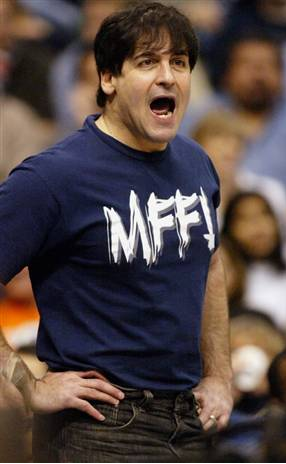
Success and Motivation by Mark Cuban - Part 5

Posted by Boston Sports Medicine and Performance Group on Fri, Apr 29, 2011 @ 07:04 AM

basketball resources

Continued from Part 4

In basketball you have to shoot 50pct. If you make an extra 10 shots per hundred, you are an All-Star. In baseball you have to get a hit 30 pct of the time. If you get an extra 10 hits per hundred at bats, you are on the cover of every magazine, lead off every SportsCenter and make the Hall of Fame.

In Business, the odds are a little different. You don’t have to break the Mendoza line (hitting .200). In fact, it doesnt matter how many times you strike out. In business, to be a success, you only have to be right once.

One single solitary time and you are set for life. That’s the beauty of the business world.

I like to tell the story of how I started my first business at age 12, selling garbage bags. No one ever has asked if I was any good or made money at it. I was, and I did…enough to buy some tennis shoes  .
I like to tell the story of how I started up a bar, Motley’s Pub when I wasn’t even of legal drinking age the summer before my senior year at Indiana University. No one really asks me how it turned out. It was great until we got busted for letting a 16-year-old win a wet t-shirt contest (I swear I checked her ID, and it was good!).
No one really asks me about my adventures working for Mellon Bank, or Tronics 2000, or trying to start a business selling powdered milk (it was cheaper by the gallon, and I thought it tasted good). They don’t ask me about working as a bartender at night at Elans when I first got to Dallas, or getting fired from my job at Your Business Software for wanting to close a sale rather than sweeping the floor and opening up the store.
No ever asked me about what it was like when I started MicroSolutions and how I used to count the months I was in business, hoping to outlast my previous endeavors and make this one a success.

With every effort, I learned a lot. With every mistake and failure, not only mine, but of those around me, I learned what not to do. I also got to study the success of those I did business with as well. I had more than a healthy dose of fear, and an unlimited amount of hope, and more importantly, no limit on time and effort.

Fortunately, things turned out well for me with MicroSolutions. I sold it after 7 years and made enough money to take time off and have a whole lot of fun.  Back then I can remember vividly people telling me how lucky I was to sell my business at the right time.
Then when I took that money and started trading technology stocks that were in the areas that MIcroSolutions focused on. I remember vividly being told how lucky I was to have expertise in such a hot area, as technology stocks started to trade up.
Of course, no one wanted to comment on how lucky I was to spend time reading software manuals, or Cisco Router manuals, or sitting in my house testing and comparing new technologies, but that’s a topic for another blog post.

The point of all this is that it doesn’t matter how many times you fail. It doesn’t matter how many times you almost get it right. No one is going to know or care about your failures, and either should you. All you have to do is learn from them and those around you because…

All that matters in business is that you get it right once.

Then everyone can tell you how lucky you are.
 

Topics: basketball performance, basketball resources, basketball conference, boston hockey conference, Mark Cuban

Success and Motivation by Mark Cuban - Part 4

Posted by Boston Sports Medicine and Performance Group on Wed, Apr 27, 2011 @ 07:04 AM

basketball resources


Continued from Part 3

You never quite know in business if what you are doing is the right or wrong thing. Unfortunately, by the time you know the answer, someone has beaten you to it and you are out of business. I used to tell myself that it was ok to make little mistakes, just don’t make the big ones. I would continuously search for new ideas. I read every book and magazine I could. Heck, 3 bucks for a magazine, 20 bucks for a book. One good idea that lead to a customer or solution and it paid for itself many times over. Some of the ideas i read were good, some not. In doing all the reading I learned a valuable lesson.
Everything I read was public. Anyone could buy the same books and magazines. The same information was available to anyone who wanted it. Turns out most people didn’t want it.
I remember going into customers or talking to people in the industry and tossing out tidbits about software or hardware. Features that worked, bugs in the software. All things I had read. I expected the ongoing response of “Oh yeah, I read that too in such-and-such.” That’s not what happened. They hadn’t read it then, and they haven’t started reading yet.

Most people won’t put in the time to get a knowledge advantage. Sure, there were folks that worked hard at picking up every bit of information that they could, but we were few and far between. To this day, I feel like if I put in enough time consuming all the information available, particularly with the net making it so readily available, I can get an advantage in any technology business. Of course my wife hates that I read more than 3 hours almost every day, but it gives me a level of comfort and confidence in my businesses. AT MicroSolutions it gave me a huge advantage. A guy with little computer background could compete with far more experienced guys just because I put in the time to learn all I could.

I learned from magazines and books, but I also learned from watching what some of the up and coming technology companies of the day were doing. Its funny how the companies that I thought were brilliant then, are still racking it up today.
Every week a company called PCs Limited used to take a full-page ad in a weekly trade magazine called PC Week. The ad would feature PC peripherals that the company would sell. Hard Drives. Memory. Floppy Drives. Graphics Cards. Whatever could be added to a PC was there. What made the ad so special was that each and every week the prices got lower. If a drive was 2,000 dollars last week, it was $ 1940 this week. For the first time in any industry that I knew of, we were seeing vendors pass on price savings to customers.

The PC Limited ads became the “market price” for peripherals. I looked for the ad every week. In fact, I became a customer. I was in Dallas. They were in Austin.  I remember driving down to pick up some hard drives that I was going to put into my customers PCs. I had no idea up to that point, but it turns out that they had just moved from the owner’s dorm room into a little office/warehouse space. I was so impressed by this young kid (I was a wise old 25 at the time), that I actually wrote a letter thanking him for the great job he was doing, and…I’m embarassed to say now, I told him that if he kept up what he was doing he was destined for far bigger and better things.  I kept on doing business with PCs Limited, and Michael Dell kept on doing what he was doing. I dont think he really needed my encouragement, but i have since told him that I thought his weekly full page ads with ever declining prices, changed the PC industry and were the first of many genius moves on his part.

Michael wasn’t the only smart one in those days.

One of the PC industry’s annual rituals was the Comdex trade show in Las Vegas. Every November, it was the only 3 days I knew I would get away and get a break from the office. It was work during the day. Visiting all the new technology booths. Trying to get better pricing from vendors. Trying to find out where the best parties were. If you could believe it, back in those days, the number one party was the Microsoft party. I sold some Microsoft products, so I could get in.
One particular year, I was on my way to having a memorable night. I had met some very, very attractive women (I swear they were). Got them some tickets to come with me to the big party. All is good. I’m having fun. They are having fun. Then we see him. Bill G. As in Bill Gates dancing up a storm. I’m a Bill Gates fan, so I wont describe his dancing, but he was definitely having fun.
At that point in time, Microsoft had gone public and Bill Gates was Bill Gates. If you were in the business you knew him or knew of him. The girls I was with were in the business. Long story short, I went to the bar to get some drinks for all us, I come back, they aren’t there. Come to find out the next day, Bill stole my girls. As I would learn later in life, money does make you extremely handsome. 

Bill G also taught me a few things about business. Put aside how he killed IBM at their own game by licensing PC DOS to anyone that wanted it. What MicroSoft did to knock Lotus 1-2-3 and WordPerfect off their thrones was literally business at its best.
At that point in time, software was expensive. WordPerfect and Lotus 1-2-3 both sold for $495 and their publishers were proud of that fact. In order to be able to sell Lotus 1-2-3, you had to go to special training to become authorized. How crazy does that sound now going to a special class to be able to sell a spreadsheet. WordPerfect wasn’t quite as bad, but they had their own idiosyncrasies as well. Meanwhile, Microsoft was on the outside looking in. Excel, Word, Powerpoint were all far down the list of top sellers until lightning struck.  Microsoft decided to go against industry protocol and package those 3 programs as a suite and offer them as an upgrade to competitors’ products for the low, low price of 99 dollars. Of course you needed to have and use Windows for it to work, but in a time when people were buying new PCs with every dramatic increase in power and decrease in price, it was a natural move for us at MicroSolutions to sell the bundle. It made the effective price of the PC and software together far, far lower. We loved it. It also taught me several big lessons.

Always ask yourself how someone could preempt your products or service. How can they put you out of business? Is it price? Is it service? Is it ease of use? No product is perfect and if there are good competitors in your market, they will figure out how to abuse you. It’s always better if you are honest with yourself and anticipate where the problems will come from.

The 2nd lesson is to always run your business like you are going to be competing with Microsoft. They may not be your direct competitor. They may be a vendor. They may be a direct competitor and a vendor. Whatever they may be to your business, if you are in the technology business, you have to anticipate that you will in some way have to compete with Microsoft at some point. I ask myself every week what I would do if they entered any of my businesses. If you are ready to compete with Microsoft, you are ready to compete with anyone else.

Watching the best taught me how to run my businesses. Along the way I taught myself a few things those come next blog.

Topics: Basketball Related, basketball performance, basketball conference, athletic training conference, boston hockey summit

Success and Motivation by Mark Cuban - Part 3

Posted by Boston Sports Medicine and Performance Group on Mon, Apr 25, 2011 @ 07:04 AM

basketball resources


Continued from Part 2

Fired. Not the first time it’s happened, but it reinforced what I already knew; I’m a terrible employee. I just had to face facts and move on. So rather than getting back on that “how the hell am I going to find a job” train, the only right thing to do was to start my own company.
My first act of business? Pile into my buddy’s 1982 Celica, nicknamed Celly, and drive to galveston to party. Of course we stayed in only the best $19.95 a night, plug the hairdryer in the wall and the circuit blows, motel. Nothing but the best as I prepared for my journey into entrepreneurial territory again. I could say I was preocuppied with how to get my new business off the ground. That while my friends got drunk, did stupid tourist tricks and ate at greasy spoons, I sat by the pool on the 1 chaise lounge chair with rust on the clean side and wrote up my businessplan. I didn’t. I got just as drunk and ate the same disgusting food. Then we faced the road trip terror that everyone knows exists, but refuses to admit, the ride home. It wasn’t until we pulled up to the apartment that it hit me. No job. No money. No way to pay the bills. But I had nice towels.
Fortunately the hangover didn’t last too long, and I realized I had to get off my ass and make something happen. First day, first task, come up with a name. This was the start of the microcomputer revolution, and I wanted a name that said what the company was going to do, which was sell personal computers and software and help companies and individuals install them. I was going to offer microcomputer solutions. So after struggling with different names for about 30 minutes, I chose MicroSolutions Inc.

Now came the hard part. I had to call all the people I had done business with at my last company, and let them know that I had been shitcanned and ask them if they would come do business with me at MicroSolutions. I got the expected questions. No I didn’t have an office. No I didn’t have a phone yet other than my home phone. Yes it was just me. No I didn’t have any investors. The only question I dreaded was whether I had a computer to work with. I didn’t. Fortunately, no one asked.
I made a lot of calls, and got some decent response. We love you Mark, we want to give you a chance. A lot of lets stay in touch. I got two real bites. One from a company called Architectual Lighting and the other from a company called Hytec Data Systems.  Architectual Lighting was looking for a time and billing accounting system to allow them to track the work with clients. I don’t remember the name of the software package I told them about, I think it was Peachtree Accounting, but after going out to meet with them it came down to this. I offered to refund 100 pct of their money if the software didn’t work for them, and I wouldn’t charge them for my time for installing and helping them. In return, they would put up the 500 bucks it would take for me to buy the software from the publisher, and I could use them as a reference. This was my “no money down” approach to start a business. They said yes. I had a business.

My 2nd call Hytec Data, was run by Martin Woodall. I met with Martin at the S&D Oyster House on a beautiful June day, and I remember sitting there and him telling me, “I graduated in Computer Science from West Virginia University. I have 50k in the bank and I drive a brand new Cadillac. I know technology better than you. We can work together”. I had a customer, and now with Martin’s help, I had some hope. Hytec Data sold multi user systems. The old kind that used dumb terminals. He bundled it with accounting software and he and a contractor named Kevin, would make modifications to the Cobol source code. They were the hardcore geeks that could help me when I needed it. I was still just 10 months from my first introduction to PCs, and had zero clue about multi user systems. If I came across prospects that could use their system and software, I would get referrals. That was good.  Even better was Martin’s offer of office space. He and Kevin shared office space with the distributor of the computer systems he sold. They had this one office, that when the CEO of the distributors son wasn’t using it to study his spanish, I could use it to make calls, and keep my folders and paperwork. Still no computer, but hey, I had an office and phone. I was bonafide…
At some point I’m going to have to go back and look at my appointment books that I kept from those days to remind myself of who my 2nd, 3rd and on from there customers were. They were small companies that I got to know very well. People that took me under their wing and trusted me, not because I was the most knowledgeable about computers, but because they knew I would do whatever it took to get the job done. People trusted me with keys to their offices. They would find me there when they got in in the morning and I was there when they left. I made 15,000 dollars that first year. I loved every minute of it.
As time went on, my customer base grew. I got my friend and former roommate Scott Susens to help with deliveries. Scott was working as a waiter at a steakhouse at the time. I remember asking him over and over, would you please help me out. I have a customer that had bought a bunch of Epson dot matrix printers from me, and I had to sell Scott on how it wouldn’t be hard to learn how to hook a parallel cable to a pc and printer, and how learning all of this would be a career move compared to working at the steakhouse. Unfortunately, I couldn’t pay him as much as the steakhouse. My good fortune was that Scott worked nights and weekends and decided to take some time in the afternoons to help me out. Not long after that, he was working fulltime installing PCs, learning whatever he had to figure out before an install.

Martin also began to play a larger and larger role. His company was growing, and he was watching my company grow. I would get the PC based stuff, he would get the accounting system stuff. It was a nice split. The better part of the relationship was based on Martin being the most anal retentive person i had ever met in my life. While I covered my mistakes by throwing time and effort at the problem, Martin was so detail oriented, he had to make sure things were perfect so problems could never happen. We could drive each other crazy. He would give me incredible amounts of shit about how sloppy I was. I would give him the same amount back because he was so anal he was missing huge opportunities. We complemented each other perfectly. It would only be a matter of time before we both knew we had to be partners and work together instead of seperately.

That first year in business was incredible. I remember sitting in that little office till 10pm and then still being so pumped up, I would drive over to the gym I belonged to and run 5 to 10 miles on the treadmill going through that day, and the next in my head. Other days I would get so involved with learning a new piece of software that I would forget to eat and look up at the clock thinking it was 6 or 7pm and see that it was 1am or 2am. Time would fly by.  It’s crazy the things that you remember. I remember when my accounts receivable got up to 15k and telling all my friends. I remember reading the PC DOS manual (I really did), and being proud that I could figure out how to set up startup menus for my customers. I remember going to every single retail store in town, BusinessLand, NYNEX, ComputerLand,CompuShop, all those companies that are long gone, and introducing myself to every salesperson to try to get leads. I would call every single big computer company that did anything at all with small businesses, IBM, Wang, Dec, Xerox, Data General, DataPoint (remember them?), setting meetings, asking to come to their offices since I couldn’t afford to take them to lunch. I didn’t need a lot of customers, but my business grew and grew. Not too fast, but fast enough that by the time MicroSolutions had been in business about 2 years, I had 85k dollars in the bank, a receptionist/secretary, Scott helping me out, and a 4 room office that I moved into along with Martin and Hytec Data Systems.
Then I learned a very valuable lesson. Martin had done a great job of setting up our accounting software and systems. I got monthly P&L statements. I got weekly journals of everything coming in and everything going out, payables and receivables. We had a very conservative process where Martin would check the payables, authorize them and then use the software to cut the checks. I would then go through the list, sign the checks and give them to Renee our secretary/receptionist to put in the envelope and mail to our vendors.

One day, Martin comes back from Republic Bank, where we had our account. He had just gone through the drive through and one of the tellers who he would see every day dropping of our deposits asked him to wait a second. She comes back and shows him a check that had the payee of a vendor, WHITED OUT and Renee Hardy, our secretary’s name typed over it. Turns out that in the course of a single week, our secretary had pulled this same trick on 83k of our 85k in the bank. As Martin delived the news, I obviously was pissed. I was pissed at Renee, I was pissed at the bank, I was pissed at myself for letting it happen. I remember going to the bank with copies of the checks, and the manager of the bank basically laughing me out of his office telling me that I “didn’t have a pot to piss in”. That I could sue him, or whatever I wanted, but I was out the money.

I got back to the office, told Martin what happened at the bank, and then I realized what I had to do about all of this. I had to go back to work. That what was done, was done. That worrying about revenge, getting pissed at the bank, all those “I’m going to get even and kick your ass thoughts” were basically just a waste of energy. No one was going to cover my obligations but me. I had to get my ass back to work, and do so quickly. That’s exactly what I did.


A Slow News Day by Seth Godin

Posted by Boston Sports Medicine and Performance Group on Fri, Apr 22, 2011 @ 07:04 AM

athletic training


A slow news day

I think you can learn a lot about an organization (and a person's career) when you watch what they do on a slow news day, a day when there's no crisis, not a lot of incoming tasks, very little drama.

Sure, when we're reacting (or responding) and it's all hands on deck, things seem as if they're really moving.

But what about in the lulls? At the moments when we can initiate, launch new ventures, try new things and expose ourselves to failure? Do we take the opportunity or do we just sit and wait for the next crisis?

If you have ten minutes unscheduled and the phone isn't ringing, what do you do? What do you start?


Topics: Basketball Related, basketball performance, basketball conference, basketball training programs, athletic training conference, boston hockey summit, boston hockey conference, Seth Godin