Boston Sports Medicine and Performance Group, LLC Blog

Save The Date: BSMPG 2012 Summer Seminar

Posted by Boston Sports Medicine and Performance Group on Mon, Nov 21, 2011 @ 07:11 AM

BSMPG Summer Seminar


Famously uttered by Sir Isaac Newton,

“If I can see further than anyone else, it is only because I am standing on the shoulders of giants.”

In 2011 BSMPG invited the titans of Sports Medicine and Performance to Boston for the largest conference of its kind, and many attendees left asking the question, "how could you ever top that speaker line-up?"

Well, we did.

BSMPG is proud to announce May 19-20, 2012 as the selected date for Sports Medicine and Strength professionals to desend upon Boston MA for another monster conference!  So how could we ever top last year's speaker set? Let's just say that we asked last year's speakers who they wanted to hear and we got em!  Stay tuned over the next few weeks as we reveal our 2012 speaker set.  As we did last year, this seminar will be divided into three distinct educational tracks including a Hockey focus, a Basketball Focus and a clear Sports Medicine/Rehabilitation Track with Keynote Speakers throughout the weekend bringing each track together for common lectures.  Attendees may choose to stay within one track throughout the entire weekend or mix and match to meet their educational needs.

Remember to save the date now - you won't want to miss another great summer seminar presented by BSMPG.

May 19-20, 2012 - Boston MA.  Complete details coming soon!

Topics: basketball conference, BSMPG, athletic training conference, boston hockey conference

Limited Seats Available for DNS Course "A" - Boston 2012

Posted by Boston Sports Medicine and Performance Group on Fri, Nov 18, 2011 @ 07:11 AM

DNS Boston

Course Description

The nervous system establishes programs that control human locomotion that includes posture and movement.  This critical “motor control” is largely established during the first years of life.   Based upon the principles of neurodevelopmental kinesiology, i.e. the neurophysiologic aspects of the maturing movement system on which the Prague School was established, the scope of clinical rehabilitation options for many of our neurologic and musculoskeletal pain patients have been expanded.  The DNS approach involves every component of the movement system (i.e. muscles, joints, nerves and soft tissue by stimulating movement control centers in the brain through activation of ideal inborn movement stereotypes.  This, in turn helps restore the  structural and postural alignment of the body’s neuro-musculo-skeletal system by evoking the global motor patterns.  Global motor patterns form the foundation of human movement and represent genetically predetermined elements for uprighting and equilibrium.  These patterns are essential for the control of posture and dynamic stability of the spine through the lifespan of the individual. Participants in this course will be introduced to the application of these principles. 


Click HERE to read more about his course.


DNS Course - 2012


(Paypal Link can be found under COURSE DETAILS)

OR

Click HERE to download Registration Application


This course is sure to fill up and is limited to 30 people MAX! Don't miss out on your opportunity for this once in a lifetime event.


Topics: BSMPG, athletic training conference

Book Highlight: The Physiology of the Joints by Kapandji

Posted by Boston Sports Medicine and Performance Group on Wed, Nov 16, 2011 @ 06:11 AM


"Look it up in Kapandji, you'll understand it then"


If only someone would have said this to me 15 years ago when I was first learning the movements and importance of the talus or any other joint in the body for that matter. 

Kapandji's book will provide countless "AHA" moments for all those professionals interested in advanced evaluation and appreciation for all of the body's joints and is a must have for anyone providing advanced sports medicine care.


Forward from The Physiology of the Joints, Volume Two, The Lower Limb


"“Look it up in Kapandji, you’ll understand it then”.

Which of us, in my own generation or those that followed, having personally spent long hours reading Kapandji, has never said those words to a younger colleague? The knowledge of anatomy and biomechanics gleaned from The Physiology of the Joints is at the heart of our profession, whether we seek to understand a symptom, a clinical diagnostic procedure or an operative manoeuvre.

Following in the footsteps of the great anatomists, who are inescapable and sometimes forbidding, Adalbert Kapandji knew from the very start how to bring a new dimension to the understanding and especially to the teaching of functional anatomy; everything becomes clear and simple, and the reader finds himself feeling a little more intelligent!"

- Professor Theirry Judet

Limited Dorsiflexion? Check the Talus

Posted by Boston Sports Medicine and Performance Group on Mon, Nov 14, 2011 @ 07:11 AM


DNS Course


by Art Horne


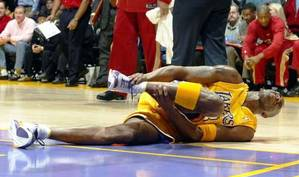
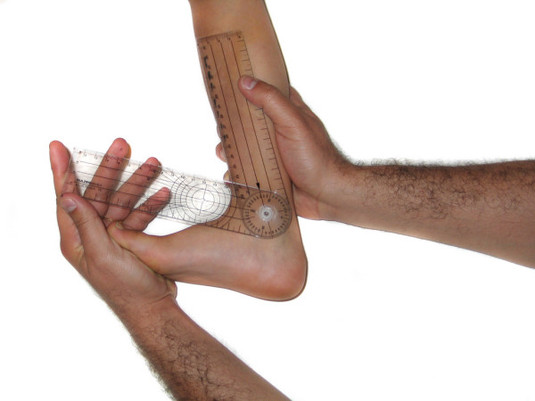
Although heel cord stretching and the use of the one dimensional slant board remain mainstream in nearly every sports medicine facility and rehabilitation program following a lateral ankle sprain, the lack of ankle dorsiflexion range of motion continues to reign supreme as the underlying cause for everything from an altered gait pattern, poor squat technique and the cause of ankle reinjury itself.  So if we as sports medicine and strength professionals spend so much time addressing this limitation in both our rehabilitation programs and strength routines, why then do we seem to be no further ahead when it comes to making an actual change in both true osteokinematic and arthrokinematic motion?

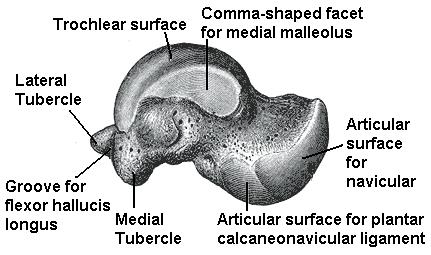
Well, the answer I believe lies clearly in the fact that most professionals are simply not addressing the arthrokinematic motion so closely and dearly needed within the ankle to achieve full and unrestricted ankle dorsiflexion.

In an article  by Denegar et al, the authors outline the importance of a normal joint axes of rotation along with the arthrokinematic or accessory motion around the talus itself.  The authors note,

“An abnormal restrictive barrier to accessory motion changes the normal pattern of movement of a joint’s instantaneous axis of rotation. Under normal conditions, as two articulating bones glide on one another, the instantaneous axis of rotation of the joint changes accordingly. For example, as the talus glides posteriorly on the mortise, the instantaneous axis of rotation of the talocrural joint also translates posteriorly.  If a restrictive barrier is encountered which limits accessory motion, the instantaneous axis of rotation becomes fixed by this restriction. Further motion thus occurs around an abnormal axis leading to subsequent joint dysfunction. At the talocrural joint, restricted posterior glide of the talus results in an abnormally anterior instantaneous axis of rotation. While full dorsiflexion range of motion may still occur, it is not necessarily reflective of normal arthrokinematic function.” (pg. 171)

So what’s next?

Well, according to the above authors, a more hands-on approach with specific attention to the talus would result in a truer movement within the talocrural joint and a much happier ankle complex.

“Our findings, and those of Green et al, have implications for rehabilitation following lateral ankle sprains as well as the risk of reinjury.  All of the athletes we studied had completed a rehabilitation program as directed by their physician under the supervision of a certified athletic trainer, and had returned to sports participation.  Furthermore, all had performed some form of heel-cord stretching. None, however, had received joint mobilization of the talocrural complex.  Despite the return to sports and evidence of restoration in dorsiflexion range of motion, there was restriction of posterior talar mobility in most of the injured ankles.  Posterior talar mobilization shortens the time required to restore dorsiflexion range and a normal gait.  Without proper talar mobilization, dorsiflexion range of motion may be restored through excessive stretching of the plantar flexors, excessive motion at surrounding joints, or forced to occur through an abnormal axis of rotation at the talocrural joint.” (pg. 172)


In conclusion:

“Our results suggest that these therapeutic exercises and the passage of time restore dorsiflexion range of motion but not normal talocrural joint arthrokinematics. While more study of talocrural joint restrictions and the risk of reinjury following lateral ankle sprain is clearly needed, our results and those of Green et al suggest that (1) a restriction of talocrural arthrokinematics may be common following lateral ankle sprain; (2) the restriction my persist despite restoration of dorsiflexion range of motion; and (3) treatment of such restrictions may need to be considered in the rehabilitation following lateral ankle sprain.” (pg. 172)

The next time you encounter a patient with limited ankle dorsiflexion, whether it’s immediately after an ankle sprain or as part of your whole body assessment for another injury presentation, take a moment and assess both the quantity and quality of motion for all contributing factors to ankle motion.

Of course, if you never assess for this motion you’ll never know it’s NOT there.

Ignorance is bliss after all.


References:

Denegar, C., Hertel, J., Fonesca, J.  The Effect of Lateral Ankle Sprain on Dorsiflexion Range of Motion, Posterior Talar Glide, and Joint Laxity.  J Orthop Sports Phys Ther. 2002; 32(4):166-173.


Topics: Art Horne, Health & Wellness

Ankle Sprain? Address the Hip!

Posted by Boston Sports Medicine and Performance Group on Wed, Nov 9, 2011 @ 07:11 AM


by Art Horne


ankle sprains


After a severe ankle sprain so much attention is often spent addressing the injured ankle that little time or thought is ever given to how the subsequent pain or the altered gait/weight bearing status of the individual plays into the long term health of the ankle or the entire kinetic chain that sits above it.   Because injury within one area of the body may influence muscle activity, muscle recruitment and ultimately pain in another “unrelated” area, it is important for the clinician to both investigate and consider addressing these potential changes as part of their routine examination and rehabilitation programming. With previous injury being the most powerful predictor of future injury, along with previous ankle sprain recurring as a future ankle sprain approximately 80% of the time (Smith, 1986), it’s worth considering another look at how we care for this common ailment.  Traditionally, athletic trainers and other health care providers focus on providing PRICE (Protection, Rest, Ice, Compression and Elevation) after an acutely injured ankle but unfortunately continue to address the pathology this way for an extended period of time.  Although some forward thinking health care professionals actually do provide high level functional exercises within their rehabilitation program rather than the popular 4-way ankle thera-band exercises and Buso ball balancing acts that usually follow the ever present “ice and e-stim” protocol, very few address the altered function within the hip and hip musculature immediately after injury in an effort to sustain the highest level of athletic ability upon return to play.

Below are two articles that will certainly get you thinking about your own rehabilitation protocol following ankle sprains and perhaps even convince you that squatting and preparing your athletes and patients to squat after injury is not just something that strength coaches should be doing.


The Influence of Ankle Sprain Injury of Muscle Activation during Hip Extension

Bullock-Saxton, J. E., Janda, V., & Bullock, M. I. (1994) The Influence of Ankle Sprain Injury on Muscle Activation during Hip Extension. Int. J. Sports Med. Vol. 15 No. 6, 330-334.

Methods: In this study, authors looked at the function of the hip and specifically hip extension after severe ankle sprain (20 men, aged between 18-35, who had suffered unilateral severe ankle sprain no less than four months earlier who were pain free at the time of the study) and compared them to eleven matched controls.  Muscle activation during prone hip extension was measured using electromyography on the motor points of ipsilateral and contralateral lumbar spinae extensors along with the hamstrings and gluteus maximus muscles of both lower limbs.

Results: “In summary, comparisons revealed that for the control group, the pattern of activation was consistent between sides of the body, and the timing of muscle activation of each of the four monitored muscles was almost simultaneous.  In contrast, for the experimental group, on the whole the patterns showed little consistency within the subject nor between sides, while there was a greater spread in timing of muscle activation in both injured and uninjured limbs, particularly contributed to by the more marked delay in activation of the gluteus maximus muscle.” (pg. 333)

Discussion:

“the results highlight the importance of the clinician’s paying attention to function of muscles around the joints separated from the site of injury.  Significant delay of entry of the gluteus maximus muscle into the hip extension pattern is of special concern, as it has been proposed by Janda that the early activation of this muscle provides appropriate stability to the pelvis in such functional activities as gait.  Without this support, compensatory muscle activity and movement is likely to occur in the low back, possibly contributing to the development of low back pain.” (pg. 333)

“the marked differences in muscle activation in both the injured and uninjured sides and their implications for development of further symptomatology, do emphasis the need for a broad ranging client assessment with treatment directed at improving appropriate muscle activation and co-ordination to ensure the comprehensive management of the injury.” (pg. 333)


_____________________________________________________________________________________

Clinical Pearls:

1. Pain is unpredictable and far reaching. By utilizing the SFMA as part of your evaluation process clinicians may address contributing problems and/or motor control deficits that otherwise would have gone unnoticed.  You’ll be amazed on how many patients that present to you with complaints OTHER than ankle pain often forget to mention that they have had a severe ankle sprain in the past just as you witness them topple over during the Single Leg Stance (Stork Test).
2. Evaluation of any injury must also incorporate the evaluation of whole body movement patterns as a means to both addressing performance limitors as well as possible contributions to future injury.


_____________________________________________________________________________________


Ipsilateral Hip Abductor Weakness after Inversion Ankle Sprain

Friel, K., McLean, N., Myers, C., & Caceres, M. (2006). Ipsilateral Hip Abductor Weakness After Inversion Ankle Sprain. Journal of Athletic Training. Vol. 41 No.1, 74-78

Methods: 23 subjects with unilateral chronic ankle sprain were recruited. Subjects had at least 2 ipsilateral ankle sprains and were bearing full weight, with the most recent injury occurring at least 3 months earlier. They were not undergoing formal or informal rehabilitation at the time of the study. Researchers obtained goniometric measurements for all planes of motion at the ankle while handheld dynamometry was used to assess the strength of the hip abductor and hip extensor muscles in both limbs.

Results: Hip abductor muscle strength and plantar flexion were significantly less on the involved side than the uninvolved side (P< 0.001 in each case). Strength of the involved hip abductor and hip extensor muscles was significantly correlated (r=0.539, P < 0.01). No significant difference was noted in hip extensor muscle strength between sides ( P = 0.19).

Discussion: Our subjects with unilateral chronic ankle sprains had weaker hip abduction strength and less plantar flexion range of motion on the involved sides. Clinicians should consider exercises to increase hip abduction strength when developing rehabilitation programs for patients with ankle sprains.


_____________________________________________________________________________________

Additional Commentary:

“Our findings of weaker hip abductors in the involved limb of people with chronic ankle sprains supports this view of a potential chronic loss of stability throughout the kinetic chain or compensations by the involved limb, thus contributing to repeat injury at the ankle.” (pg. 76)
“If the firing, recruitment, and strength of the hip abductor muscles in people with ankle sprains have been altered because of the distal injury, the frontal-plane stability normally supplied by this muscle is lacking, and the risk for repeat injury increases.  Weak hip abductors are unable to counteract the lateral sway, and an injury to the ankle may ensue.”


1. I remember Charlie Weingroff telling me that he had never met a flat arch that the hip couldn’t fix.  Of course this is not entirely true, and Charlie would admit this as well, but the fact remains that the hip has a tremendous effect on lower extremity function including your arch and of course your ankle. 

2. Treatment protocols that include evaluation and strengthening of the hip must be established after injury to the ankle.   Rehabilitation of proximal structures should be prominent within any lower extremity injury rehabilitation programming.
_____________________________________________________________________________________


Conclusions and Final Thoughts:


No longer should injury be treated as an isolated insult to a specific joint, ligament or muscle.  Both injury itself and the pain produced as a result from the injury have far reaching ramifications that require clinicians to incorporate evaluation and rehabilitation techniques that involve joints above and below the site of insult.  Clinicians must develop a keen sense and an appreciation for whole body movement patterns and address aberrant patterns when they present themselves.  Both the double leg and single leg squat patterns are time efficient tests that provide the attentive clinician an opportunity to observe such troubling patterns.

Functional return to play guidelines and testing need to incorporate measures not just related to ankle strength and range of motion but must also include measures related to the hip.  Hand held dynamometer measures taken during annual pre-participation screenings can both be used as a baseline to compare after injury or used to tease out those individuals on entry with less than optimal hip strength from a previous unresolved injury.  Those individuals that have significant side-to-side differences can immediately be given additional exercises and attention in an effort to both improve performance and possibly reduce the likelihood of future injury.  Other pre-participation screening tests include single leg wall sit or single leg hop for distance which will provide additional information in the form of strength, power and motor control. 


References:

Bullock-Saxton, J. E., Janda, V., & Bullock, M. I. (1994) The Influence of Ankle Sprain Injury on Muscle
Activation during Hip Extension. Int. J. Sports Med. Vol. 15 No. 6, 330-334.

Friel, K., McLean, N., Myers, C., & Caceres, M. (2006). Ipsilateral Hip Abductor Weakness After Inversion
Ankle Sprain. Journal of Athletic Training. Vol. 41 No.1, 74-78

Smith RW, Reischl SF. Treatment of ankle sprains in young athletes. Am J Sports Med. 1986;14:465-471.

Topics: Art Horne, Health & Wellness

Only 25 of the 30 Seats Remain - DNS Course A - Boston 2012

Posted by Boston Sports Medicine and Performance Group on Mon, Nov 7, 2011 @ 07:11 AM

Five seats have already been claimed for this once in a lifetime opportunity.  Don't miss your opportunity to attend DNS Course 'A' in Boston March 30-April 1, 2012.


DNS 

Introduction to Dynamic Neuromuscular Stabilization

The “Prague School of Rehabilitation and Manual Medicine” was established by key neurologists/physiatrists, all of whom were giants in the 20th century rehabilitation era i.e. Karel Lewit and the late Professors Vaclav Vojta, Vladimir Janda & Frantisek Vele.  Based on groundbreaking neurodevelopmental and rehabilitation principles by these men, Professor Pavel Kolar has successfully integrated the work of his predecessors in proposing the underlying neurodevelopmental mechanism for how the movement system develops hand-in-hand with CNS maturation.  This complex approach is “cutting-edge” in that it provides a window into provides a window into the complexity and plasticity of the CNS and its effect on the movement system.  The DNS approach can be used in the rehabilitation of a myriad of neurologic, musculoskeletal pain syndromes as well as performance athletic training.

Click HERE for complete details and additional course information

ATTENTION: This course is limited to 30 seats only! Once seats are filled registration will close.  Sign up before you miss this once in a lifetime learning opportunity.


Topics: athletic training conference, DNS

Ankle Dorsiflexion and Positional Faults

Posted by Boston Sports Medicine and Performance Group on Tue, Nov 1, 2011 @ 07:11 AM

by Art Horne


dorsiflexion 


In a previous post we discussed how restrictions within the soft tissue surrounding the ankle joint may limit the ever so important motion of dorsiflexion.  However, soft tissue dysfunction or tissue adhesions may not be the only limitation when it comes to you and your ankle joint moving freely.  In fact, many times a gross reduction in motion may be caused by only a miniscule restriction in one of the surrounding foot and ankle bones, especially after injury.

This concept of “positional faults” was first made famous by Australian physiotherapist, Brian Mulligan in which he described an actual anterior translation of the fibula on the tibia after the typical inversion ankle sprain, rather than a disruption of the ATF ligament which so many athletic trainers and physical therapists focus their post-injury treatment protocol on.

 

Mulligan


“I believe that when the foot is forcibly plantar flexed and inverted beyond the natural range the lateral ligament usually suffers minor injury. The fibula gets wrenched forward on the tibia and positional faults occur.” (pg. 96 Manual Therapy by Brian Mulligan)


Mounting evidence is beginning to support this notion in some patients after the common ankle sprain as well as those with lateral ankle instability as indicated by the article summaries below.  As with all your patient cases, a proper and  methodical assessment is critical to determining if in fact a “positional fault” has occurred versus the previously discussed restriction within the soft tissue surrounding the ankle complex .  In the event that a patient has difficulty after a “simple” ankle sprain, consideration should be given to Mulligan’s concepts with manual therapy techniques employed to correct these faults.


Fibular Position in Individuals with Self-Reported Chronic Ankle Instability

by Hubbard, Hertel and Sherbondy


It has been reported that 55% of individuals who sprain their ankle do not seek treatment and up to 70% suffer from repetitive sprains. Chronic Ankle Instability (CAI) may also lead to increased risk of osteoarthritis and articular degeneration. “Altered arthrokinematics lead to abnormal physiologic motions, distorted state of ligamentous structure and altered joint function” (pg.4), with the combination of these possibly leading to an increased risk of re-injury.

Purpose: The purpose of this study was to assess the position of the distal fibula in individuals with chronic ankle instability CAI. 
Study Design: Thirty subjects with unilateral CAI and 30 subjects with no previous history of ankle injury participated in this study, completing a pair of subjective functional scales and fluoroscopic lateral images for both ankles with the distance from the anterior margin of the distal tibia to the anterior margin of the distal fibula measured.
Results: There were statistically significant differences in fibular position for the subjects with unilateral CAI compared to their non-injured limb as well as the control group, suggesting an anterior positional fault was present in those with unilateral CAI. 
Conclusion: the fibula was positioned significantly more anterior in relation to the tibia in subjects with unilateral CAI but further research is needed to determine if repetitive bouts of ankle instability caused the anterior fibula position or if the position was a predisposing factor to injury.
______________________________________________________________________________
Clinical Pearl: Suspicion of fibula position fault should be high in lateral ankle sprains with longer than usual symptoms despite traditional treatment, especially in those ankles with swelling that remains despite treatment and is supported by Hubbard and Hertel 2008 in which they found, “a strong positive correlation between fibular position and swelling.” In addition, “those ankles with more swelling had the most anteriorly positioned fibulae. The fibulae in sub-acutely sprained ankles appear to be positioned more anteriorly compared to the contralateral ankles. This positional fault may be maintained acutely by swelling.” (pg. 63)
______________________________________________________________________________


Immediate Effects of Anterior-to-Posterior Talocrural Joint Mobilization after Prolonged Ankle Immobilization: A Preliminary Study

by Landrum, Brent, Kelln, Parente, Ingersoll and Hertel


Ankle dorsiflexion ROM typically decreases after prolonged immobilization and thus is a central focus for many clinicians during the rehabilitation process.  Interventions such as static stretching and joint mobilizations are often employed as an effort to restore this very motion. “Passive mobilizations consist of gentle oscillating movements of the articular surfaces that create the movement of joints by a means other than the musculotendinous units that normally act on those particular segments. Joint mobilizations are purported to relieve pain and improve range of motion of injured joints.  Such  improvements can in turn lead to an increase in functional activities.” pg. 100. 


Purpose: “The purpose of this study was to determine if a single bout of Grade anterior-to-posterior talocrural joint mobilizations immediately affected measures of dorsiflexion ROM, posterior ankle joint stiffness, and posterior talar translation in ankles of patients who have been immobilized at least 14 days.”
Study Design: The study used 10 subjects 5 male and 5 female each who had been previously immobilized following lower extremity injuries with at least a 5 degree deficit in ankle dorsiflexion. Immobilization ranged from 2 weeks to 9 weeks. All subjects underwent three series of measurements of ankle dorsiflexion ROM, posterior talar mobility, and posterior joint stiffness. ROM was measured using a bubble inclinometer and talar mobility and joint stiffness were measured using an ankle arthrometer. The subjects were split into two groups one receiving the intervention and one control group. All subjects received both the joint mobilization and control (no intervention) in their crossover design.
Results: Ankle dorsiflexion ROM increased significantly at each assessment period. A possible reason for this increase in dorsiflexion ROM could be due to correction of an anterior positional fault of the talus after joint mobilizations. It is possible that these faults were corrected via either the joint mobilization and/or the arthrometer testing.
Conclusion: “After a single application of Grade III anterior-to-posterior talocrural joint mobilization, dorsiflexion ROM and posterior ankle joint stiffness were significantly increased.  There was also a trend toward less posterior talar translation immediately after immobilization.”  This result may be related to correction of a positional fault at the talocrural joint.

______________________________________________________________________________
Interesting Note: “Mulligan’s positional fault theory may help explain our findings. Residual loss of the posterior glide may be representative of an anterior positional fault of the talus on the tibia and may result in an abnormal axis of talocrural rotation.  Through an acute mechanism of injury, such as ankle sprain, the talus may anteriorly subluxate and become stuck, thus resulting in restricted posterior glide and compromised ankle function.  It is possible that the patients in our study who were immobilized for a prolonged period of time also developed positional faults of the talus and that these positional faults were corrected via either the joint mobilizations and/or the arthrometer testing.” pg. 104
______________________________________________________________________________


Predicting Short-Term Response to Thrust and Nonthrust Manipulation and Exercise in Patients Post Inversion Ankle Sprain

By Witman et al.


“It has been estimated that the reinjury rate following a lateral ankle sprain may be as high as 80% suggesting the need to identify the most effective management strategies for this condition.”


Purpose: The purpose of this study was to develop a clinical prediction rule (CPR) to identify patients who had sustained an inversion ankle sprain who would likely benefit from manual therapy and exercise.
Study Design: Consecutive patients with a status of post inversion ankle sprain underwent a standardized examination to determine baseline data followed by a treatment program consisting of ankle/foot thrust and non-thrust manipulation, general mobility exercises (including ROM and stretching), advice to maintain usual activity within the limits of pain, and instruction in the use of ice and elevation. Thrust manipulations included a rearfoot distraction technique and a proximal tibiofibular joint posterior-to-anterior thrust manipulation. Nonthrust manipulation techniques used included anterior-to-posterior talocrural technique, lateral glide/eversion rearfoot technique and a distal tibiofibular technique. Of the 85 patients enrolled in the study, 64 or 75%, experienced a successful outcome as reported on the Global Rating of Change scale. Of those who experienced success, 35 or 55%, experienced a successful outcome at the time of the second visit and the remaining 29 experienced success at the 3rd visit. 
Conclusion: The study developed a CPR to identify patients with a status of post inversion ankle sprain who would most likely benefit rapidly and dramatically from manual therapy and general exercise. If 3 of the 4 variables (symptoms worse when standing, symptoms worse in the evening, navicular drop >5 mm, or distal tibiofibular joint hypomobility), were present, the accuracy of the rules was maximized and the post-test probability of success increased to 95%. 
______________________________________________________________________________
Interesting Note: Athletes/patients who have suffered ankle sprains in high school and did not seek medical help but instead left their ankle trauma to resolve on its own, often present years later with limited ankle range of motion with associated knee or other foot pain for which they usually present.  It is this author’s experience that athletes with previous ankle sprains, but otherwise “healthy” benefit greatly from the following mobilization techniques (described in this article) as part of their comprehensive treatment in an effort to regain normal ankle dorsiflexion regardless of their initial presentation. 


Appendix A – page 199

• Lateral Glides and Eversion Mobilization/Manipulation to the Subtalar Joint
• Talocrural joint Anterior-to-Posterior mobilization/manipulation with patient supine and ankle off end of treatment table
• Talocrural joint Anterior-to-Posterior mobilization/manipulation (mobilization with movement utilizing belt for assistance)


** This is true for both acute ankle inversion sprains as well as for athletes with residual restrictions from prior injury.  In a study by Green et al., in 2001 the addition of talocrural mobilizations to traditional RICE protocols necessitated fewer treatments to achieve pain-free dorsiflexion.
______________________________________________________________________________


Initial Changes in Posterior Talar Glide and Dorsiflexion of the Ankle After Mobilization With Movement in Individuals With Recurrent Ankle Sprain

By Vicenzino et al.


“Physiotherapists frequently use mobilization with movement (MWM) techniques as a physical treatment to improve range of motion, alleviate pain, and promote earlier return to function following lateral ankle sprain.”

Purpose: Test current contention that mobilization with movement (MWM) to the talocrural joint in both weight bearing and non–weight bearing positions improve posterior talar glide as a means to increasing ankle dorsiflexion
Study Design:  8 females and 8 males ages 18-27 recruited from Queensland’s student population
• Inclusion Criteria: “history of recurrent ankle sprain with at least 2 ankle sprains, more than 20 mm asymmetry on the weight-bearing lunge test for ankle dorsiflexion, no history of lateral ankle sprain on the contralateral side, and not receiving any other physiotherapy treatment during the study”
• Exclusion Criteria: “acute ankle sprain within past 6 months, previous injury or surgery in the back, hip or knee, or major fracture to the ankle or distal leg”

Results:  “weight-bearing and non-weight-bearing MWM treatment techniques both produced significant changes in posterior talar glide that were not evident in the control condition”

- Non-weight-bearing: “reduced posterior talar glide deficit by 50%”
- Weight-bearing: reduced posterior talar glide deficit by 55%

- Control: “reduced posterior talar glide deficit by 17%”
- Weight-bearing and nonweight-bearing MWM treatment improved weight-bearing dorsiflexion by 26%, compared to 9% by the control group.

Conclusion: “application of MWM treatment techniques improved posterior talar glide and talocrural dorsiflexion immediately after application in subjects with chronic recurrent lateral ankle sprain.”

____________________________________________________________________

Note:
“Approximately 44% of all sprained ankles go on to have further problems and although the factors that predispose to injury or reinjury are not conclusively evidence based, they are reported to involve proprioceptive deficits of the ankle, lack of ankle dorsiflexion, and reduced posterior glide of the talus in the ankle mortice.” (pg. 465)

“Denegar et al found a reduction in posterior glide of the talus in the ankle mortise in asymptomatic fully functional subjects in the 6 months following ankle sprain. It was postulated that because the talus lacks muscular attachments, it might subluxate anteriorly following disruption to the ligaments that attach to it. The talus then remains malpositioned anteriorly until it is passively returned to its ‘normal’ position. To an extent, the findings of reduced posterior talar glide and dorsiflexion range of motion appear congruent, as posterior talar glide is an accessory motion component of ankle dorsiflexion.” (pg. 465)
______________________________________________________________________________


Conclusion: Whether you are treating an acute ankle sprain, or addressing knee pain secondary to restricted ankle dorsiflexion a detailed evaluation which involves ALL contributing factors, both bony and soft-tissue, associated with a decrease in ankle dorsiflexion as outlined here and our previous post is the only way to ensure your patient will receive the best possible outcome and the fastest track back to normal function and high performance activities.  Positional faults are impossible to find if you never look for them - assessment of all ankle sprains or ankles with limited motion should include a detailed examination of all bones related to the foot and ankle including the distal tib-fib joint and talus for appropriate accessory motions. In a future post I’ll discuss why the all so common,  “ice and e-stim approach” to ankle sprain management only works for so long and why hip strength may actually be more important.


References

Collins N, Teys P, Vicenzino B. The initial effects of a Mulligan’s mobilization with movement technique on dorsiflexion and pain in subacute ankle sprains. Manual Therapy 2004; 9:77-82

Denegar, C., Hertel, J., Fonesca, J.  The Effect of Lateral Ankle Sprain on Dorsiflexion Range of Motion, Posterior Talar Glide, and Joint Laxity.  J Orthop Sports Phys Ther. 2002; 32(4):166-173.

Hubbard T, Hertel J, Sherbondy P. Fibular position in individuals with self-reported chronic ankle instability. J Orthop Sports Phys Ther. 2006;36(1):3-9.

Hubbard TJ, Hertel J. Anterior positional fault of the fibula after sub-acute lateral ankle sprains. Manual Therapy.  2008;13:63-67.

Landrum E, Kelln B, Parente W, Ingersoll C, Hertel J. Immediate effects of anterior-to-posterior talocrural joint mobilization after prolonged ankle immobilization: a preliminary study. J Manual Manip Ther. 2008;16(2):100-105.

Whitman J, Cleland J, McPoil T, et al. Predicting short-term response to thrust and nonthrust manipulation and exercise in patients post inversion ankle sprain. J Orthop Sports Phys Ther.  2009;39(3):188-200.

Vincenzino, B., Branjerdporn, M., Teys, P., Jordan, K.  Initial Changes in Posterior Talar Glide and Dorsiflexion of the Ankle after Mobilization With Movement in Individuals with Recurrent Ankle Sprain.  J Orthop Sports Phys Ther. 2006;36(6):464-471.

Green., T., Refshauge, K., Crosbie, J., Adams, R.  A randomized controlled trial of a passive accessory joint mobilization on actue ankle inversion sprains. Phys Ther. 2001;81(4):984-994.

Mulligan BR. Manual therapy: “NAGS,” “SNAGS,” “MWMS,” etc. 3rd ed. Wellington, New Zealand: Plane View Services LTD; 1995.




Topics: Basketball Related, Art Horne

BSMPG Releases a Second DVD Set From This Summer's Seminar!

Posted by Boston Sports Medicine and Performance Group on Fri, Oct 28, 2011 @ 07:10 AM


BSMPG announces another opportunity to hear the Giants in Sports Medicine and Performance from the 2011 BSMPG summer seminar, "Standing On The Shoulders Of Giants".  Watch presentations from Tom Myers' Intensive Track Lecture, Cal Dietz's presentation from the Hockey Specific Track along with Mark Toomey & Dr. John DiMuro's presentation from the Sports Medicine & Rehabilitation Track.


This 3-DVD set contains four hours of Sports Medicine and Performance information and is the perfect holiday gift for those looking to improve the health and performance services that they provide.

Click HERE for complete details. 

Interested in more lectures from this seminar? Click HERE to learn more about additional lectures from Tom Myers, Clare Frank and Charlie Weingroff.


DNS 

DNS Course "A" is coming to Boston in the spring of 2012. Learn more by clicking HERE. This course is limited to 30 individuals and is sure to fill up fast so register today!!

Topics: basketball conference, athletic training conference, boston hockey summit

Highlights from the 2011 BSMPG Intensive Track - featuring Tom Myers

Posted by Boston Sports Medicine and Performance Group on Mon, Oct 24, 2011 @ 07:10 AM


Missed Tom Myer's presentation during the Intenstive Study Track from our conference in June?  No problem!!


Watch highlights from this presentation here.  This DVD will be available shortly for purchase on BSMPG.com - your one stop for the best in continuing education!


To purchase other video's from this conference click HERE.


Topics: basketball resources, BSMPG, athletic training conference, boston hockey summit, Tom Myers

Highlights from Cal Dietz's 2011 BSMPG Summer Seminar Presentation

Posted by Boston Sports Medicine and Performance Group on Fri, Oct 21, 2011 @ 09:10 AM


Watch highlights from Cal Dietz's 2011 BSMPG summer seminar presentation.

Cal's entire presentation will be available for purchase shortly on BSMPG.  Stay tuned for details.


To purchase other DVD's from the 2011 Summer Seminar click HERE.

Topics: BSMPG, athletic training conference, boston hockey summit, athletic training, athletic training books, Cal Dietz