Boston Sports Medicine and Performance Group, LLC Blog

"How Much Can I Get Away With?" by Seth Godin

Posted by Boston Sports Medicine and Performance Group on Mon, Apr 4, 2011 @ 07:04 AM

basketball resources


"How much can I get away with?"

There are two ways to parse that question.

The usual way is, "How little can I do and not get caught?" Variations include, "Can we do less service? Cut our costs? Put less cereal in the box? Charge more?" In short: "How little can I get away with?"

The other way, the more effective way: "How much can we afford to give away? How much service can we pile on top of what we're selling without seeming like we're out of our minds? How big a portion can we give and still stay in business? How fast can we get this order filled?"

In an era in which the middle is rapdily emptying out, both edges are competitive. Hint: The overdelivery edge is an easier place to make a name for yourself.


Topics: basketball conference, basketball training programs, athletic training conference, boston hockey summit, boston hockey conference, Seth Godin

Advice From Bill Gates

Posted by Boston Sports Medicine and Performance Group on Fri, Apr 1, 2011 @ 07:04 AM


basketball resources


RULE 1: Life is not fair - get used to it!

RULE 2: The world doesn't care about your self-esteem. The world expects you to accomplish BEFORE you feel good about yourself.

RULE 3: You will NOT make $40,000.00/year fresh out of high school. And you won't be a vice-president with a car phone until you EARN both.

RULE 4: If you think your teacher is tough, wait until you get a boss. He won't have tenure.

RULE 5: Flipping burgers is NOT beneath your dignity. Your grandparents had a different word for burger flipping - they called it OPPORTUNITY!

RULE 6: If you mess up, it is only your fault; learn from your mistakes. 

RULE 7: Before you were born, your parents weren't as boring as they are now. They got that way from paying your bills, cleaning your clothes, and listening to you talk about how COOL you are. So before you save the rain forest from the parasites of your parents' generation, try delousing the closet in your room instead.

RULE 8: Your school may have done away with winners and losers, but life has not. In some schools they have abolished failing grades and will give you as many times as you need to get it right. This doesn't have the slightest resemblance to ANYTHING in real life.

RULE 9: Life is not divided into semesters. You don't get summers off and very few employers are interested in helping you find yourself. Do that on your own time.

RULE 10: TV is NOT reality. In real life people need to leave the coffee shop and go to work.

RULE 11: BE NICE TO NERDS!! Chances are you will end up working for one!


So Your Season Is Over. Now What?

Posted by Boston Sports Medicine and Performance Group on Wed, Mar 30, 2011 @ 08:03 AM

by Art Horne

So your basketball season ended earlier than you had wished.

Hey, there’s always next year right?

But what makes you think that next year will end any different than this year?  Sure, there’s always that touted incoming freshman that everyone is talking about, or that transfer from another school that is sure to help your team make that championship run.  But freshman always take time to mature and transfers have to sit out for a year per NCAA rules. So it looks like next year starts with you – and next year starts now!

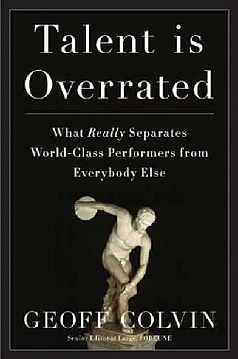
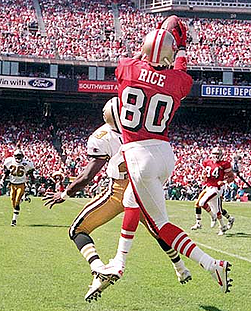
In Geoff Colvin’s book, Talent is Overrated, he points to one of the greatest NFL players of all time as an example of an athlete that overcame a lack of “talent” (many would argue that Rice was clearly the most talented wide receivers of all time) by simply outworking his opponents in the off-season.
 

basketball resources    basketball resources


So what made Jerry Rice so good?

1. He spent very little time playing football

a. “Of all of the work Rice did to make himself a great player, practically none of it was playing football games.” (pg. 54)  It’s clear once you compare the amount of time in a game, and then more closely at the amount of time that Rice spent on the field that the time there paled in comparison to his other football “related” activities.  So what does Jerry Rice and football have to do with hoops?

b. Try this on for size – many athletes always look to play as an means to improve their game, but how many shots do you get during a summer pick-up game vs. time with a teammate (coaches can’t be with players in the summer) working on your left-hand hook shot?  You could probably count on one hand the number of times in an afternoon of summer pick-up games that you were able to execute a particular shot.  In contrast, a specific shot can be practiced and rehearsed over and over in preparation for real time execution.

c. Pick-up games are required? Great – stop using them to run slow, argue and BS – use it as your summer conditioning and insist that you guard the opposing team’s best player each and every time.  Defensive work is probably the one skill that is hardest to do (and probably impossible) on your own.  Use this time with others to work on skills that REQUIRE others, and dedicate the majority of your other free time to individual skill development.

2. He designed his practice to work on his specific needs

a. “He (Rice) had to run precise patterns; he had to evade the defenders, sometimes two or three, who were assigned to cover him; he had to outjump them to catch the ball and outmuscle them when they tried to strip it away; then he had to outrun tacklers. So he focused his practice work on exactly those requirements.” (pg. 55)

b. Most athletes won’t admit that they are not good at a particular skill.  It was the ref or some other outside force that kept the ball from dropping in the hoop, time and time and time again.  Before working on those specific skills players must be brutally honest with themselves and admit that they don’t have a complete skill set to compete at the highest level.  Sure you may be able to windmill dunk or you have a killer back-to-the-basket post move, but is your skill set complete or evolved to the point where you can make the leap to the next level?

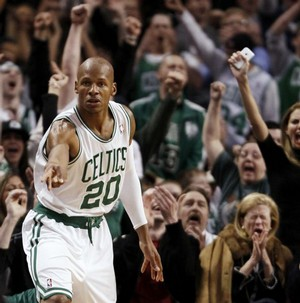
c. A quick look at your shooting percentage at the end of the basketball season will clearly demonstrate whether you have earned the right to shoot from beyond the arc.  Still think you have what it takes to play in the NBA? Grab two rebounders and shoot uncontested 3-pointers up to a hundred – if you didn’t make 75 then you need to swallow your pride, find a coach and ask him how you can improve you stroke.  NBA 2-guards make 75/100 and elite shooters like Ray Allen make 80-85.
 

basketball resources


d. You’d have to play an entire days worth of pick-up games before you have an opportunity to make 75 3-pointers – very little time should be dedicated to actually playing the game if you are looking to improve a specific skill.

3. While supported by others, he did much of the work on his own

a. The collegiate basketball season starts Oct 15th with official practices and ends with the national championship the first week of April (if you’re lucky). That leaves 7 months of individual work that can be accomplished before team practices begin again.  More than half the year can be dedicated to individual work and skill development.

4. It wasn’t fun

a. Basketball athletes rarely ever work on skills that they’re not good at simply because failure really isn’t that much fun. Imagine being a decent shooter, say 35% from three-land?  It’s not bad, but to make it to the next level a minor tweak or change may be necessary to get your percentage above the 40% range.  So you make a few adjustments and begin shooting from beyond the arc with your new and improved shooting technique – do you think you’ll shoot better or worse for the first week?

The answer is worse.

Not to mention now going through this process during a “friendly” game of pick-up with your boys reminding you that you missed again your last trip down the court.

b. Rarely will athletes work through this “learning” period, especially when they’ve experienced “success” with their previous form.  If you’re going to work on a skill that you’re not great at you must first be prepared for failure – lock in and accept that it won’t be fun this summer (fun comes next season when you’re making it rain from beyond the arc!)

So looking at just one football star clearly doesn’t constitute a scientific study of any kind, and still the question remains, why are some people simply more successful at sports than others, or at any skill for that matter?

Consider a study conducted in the early nineties examining a music academy in Berlin to discover why some violinist were better than others.

The Role Of Deliberate Practice In the Acquisition of Expert Performance by Ericsson, Krampe and Tesch-Romer. Psychological Review. 1993, Vol. 100. No. 3. 363-406.

 

basketball resources

 
Summary points:

1. Practice Makes Perfect: When asked to rate the relevance of music-related activities and non-music-related activities to their progress towards becoming the very best, solitary practice was far and away number one.

2. The More The Merrier: Although they all knew that this practice was essential, they didn’t all do it.  The two top groups, (the best and the better violinists) practiced by themselves about 24 hours a week on average. The third group (the good violinists) practiced by themselves only 9 hours a week.

3. Solitary Practice Is Essential: Each violinist recognized that the most important activity, the solitary practice was neither easy nor fun!

“When they rated activities by effort required, solo practice ranked way harder than playing music for fun, alone or with others, and harder than even the most effortful everyday activity, child care.  As for pleasure, practice ranked far below playing for fun and even below formal group performance, which you might reasonably guess would be the most stressful and least fun activity.”

4. No Outside Help Needed:  Although solo practice does not require outside help – no coach or instructor is needed – and thus completely in the control of the individual and almost limitless, only those that chose to practice more became excellent at their skill.

“Solo practice is unusual among music-related activities in that it’s largely within the individual’s control.   Most other activities – taking lessons, attending classes, giving performances – require other people’s involvement and are therefore constrained.  But with 168 hours in a week, a person can practice by himself or herself just about without limit.  In fact, no one in the study came anywhere near spending every available hour on practice.
So all the violinists understood that practicing by themselves was the most important thing they could do to get better. Though they didn’t consider it easy or fun, they all had virtually unlimited time in which to do it. On those dimensions, they were all the same. The difference was that some chose to practice more, and those violinists were a great deal better.” P. 59

Summary:

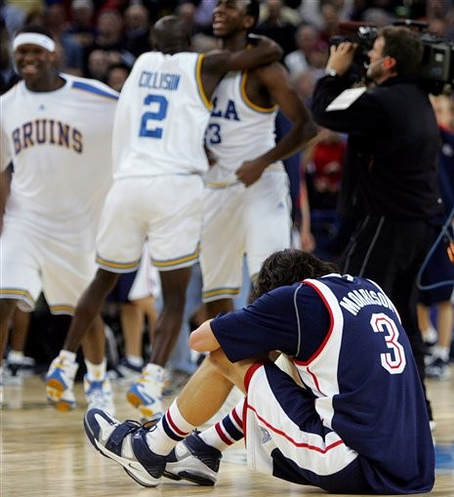
As much as you’d like to believe it, practice, deliberate and focused practice isn’t much fun.  You’ll experience failure many more times than success if you are truly working on skills that need improving.  Whether it was Jerry Rice running stadium stairs or world class violinists practicing for hours on end, both learned to love the process of getting better and realized that failure in the moment (games or recitals) when it matters the most, is far less fun than any amount of practice.

“There are two pains in life, the pain of preparation and the pain of regret.”
 

basketball resources


Topics: Art Horne, basketball resources, basketball conference, athletic training conference

Are You Making Something by Seth Godin

Posted by Boston Sports Medicine and Performance Group on Mon, Mar 28, 2011 @ 07:03 AM

athletic training resources


Are you making something?

Making something is work. Let's define work, for a moment, as something you create that has a lasting value in the market.

Twenty years ago, my friend Jill discovered Tetris. Unfortunately, she was working on her Ph.D. thesis at the time. On any given day the attention she spent on the game felt right to her. It was a choice, and she made it. It was more fun to move blocks than it was to write her thesis. Day by day this adds up... she wasted so much time that she had to stay in school and pay for another six months to finish her doctorate.

Two weeks ago, I took a five-hour plane ride. That's enough time for me to get a huge amount of productive writing done. Instead, I turned on the wifi connection and accomplished precisely no new measurable work between New York and Los Angeles.

More and more, we're finding it easy to get engaged with activities that feel like work, but aren't. I can appear just as engaged (and probably enjoy some of the same endorphins) when I beat someone in Words With Friends as I do when I'm writing the chapter for a new book. The challenge is that the pleasure from winning a game fades fast, but writing a book contributes to readers (and to me) for years to come.

One reason for this confusion is that we're often using precisely the same device to do our work as we are to distract ourselves from our work. The distractions come along with the productivity. The boss (and even our honest selves) would probably freak out if we took hours of ping pong breaks while at the office, but spending the same amount of time engaged with others online is easier to rationalize. Hence this proposal:

The two-device solution

Simple but bold: Only use your computer for work. Real work. The work of making something.

Have a second device, perhaps an iPad, and use it for games, web commenting, online shopping, networking... anything that doesn't directly create valued output (no need to have an argument here about which is which, which is work and which is not... draw a line, any line, and separate the two of them. If you don't like the results from that line, draw a new line).

Now, when you pick up the iPad, you can say to yourself, "break time." And if you find yourself taking a lot of that break time, you've just learned something important.

Go, make something. We need it!

Topics: basketball conference, athletic training conference, boston hockey summit, boston hockey conference, Seth Godin

A True Hero

Posted by Boston Sports Medicine and Performance Group on Fri, Mar 25, 2011 @ 07:03 AM

basketball resources


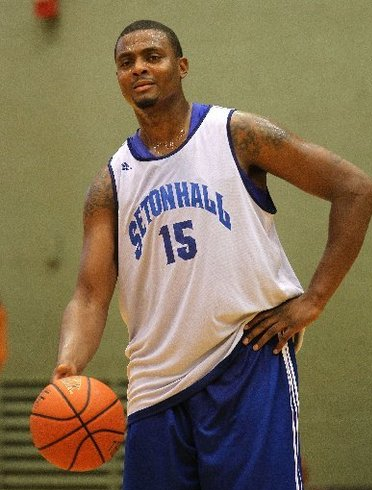
Tony Testa, Director of Sports Medicine at Seton Hall and former athletic trainer at Northeastern University performed his most important duty required of an athletic trainer – He Saved a Life


Great Job Tony!   Kudos to you and your staff for a job well done.

Brief article below summarizes the event.


AT’s Save Basketball Player’s Life in New Jersey

“A basketball player for Seton Hall was participating in a routine workout when he complained of dizziness. His coaches followed him out of the gym to find him incoherent and barely conscious. The coaches called the athletic training room for help, and Jessica Viana, Med, ATC, and Tony Testa, Med, ATC, CSCS, found the player unconscious and without a pulse. They worked together to perform CPR and to shock the player with the AED. Emergency services arrived and took the player to the hospital, where he remained for three weeks.” – NATA News

Topics: basketball conference, athletic training conference

Set Your Mental Channel

Posted by Boston Sports Medicine and Performance Group on Wed, Mar 23, 2011 @ 06:03 AM


Take a look around where you’re sitting and find five things that have blue in them.

Go ahead and do it.

With a “blue” mindset, you’ll find that blue jumps out at you: a blue book on the table, a blue pillow on the couch, blue in the painting on the wall, and so on. Similarly, whenever you learn a new word, you hear it six times in the next two days.  In like fashion, you’ve probably noticed that after you buy a new car, you promptly see that make of car everywhere.  That’s because people find what they are looking for. If you’re looking for conspiracies, you’ll find them. If you’re looking for examples of people’s good works, you’ll find that too. 

It’s all a matter of setting your mental channel.


- Roger von Oech

Topics: basketball conference, athletic training conference, boston hockey summit

Congrats UW Badgers - 2011 Women's Ice Hockey National Champions

Posted by Boston Sports Medicine and Performance Group on Tue, Mar 22, 2011 @ 07:03 AM

Congrats to the University of Wisconsin Badgers Women's Ice Hockey team for winning the 2011 National Championship in a 4-1 win over Boston University this past weekend. 

hockey conference


Hear UW Badgers Strength and Conditioning Coach, Jim Snider speak at this year's BSMPG Hockey Conference, June 3rd and 4th in Boston MA., as he discusses, "Hockey Specific Dry Land Speed Training".

Learn how this year's National Champions train in the off-season and what you may be missing in your summer hockey strength training programs. 


Topics: boston hockey summit, hockey conference, hockey DVD, Jim Snider

Are You Doing A Good Job? by Seth Godin

Posted by Boston Sports Medicine and Performance Group on Mon, Mar 21, 2011 @ 07:03 AM

athletic training resources


Are you doing a good job?


One way to approach your work:

"I come in on time, even a little early. I do what the boss asks, a bit faster than she expects. I stay on time and on budget, and I'm hardworking and loyal."

The other way: "What aren't they asking me to do that I can do, learn from, make an impact, and possibly fail (yet survive)? What's not on my agenda that I can fight to put there? Who can I frighten, what can I learn, how can I go faster, what sort of legacy am I creating?"

You might very well be doing a good job. But that doesn't mean you're a linchpin, the one we'll miss. For that, you have to stop thinking about the job and start thinking about your platform, your point of view and your mission.

It's entirely possible you work somewhere that gives you no option but to merely do a job. If that's actually true, I wonder why someone with your potential would stay...

In the post-industrial revolution, the very nature of a job is outmoded. Doing a good job is no guarantee of security, advancement or delight.

Topics: basketball resources, basketball conference, athletic training conference, boston hockey summit, boston hockey conference, Seth Godin

Bracket Busted

Posted by Boston Sports Medicine and Performance Group on Fri, Mar 18, 2011 @ 07:03 AM

athletic training resources


They say the selection committee rewards those that challenge themselves early in the year.

The ones that seek out difficult opponents; the ones that never back down.

It’s true that the little guys may not win them all, but the effort and determination demonstrated is surely worth considering against someone of a “higher” stature but never challenges themselves.

So, while you’re enjoying the beginning of March madness and hovered around co-worker’s computers watching buzzer beaters and last second shots consider this:

Have you sought out difficult projects this past year? Have you volunteered to take on the massive assignment that everyone else refuses to do? Or are you happy with your numerous completions and office victories on sub-par tasks?

Would the selection committee choose you?


Art Horne is the Coordinator of Care and Strength & Conditioning Coach for the Men’s Basketball Team at Northeastern University, Boston MA.  He can be reached at a.horne@neu.edu.


Topics: Art Horne, basketball conference, athletic training conference, boston hockey conference

I Wish That I Knew What I Know Now When I Was Younger

Posted by Boston Sports Medicine and Performance Group on Wed, Mar 16, 2011 @ 07:03 AM

athletic training resources


They say there are things you just have to experience yourself. Mistakes you have to make on your own.

I remember when I was younger and my father imploring me not to make the same mistakes he made.  But I was smarter than him - no way I would make that mistake.

Boy, was I wrong. 

When it comes to patient care - even medicine isn't perfect.

Looking back from the time I was in undergrad to present time many things have changed - fascia and movement patterns have become prominent influences in both injury evaluation and rehabilitation.  I don't remember learning about either in my undergrad classes.  I guess it just wasn't important.

Boy, was I wrong.

See three pioneers in Movement and Fascia work this June 3/4 in Boston.

describe the image


Art Horne is the Coordinator of Care and Strength & Conditioning Coach for the Men’s Basketball Team at Northeastern University, Boston MA.  He can be reached at a.horne@neu.edu.


ooh la la
ooh la la, la la, yeah

I wish that I knew what I know now
when I was younger
I wish that I knew what I know now
when I was stronger


To listen to ooh la la by the The Faces click below and enjoy. Kinda makes you want to be young again.


Topics: Art Horne, basketball conference, athletic training conference, boston hockey summit