Boston Sports Medicine and Performance Group, LLC Blog

Can We Make It A Two-Way Street?

Posted by Boston Sports Medicine and Performance Group on Mon, Mar 14, 2011 @ 07:03 AM

athletic training resources


As an athletic trainer I provide regular and constructive feedback to my patients.  Statements such as “Relax your traps and pinch your scapulas together,” or “Maintain this position,” or “Nope, you need to contract this muscle first,” routinely roll off my tongue.  All these corrections and advice are focused on getting my patients better.  Without supervision, oversight, and criticism of a patient’s treatment or rehabilitation plan I am doing them a disservice.

Observing a strength and conditioning session performed by a colleague the other day, I was quite impressed with the enthusiasm, motivation, and feedback he provided.  Echoing through the weight room are words of wisdom like “Don’t let your knees go over your toes,” or “Head up, chest out,” or my all time favorite “Do it right and we will get bigger, faster, stronger today.”  Immediately reflecting back on that day, I took away how much attention, education, and constructive criticism went into that one session.  All of these qualities demonstrated during the training were essential for the improvement of the athlete.

We owe it to our athletes to be critical of their performance.  We need to educate them all the time on items such as proper technique and appropriate activation of muscle. Without these pieces of feedback their recovery will be delayed or performance progression inhibited.  Going to extreme measures to provide appropriate feedback to our athletes are what quality athletic trainers and strength coaches do.  So I ask myself, why do we walk down a one way street?

When is the last time you critiqued your co-worker?  Can you recall correcting their treatment plan with validated research?  Have you changed a peer’s practice pattern by suggesting a more appropriate exercise?

As athletic trainers and strength and conditioning coaches are we doing a disservice to our profession by not providing timely and appropriate feedback of each other.  Why are we so afraid to be critical of one another, yet in the next breathe assess our athletes all for their benefit? 

Challenge yourself to not be defensive when a colleague points out something you are doing wrong, or shows you a better way (I mean we can’t be right all the time).  Embrace that opportunity as a way to get better.  Take some ownership in educating the person next to you; demand them to be critical of you.  If feedback is so important to those we service every day, it must be important for our improvement as well.

So ask yourself, can we make it a two-way street?


Scot Spak EdM, ATC, CSCS
Athletic Trainer
Massachusetts Institute of Technology

 

Topics: basketball conference, athletic training conference, boston hockey summit, athletic training, boston hockey conference, Scot Spak

Learn and Earn

Posted by Boston Sports Medicine and Performance Group on Fri, Mar 11, 2011 @ 10:03 AM

athletic training resources


While many athletic trainers and strength coaches look to the summer as a time to relax, a few view this time to L-EARN. 

It’s not by accident that the most successful professionals that I know across both disciplines often spend their summers L-EARNing. 

They’re also the ones that EARN the most money.


Art Horne is the Coordinator of Care and Strength & Conditioning Coach for the Men’s Basketball Team at Northeastern University, Boston MA.  He can be reached at a.horne@neu.edu.

Topics: Art Horne, basketball training programs, athletic training conference, boston hockey summit, boston hockey conference

The Explosion Of Fascia Research by Leon Chaitow

Posted by Boston Sports Medicine and Performance Group on Mon, Mar 7, 2011 @ 07:03 AM

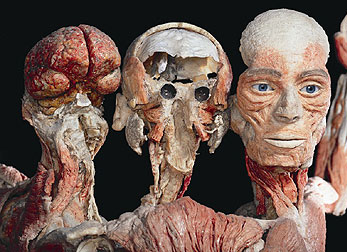
I remember walking into Gross Anatomy lab and seeing the cadaver stripped down to only bones and muscles - everything else was taken out and discarded. It just wasn't that important.

This initial introduction to the human body just never quite sat well with me-

It was too clean, too simple, too rudimentary.

""A" attaches to "B" and causes "Y" to happen. Don't worry about "D"", the professor would tell you, "that's for next class and it doesn't influence what we are talking about today or change "Y" anyway."

Is it any wonder why most of us still associate the human anatomy as a simple construct of levers, hinges and force vectors with little to no interplay between independent parts.  I've made plenty of mistakes in my career, but the one that kept me from truly understanding human movement and appreciating dysfunctional patterns was the role and influence of fascia.  It took a colleague many years ago to demonstrate how a simple pull on her sweater caused a change in tension far from where it was originally pulled. 

A simple, yet powerful example of how fascia influences our every move.


athletic training resources


Interested in more information on fascia?

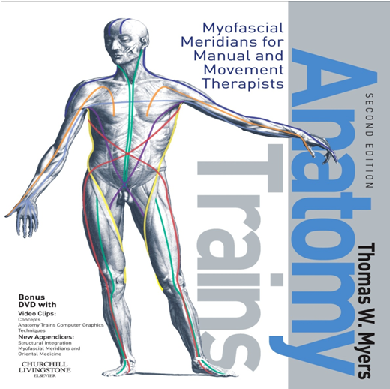
1. See author of Anatomy Trains, Tom Myers speak at the 2011 BSMPG summer seminar.

2. See information below for the 2012 meeting in Vancouver, Canada.  Read Leon Chaitlow's post below or read proceedings from the 2007 and 2009 Fascia Research Congress Meetings.


athletic training resources


3. Read Leon Chaitow's post on fascia research by clicking HERE.


Click HERE for the 2007 Fascia Research Congress Proceedings Book Overview

Click HERE for the 2009 Fascia Research Congress Proceedings Book Overview

Topics: basketball conference, athletic training conference, boston hockey conference, Tom Myers

Rehab and Rewards

Posted by Boston Sports Medicine and Performance Group on Fri, Mar 4, 2011 @ 06:03 AM


athletic training resources


I often wonder how the “timing of rewards” affect our student-athletes view on their rehabilitation programs?

“Do this stretch and your groin strain will get better.”

In a world dominated by the Iphone, instant gratification and the ability to download an “app” to solve almost any problem, how long are your athletes willing to wait for your program to work?

As an example, we’ve over sold the “reward” of stretching to decrease back pain and then undelivered on results.  At PT clinics, patients stop coming in and we assume they got better because they stopped coming – the same can be said in the college setting.

Did you really expect your athlete to continue to come in day after day with no change?

“Stretching takes time – they’re probably not stretching at home like I told them to.”

True – stretching does take time. But maybe they didn’t need stretching. Maybe you were applying a good tool in the wrong place?

If you didn’t test your athlete at the beginning of your treatment session, whether it be a simple toe touch or squat pattern and then demonstrated improvement immediately after your treatment, how long do you expect your athletes to continue buy “your product”?

How many times would you come back?

Art Horne is the Coordinator of Care and Strength & Conditioning Coach for the Men’s Basketball Team at Northeastern University, Boston MA.  He can be reached at a.horne@neu.edu.

SFMA and Anatomy Trains by Patrick Ward

Posted by Boston Sports Medicine and Performance Group on Wed, Mar 2, 2011 @ 07:03 AM

Patrick Ward writes a fantastic article on the SFMA Assessment and Anatomy Trains.  See Anatomy Trains author, Tom Myers at this year's BSMPG summer conference - June 3rd and 4th.


SFMA and Anatomy Trains: Concepts For Assessment and Treatment by Patrick Ward


basketball conference

Topics: Art Horne, basketball conference, athletic training conference, boston hockey conference

Indispensible

Posted by Boston Sports Medicine and Performance Group on Mon, Feb 28, 2011 @ 07:02 AM

athletic training resources

There are a number of ways to become indispensible.

Some more successful than others. 

Sure doing exactly what the boss says will get you started, but to be truly indispensible, you must challenge your boss, your co-workers, and of course demand that they challenge you in return.

Below Seth Godin outlines how you may become a linchpin in your organization.


A linchpin hierarchy

1. Do exactly what the boss says.
2. Ask the boss hard questions.
3. Tell the boss what your best choice among the available options is. Insist.
4. Have co-workers and bosses ask you hard questions.
5. Invent a whole new way to do things, something that wasn't on the list.
6. Push and encourage and lead your co-workers to do ever better work.
7. Insist that they push and encourage you.


Topics: Art Horne, basketball conference, athletic training conference, boston hockey summit, Seth Godin

Good Decisions - Bad Intel

Posted by Boston Sports Medicine and Performance Group on Wed, Feb 23, 2011 @ 07:02 AM

athletic training resources


So many times we make good decisions off of bad intelligence.

I remember when a student-athlete approached me many years ago stating that his coach said he needed to lose weight in order to participate in an upcoming track meet.  His coach had measured his body fat and been nagging him for several weeks stating that he was too fat and that his weight was holding him back from achieving the success he was hoping for.

Subsequently, he cut his caloric intake down to a rabbits serving size (yes, it also included a lot of salad and carrots because that’s what the coach said would be most beneficial).  His training times, surprisingly (insert sarcasm here) became worse, and out of frustration sought help from our department.

It turned out that his body fat had first been measured using bioelectrical impedance, and then a week later with a skin fold caliper using only 3 sites. Yes, body fat is a good indicator of general physical preparation and a "lower" range tends to lend itself to improved performance to an extent. The problem however in this case is that the coach was taking a good measurement and inserting bad numbers.

I have no doubt that the young coach’s heart was in the right spot. I have no doubt that he really wanted to make a difference in that athlete's life and his athletic career. However, when we make what we would consider a good decision, we also need to make sure it’s been calculated from good intel.  Good decisions based off bad intel, can be just as dangerous as bad decisions made from good intel.


Topics: Basketball Related, basketball conference, athletic training conference

But They're My Friends...

Posted by Boston Sports Medicine and Performance Group on Mon, Feb 21, 2011 @ 08:02 AM

“What should I do? 

Should I not listen to my friends?

They’re my friends.”


Friends don’t let friends drive drunk.
Friends don’t let friends make bad decisions, take the easy way out, support bad habits or enable them to continue down a dangerous path.

Friends tell you when you’re wrong because they’re your friends.
Friends will tell you that you’re making a poor choice and help you find a better one.

Real friends, the ones you want to surround yourself with, are the ones that aren’t afraid to tell you that you’re wrong….

Because that’s what real friends do.

Sorry Lebron – time to find some new friends.

Topics: Art Horne, basketball conference, athletic training conference, LeBron James

To Do Better...

Posted by Boston Sports Medicine and Performance Group on Mon, Feb 21, 2011 @ 07:02 AM

sports medicine resources


"To do better, you must know better, but just because you know better, doesn't mean you do better."

     -  Dr. Thermal Evans - National Conference on Health Disparities


George Mumford and the LA Lakers

Posted by Boston Sports Medicine and Performance Group on Thu, Feb 17, 2011 @ 07:02 AM

George Mumford, speaker at the 2011 BSMPG Basketball Specific Conference - June 3/4th in Boston, was recently featured in the LA times for his help with Laker big man,  Andrew Bynum and the Laker team hours before they took on the Boston Celtics in their recent east coast road trip.

Result: Lakers 92 Celtics 86


george mumford

"Sensing the need for a team pick-me-up, the Lakers coach asked longtime friend and sports psychologist George Mumford to talk to the players several hours before they took on the Boston Celtics..."

Read more by clicking HERE.

George Mumford also featured on orangecounty.com


Topics: basketball resources, basketball conference, athletic training conference, boston hockey summit