Click below to see highlights from our 2012 BSMPG Summer Seminar featuring Logan Schwartz from the University of Texas.
More highlights are set to come in the next few weeks so stay tuned!
A special thanks again to our SPONSORS!

Click below to see highlights from our 2012 BSMPG Summer Seminar featuring Logan Schwartz from the University of Texas.
More highlights are set to come in the next few weeks so stay tuned!
A special thanks again to our SPONSORS!
Topics: athletic training conference, Craig Liebenson, Logan Schwartz, Cal Dietz, Bill Knowles, Chris Powers
by Perry Nickeston, DC
If you work with athletes long enough you come to realize a few in-the-trenches facts.
Athletes are covert at hiding dysfunction. Count on it! There are many assessments and evaluation procedures specifically designed to spot dysfunctional patterns and compensations. However, subtle signs of compensation chaos may be overlooked by an untrained eye because the athlete is so good at ‘cheating’ movement. So what can you do to look for the hidden signs of dysfunction that athletes are so great at covering up? How can you find the kink in the armor? Search for neurological signs of compensation the body uses as a fall back mechanism for stability. The best part is an athlete has no idea they are doing these compensations, so it’s a ‘tell’ of instability (poor motor control). These five signs are extremely valuable for divulging central core dysfunction. An athlete must have central (proximal) stability to achieve optimal distal mobility. If this relationship is altered, they will ‘bleed’ energy and move inefficiently with loss of power, speed, endurance, and performance. That’s bad.
These signs are ‘Red Flags’ of dysfunction. So what are they?
1. Foot Stability
Assess your athlete in a single leg stance position with bare feet. The foot should appear stable. Signs of stability dysfunction include: The tendency of the foot to excessively pronate or supinate. Toes grip (claw) the ground for dear life. Extensor tendons on the dorsum of the foot are popping out like mad.
2. Breathing Patterns
Labored breathing is a surefire sign of dysfunction. Monitoring how an athlete breathes during non stressful movements and during high intensity training divulges valuable information about their core. Optimal breathing patterns are achieved via the diaphragm. The diaphragm is one of four primary components to the inner core (diaphragm, pelvic floor, transverses abdominis, and multifidi). If the diaphragm is not functioning at optimum and is facilitated you can have inhibition of the pelvic floor and transverse abdominis leading to faulty recruitment of the core.
3. Jaw Clenching
The jaw muscles are a default mechanism for overcompensation. In other words, the jaw muscles can become facilitated for other inhibited muscles throughout the body. Clenching up the jaw during minimal challenges to the core is a sure sign of instability. The pterygoids often inhibit the scalenes, the latissimus dorsi, the obliques, the quadratus lumborum, and the hip abductors. If these relationships are left unattended the tension in the jaw muscles increases tremendously resulting in the aforementioned symptoms. The jaw muscles must be considered in global relationships with the rest of the movement chains.
Observe for jaw holding or clenching when athletes are challenging the core in positions such as planks, side planks, chops/lifts, and isometric work. If you see the jaw clenched, have them open and relax the jaw and notice the increase in difficulty performing the movement. Ask them if they feel a difference. The answer will be yes….less stable!
4. Grip (Clenching fist)
Finger flexors tend to be facilitated in relationship to finger extensors and synergistic muscles of the anterior chain. Often you may see an over compensation ‘death grip’ on power movements when there is inhibition in the psoas. Your brain can’t get the stability from the psoas structure so it fires on grip muscles to pull more with the upper torso as opposed to the core. Watch for athletes complaining of increased cases of elbow tendonitis or shoulder injuries. This indicates altered patterns in grip to upper extremity muscle sequencing. Watch for athlete making fists when performing isometric movements.
5. Rolling Patterns (Ground movements)
The ground is the great equalizer for the core. It does not care how big and strong you are because it eliminates most of your global power movers relying on core stability sequencing for movement. There is no cheating on the floor! Rolling patterns championed by Gray Cook, PT are a fantastic initial screening process. Have athlete lie supine on floor with arms and legs extended and roll over to prone position using only one side of the upper body. The movement should be easy and seamless. No sticking or altered patterns from the lower extremity. The underlying weakness or core instability of sequencing will be noticed easily. Athletes will feel the difference. If an athlete cannot accomplish a simple rolling task on the ground where gravity is minimal challenge on the core for stability, you can be sure there is no way they will be stable and functional in a standing position. OWN THE FLOOR!
Click here to see a video of me demonstrating a proper roll with Chris Flo from Flo Fitness.
Be observant and diligent in your assessments. Always be assessing. As Yogi Berra said, ‘You can learn a lot just by watching.’ When it comes to optimal core function regress to progress and own precision of movements. Attention to detail will bring your athlete one step closer to becoming a champion. It’s the details and commitment to excellence that make a champion. They deserve it. So become obsessive compulsive in your foundational program of inner and outer core assessments. Motor control is the shock and awe secret of power and durability.
Perry Nickelston, DC, SFMA
References:
Topics: Art Horne, athletic training conference, Perry Nickelston, Barefoot in Boston

I recently attended the BSMPG Summer 2012 conference, and over the course of two days I realised how little I know. I got the opportunity to hear a number of really smart people speak (including Bill Knowles, Craig Liebenson, Dr John DiMuro, Mark Toomey, Art Horne, Dr Pete Viteritti, Keith D’Amelio, Chris Powers, Irving Schrexnayder and Alan Grodin).
It was awesome.
Firstly, a huge thanks to Art Horne and the rest of the people who made the conference possible. Fingers crossed I’ll be able to make the trip across the pond for it next year.
Here’s a snapshot of my notes which I scribbled down throughout the conference.
————————————————————–
“Injury is an opportunity to become a better athlete”.
We shouldn’t be talking about return to play, we should be talking about a return to competition.
Are any of your athletes load compromised, or joint compromised?
The return to competitive strategy should be months or years long, not weeks.
“It’s easy to get an athlete back to sport, it’s hard to keep them back”
Continue to read this review by clicking HERE.
Topics: Art Horne, Craig Liebenson, Charlie Weingroff, Andrea Hudy, Cal Dietz, Bill Knowles, Alan Grodin, Dan Boothby, Chris Powers
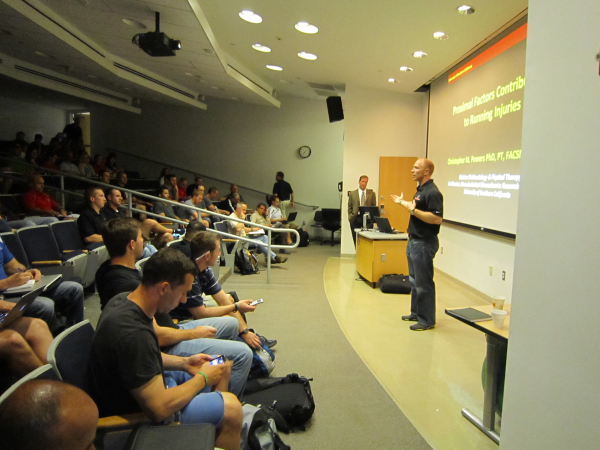
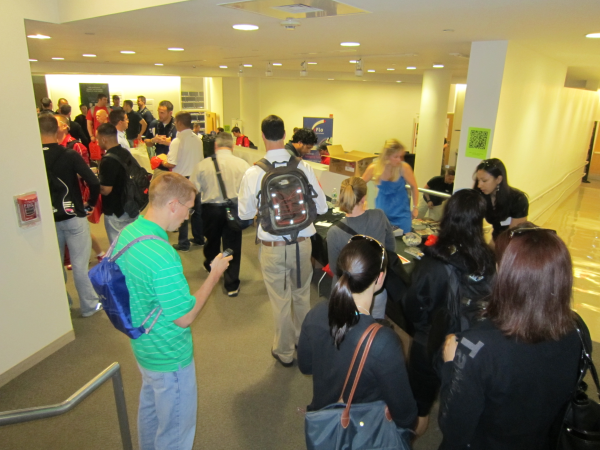
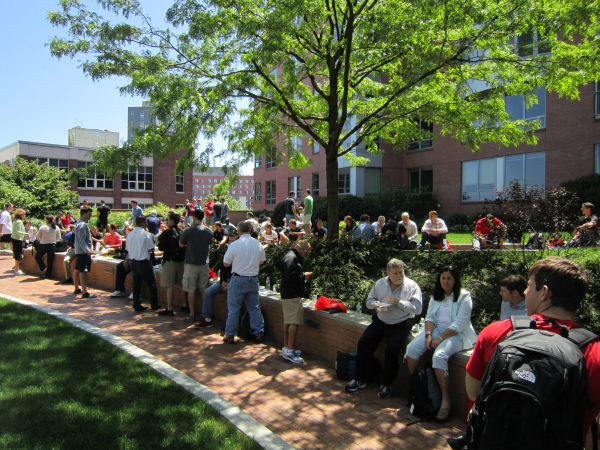
View pictures from the 2012 BSMPG Summer Seminar below. For the complete photo gallary click HERE.
Thank you again to all our attendees, speakers, sponsors, and organizers!
Topics: Art Horne, Craig Liebenson, Brijesh Patel, Charlie Weingroff, Cal Dietz, Dr. DiMuro, Dan Boothby, Chris Powers
by Bangen Athletic Development
This past weekend I had the pleasure of heading to Boston for my third Boston Sports Medicine and Performance Group (BSMPG) Summer Seminar. I wasn’t sure how it was going to top last year’s line-up and I can’t say for sure that it did, but it was at least on par. I was able to hear some very informative presentations from Bill Knowles, Craig Liebenson, Sean Skahan, Dan Boothby, Pete Friesen, Boo Schexnayder, Joel Jamieson, Cal Dietz, Chris Powers and Alan Grodin. The following are the three things that I am going to implement into my program at Michigan Tech as soon as I get back to Houghton tomorrow (I am writing this on the plane trip home).
1. Subjective Athlete Monitoring
Joel Jamieson spoke about allostasis and the training process. According to Joel, Allostasis is “the varying integrated adaptive responses taken by the body in order to maintain homeostasis at all times and in all circumstances as necessary to keep the body alive.” We only have a certain amount of energy (called the allostatic reserve) to accomplish these adaptations. Training is obviously one of the stressors that can disrupt homeostasis, causing allostasis to occur. However, if the training is too much in terms of volume, intensity, or both, then that allostatic reserve can be drained and we won’t get the training adaptations that we are looking for.
Therefore, it is essential to monitor the recovery levels of our athletes and quantify their training load to maintain that allostatic reserve and ensure readiness for training. Unfortunately, at Michigan Tech we don’t have the resources for an Omega Wave or even other heart rate variability technology. I also don’t have the time to measure everyone’s vertical jump or grip strength on a regular basis. However we can use subjective measures to tell how an athlete is feeling and how they perceive their training. We will now have the athletes rate on a scale of one to ten on how ready they feel to train that day after the warm-up (it’s best to do it after the warm-up because athletes rarely feel ready before, sometimes I don’t feel fully ready until after the warm-up) and they will rate their perceived difficulty and intensity after the training session. This will allow me to quantify how they are responding to training and make adjustments as needed.
2. Lowering Hurdle Height for Plyometrics
In our second, third and fourth phases of plyometric training we use hurdles to jump over and in the past we have allowed our athletes to bring their knees up, sometimes all the way to their chest in order to clear the hurdle. During Boo Schexnayder’s presentation, he repeatedly discussed the importance of posture while jumping and that the set should be stopped if posture is lost at any point.
Continue to read by clicking HERE.
Topics: Art Horne, Brijesh Patel, Charlie Weingroff, Andrea Hudy, Bruce Williams, Cal Dietz, Bill Knowles, Barefoot in Boston, Clare Frank, Chris Powers
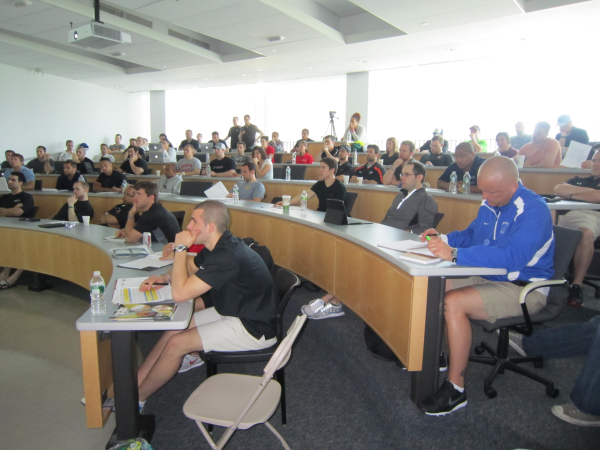
Year after year, Art Horne and the gang at the Boston Sports Medicine and Performance Group host their anual Summer Seminar. Having heard nothing but positive feedback from colleagues who have attended in the past, I decided that this would be the year to finally attend. Living in Western Canada, it certainly isn’t easy to travel across the continent both from a time and financial perspective, but I felt that in order to continually better myself as a professional, attendance was a must. Like many of my previous educational endeavors, it was important for me to be 100% confident that this event was grounded in “educational conducivity” and not just a place where many of my friends were going to be. However, upon looking at the speaker lineup, it was more difficult to convince myself not to attend.
Perhaps the most challenging task however, was deciding which sessions to attend. So aside from the keynote lectures where all delegates were present, I found myself attending lectures from the following: Sean Skahan, Dr. John DiMuro & Mark Toomey, Art Horne & Dr. Pete Viteritti, Joel Jamieson, and Keith D’Amelio. So…
Continue to read this review by Jeff Cubos by clicking HERE
Topics: Craig Liebenson, Charlie Weingroff, Andrea Hudy, Bruce Williams, Cal Dietz, Bill Knowles, Alan Grodin, Barefoot in Boston, Dr. DiMuro, Dan Boothby
Another year.... Another HUGE success!!
BSMPG would like to thank all the attendees who attended the 2012 BSMPG Summer Seminar. We wouldn't be able to run the leading Sports Medicine & Performance Seminar in the world without the leading Sports Medicine & Performance Professionals attending each and every year. And of course a huge thank you and shout out to all of our sponsors and speakers!
Thank you!
Additional photos and details coming soon. We've already started planning for next year so stay tuned for details coming soon!
Here is a little sneak peak from the Photo Gallery that will be up shortly:
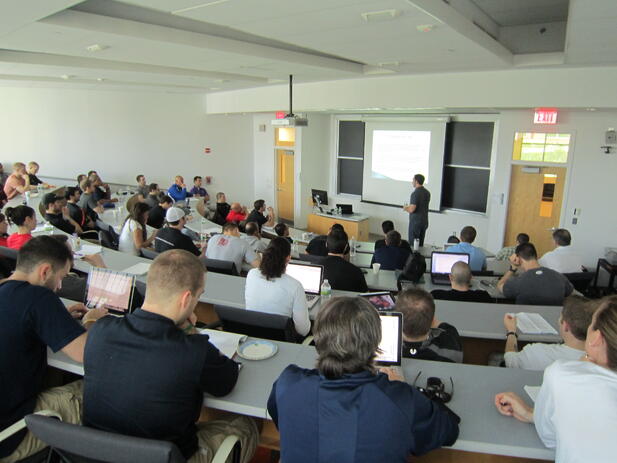
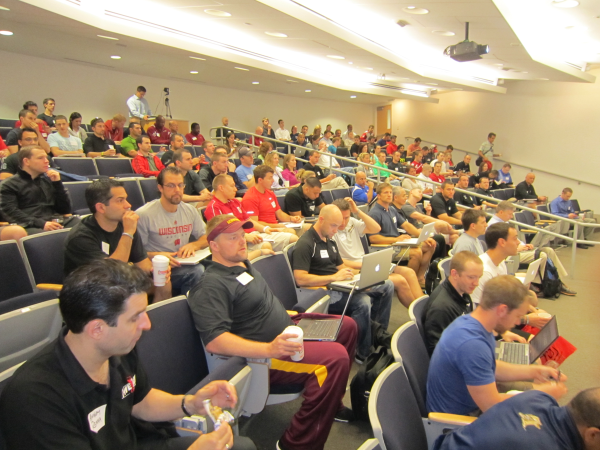
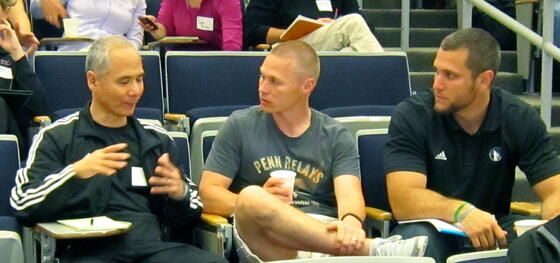
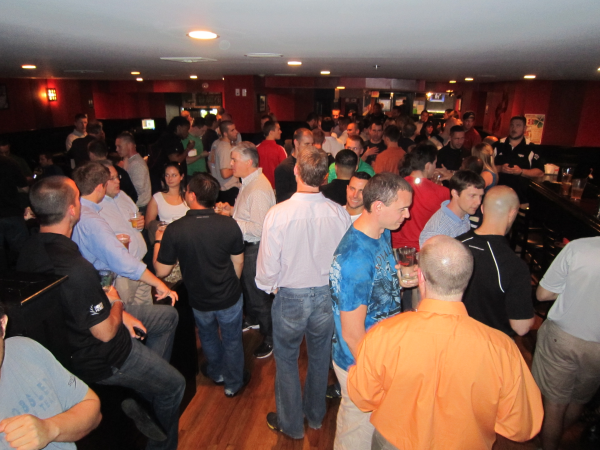
Thanks again and it was so great to see everyone!
-BSMPG
Topics: Art Horne, Jay DeMayo, athletic training conference, athletic training, Craig Liebenson, Brijesh Patel, Charlie Weingroff, Logan Schwartz, Andrea Hudy, Cal Dietz, Bill Knowles, Alan Grodin, Jeff Cubos, Barefoot in Boston, Dr. DiMuro

TopCoder's Clinton Bonner will be guiding an in-depth panel discussion and presentation on sports performance and sports medicine today at 4pm-5:15 during our VIP Workshop. A revolution is coming in how not only do coaches and therapists approach performance and injury, but how technology is going to disrupt legacy approaches. Moneyball ten years go was a milestone for sport, but analytics and algorithms is still embryonic now in our profession. Attendees will leave with a blue print on getting started with data driven methodologies and how they are giving a competitive edge to the best teams in the world.
During this session Jose Fernandez and Dr. Bruce Williams will do an assessment of an athlete, followed by group discussion on best practices with screening. A focus on gait and lower body mechanics is the highlight, supported by both biochemical and biomechanics monitoring. Evidence based medicine and the latest advancements of technology, therapy, and sports performance methods will be covered. With the advent of Moneyball, Jose and Bruce will show how they look at risk analysis with athletes in team sports from both a time management perspective and decision making process.
Catch up with Jose, Bruce, and the rest of the country's top sports medicine and performance professionals at the 2012 BSMPG Summer Seminar May 19-20th!!

Topics: Art Horne, Craig Liebenson, Charlie Weingroff, Andrea Hudy, Bruce Williams, Cal Dietz, Alan Grodin, Jeff Cubos
Meet Gil Blander and learn more about Inside Tracker from Segterra at the 2012 BSMPG Summer Seminar.
InsideTracker analyzes your bloodwork and gives you recommendations and an optimal eating plan. All InsideTracker recommendations are based on scientific evidence and tailored to you. If your life changes, so does InsideTracker.
Topics: Art Horne, BSMPG, Charlie Weingroff, Andrea Hudy, Cal Dietz, Bill Knowles, Alan Grodin, Jeff Cubos, Dan Boothby

Victor, the mobile market is a very disruptive movement to many software companies. How has Dartfish continued to succeed with more and more competition?
Actually it helps the overall picture because many coaches had not realized before how important video was. An app is only once piece of a total solution and if you do not answer all the needs (or most of the needs) of an organization, you will not be successful. Dartfish has been serving this community for more than 10 years and we have listened to our client’s needs. This why we continue to be the driver in this market. We have developed apps as well and will continue with new ones to come, but always in a fully integrated and complementary approach (cloud, software and mobile).
Dartfish.tv allows users to monetize their skill sets with revenue streams similar to the iTunes store. How do you see coaches take advantage of this in the world of sports performance? Many private facilities are looking for both a competitive edge and a way to keep profits from dissolving to their competition. How does this help coaches on salary such as college and professional ranks as well?
There are many ways where coaches can create additional revenue or at least show a very professional image with great technologies. Coaches can sell video clips online (clips, drills, etc.,), they can start remote coaching services, they can post videos of camps and clinics, they can ask parents to subscribe to competitive events. We have clients with thousands of videos on their dartfish.tv platform today.
Many coaches want instant feedback or analysis live during training sessions. Most experienced coaches feel just the opposite that athletes should be viewing outside the field, court, pool, or track. Shouldn't analysis be more in the office and not in the field? What problems have you heard regarding this practice?
Actually there is a fine line between doing too much on the field and not doing enough with video. A quick visual feedback on the field is very beneficial to the muscle memory learning experience (seeing is believing). However, doing too much can be disruptive and you will lose the impact according to our best users. Deeper analysis should be done after the training session to find out additional facts and reinforce what was communicated on the field.
Fusion of data sets such as EMG and Force plates can be done with your system; can you share why this is going be a major and more common practice in the future?
What is essential here is to be able to have the full picture. Too many times, athletes and coaches are presented with data and it is very complex to really understand what is going on just by looking at the numbers. We say that your data needs video! As more and more data systems are available to larger audiences, the fusion with video will help the understanding and communication process. It is an additive process. A picture or video may worth a thousand words, and the data/words are worth a lot, but the combination is worth a million words.
Speaking of the future, without giving away too much can you identify the problems coaches and therapists have with video analysis with a busy team or clinical setting that will be alleviated with the innovations you are working on currently?
We are working on offering a product for every step of the process. 3 Key elements are important for therapists and coaches: Communicate, analyze, and then share. The key is to have the solutions that are fully integrated within their processes. It is always difficult to first embrace something new (people hate changes) but as soon as you have your workflow well established and you see that you can reap the benefits (patients doing better, medals won, increased revenue) there is no more doubt. When the first vehicles were introduced, many moving companies resisted and kept their horses and carts….we don’t see them on the roads anymore.
Interview courtesy of Carl Valle
Topics: Art Horne, Craig Liebenson, Brijesh Patel, Charlie Weingroff, Dartfish, Andrea Hudy, Bruce Williams, Cal Dietz, Alan Grodin, Barefoot in Boston
“The residents who live here, according to the parable, began noticing increasing numbers of drowning people caught in the river’s swift current and so went to work inventing ever more elaborate technologies to resuscitate them. So preoccupied were these heroic villagers with rescue and treatment that they never thought to look UPSTREAM to see who was pushing the victims in.”
Learn what is hurting your feet and your performance, and how to finally train your feet the way they were meant to be.