Boston Sports Medicine and Performance Group, LLC Blog

Standing On The Shoulders Of Giants DVD's Available

Posted by Boston Sports Medicine and Performance Group on Thu, Sep 29, 2011 @ 08:09 AM

Missed this summer's BSMPG summer seminar?

Wished you could have seen the authors of these books and video speak while they were in Boston?


Tom Myers  Charlie Weingroff  Clare Frank

Well now you can - We captured three groundbreaking presentations from this once in a lifetime seminar.  Catch three of these Giants in action as they presented at the 2011 "Standing On The Shoulders Of Giants" Summer Seminar.

This conference was held in Boston, MA on June 3rd and 4th, 2011

Included: 3 DVDs with over 4.5 hours of Sports Medicine and Rehabilitation Information

Presentations by: Clare Frank - Muscle Balance and Stability, Tom Myers - Anatomy Trains and Myofascial Fitness and Charlie Weingroff - Trying to Define the Core.

clare frank Tom Myers Charlie Weingroff

Click HERE for complete details.

Topics: Art Horne, basketball resources, basketball conference, BSMPG, boston hockey summit, athletic training, Charlie Weingroff, boston hockey conference, Tom Myers, athletic training books, barefoot strength training, Clare Frank

SAVE THE DATE : March 30th - April 1st, 2012

Posted by Boston Sports Medicine and Performance Group on Wed, Sep 28, 2011 @ 09:09 AM

BSMPG


BSMPG is busy working on the final details of a continuing educational opportunity that you won't want to miss!

Pencil in this 3-day learning event coming March 30th through April 1st of next year. 

This event will only be open to 30 individuals and 30 individuals only.

NO walk-ins. NO casual learners. NO nodding off after lunch is served. 

This will be an intense 3-day course developed for those skilled clinicians looking to take their treatment approach to the next level and is the first of it's kind on the east coast!

Location: Northeastern University, Boston MA, USA

Details coming soon!

Topics: Art Horne, BSMPG, athletic training conference, Charlie Weingroff, Clare Frank

Integrated Care - Part VI: Getting Everyone To Squat

Posted by Boston Sports Medicine and Performance Group on Tue, Sep 27, 2011 @ 07:09 AM


by Art Horne

Since squatting and the decision to squat or not comes up more often than any other subject when it comes to sports medicine and performance professionals, we decided to tackle this subject head on in this latest post.  Everyone should be able to squat - there I said it. So whether you'll be teaching it after surgery, or training it in the weight room it's important that the beliefs and concepts that you have pertaining to the squat is the same as those that you work with in order to achieve the highest level of athlete success. 

Below is an outline which we have used in a staff journal club to finalize our teaching progressions and teaching cues for the squat pattern while also getting everyone on the same page and on board with the importance of squatting.

sports medicine


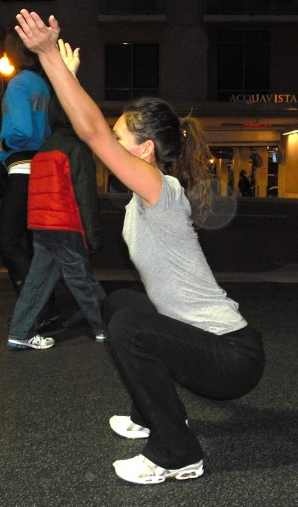
Squat Goal: all athletes should be constantly working towards a score of three on their OH Squat test. Whether they initially present to Sports Medicine with back, knee, hip or other LE injury or pain, all care and performance training providers should be able to look at this movement pattern and address any movement concerns IN ADDITION to their traditional rehab or performance program regardless of initial pain or injury presentation.

FMS Squat Test:  see functionalmovement.com  for complete details
(Have a staff member certified or familiar with the FMS review testing criteria, followed by staff members from both staff’s testing and evaluating each other).


What if the student-athlete describes PAIN during the squat test?


sports medicine


Only qualified medical professionals should deal with pain and painful movement patterns.  If a student-athlete experiences pain they should be referred to the athletic trainer coordinating their care at the college level or another health care professional if you are working in the private sector.  Although many “painful” maneuvers are often neglected and played down by the student-athlete, seldom do those with pain during a simple bodyweight squat ever go on to compete at a high level without future injury and time loss.

Since PAIN is complicated, multifactorial and often unpredictable, a painful pattern should be “broken down” to its component parts so to find the underlying pain generator or limiting factor.  The Selective Functional Movement Assessment TM offers health care providers a systematic approach and a common movement language among all staff members.

(Have a staff member certified or familiar with the SFMA squat breakout present this algorithm to the remainder of your staff and then follow up by having individuals from both groups evaluate each other while identifying the limiting factor within each individual’s squat pattern.


SFMA Squat Breakout:


1. Overhead deep squatting pattern

2. Fingers interlocked behind neck into deep squat position
a. This position lowers the difficulty by not having the shoulders flexed vertical
b. Removes the upper body components and reduces the level of dynamic stability needed to perform the squat.

3. Assisted Squat from ATC into deep squat
a. Athlete holds hands of evaluator while performing squat.
b. Looks at the true symmetrical mobility of the lower body (hips, knees, ankles) without the requirement of dynamic stability.

4. Half kneeling Dorsi-flexion (test for ankle ROM)
a. Place foot on weight bench and lean forward over the foot as far as possible without the heel coming off the bench.
b. The knee should move forward out past the toes at around 4 inches.
c. Repeat for both sides.

5. Supine Knees-to-chest – test for anatomical limitations at hip in non-weight bearing position.
a. Looks at mobility of the hips, knees and spine in a non-weight bearing position.
b. Can help differentiate a mobility vs. stability problem
c. Have the patient grab both shins and attempt to touch their thighs to their lower rib cage.
d. If they can’t get their calves to touch their thighs due to knee tightness, have them grab their thigh instead and repeat thin maneuver. (This will help differentiate between hip and knee mobility issues. If in this position they still can’t get their thighs to touch their rib cage, then there is a potential hip dysfunction).


What’s Next?

Since so many of us sit on our butts all day it’s no surprise that our butts are rarely working to the level they should be. 

(Unless of course you use your butt for a simple paper weight – then your butt works just fine).

Because the squat is the end goal for all athletes in terms of both health and performance, it’s important for athletic trainers and other health care professionals to begin grooving this pattern early on in the rehabilitation process so that there is not only a seamless transition from one Sports Medicine to Performance Training, but also a clear message when it comes to cueing and technique among all professionals on staff.  In order to have everyone speaking the same squat language, starting everyone back on the ground and building a solid and logical progression from post-surgical all the way to high performance only makes sense while the entire staff is playing nice together.

Below is a starting point with a few teaching cues to get the conversation started and a solid progression built between the two groups.   (I have purposefully not included a complete progression below so to force the issue with your own staff.  People tend to complete tasks fully if they have had an opportunity to contribute to so be sure to ask for feedback from both staffs – Sports Medicine and Strength & Conditioning).


Back to Basics: (Supine Table Series)


1. Teach Glute Max w/ Bridge
2. Supine Bridge w/ Thera-band
3. Supine Bridge w/ Marching
4. Single Leg Hip Bridge


Teaching Points:


a. Squeeze Glutes to hold “gold coin” between butt cheeks or pretend to “crack a walnut” while bridging
b. brace core musculature as taught by Stu McGill
c. Ensure hamstrings are not dominate during exercise by palpating medial tendons.
d. Add a theraband around knees or create an ADDuction force to the knees to facilitate additional glute max contraction


– NEVER PLACE A BALL BETWEEN THE KNEES!


Teaching Progression for the Troubled Squat


gobletsquat


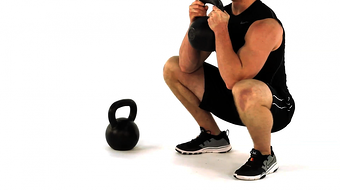
1. Goblet Squat: hold Kettlebell by the horns and squat to depth (providing a weight to the anterior portion of body balances the athlete and gives an additional point of stability

2. Descend squat so that elbows touch VMO of each knee.

3. If depth is a problem “wedge” elbows inside of knees to mobilize the hips.

4. In the early stages be sure to stand behind your athlete to ensure safety – encourage thoracic extension and a flat back

5. ** use clinical judgment based on patient presentation and injury. If unsure, REGRESS activity and PERFECT – OWN THE MOVEMENT before progressing to more advanced alternatives.


READ:  Squatting - An Expression Of Health


Next week: Bringing both staffs together to learn and master the hip hinge – a must for avoiding and rehabilitating back pain and also pulling big deadlift numbers!


Topics: Basketball Related, Art Horne, basketball resources, BSMPG, athletic training conference, athletic training, FMS, Barefoot in Boston

Integrated Care - Part V: When NOT Touching Your Toes is NOT a Hamstring Problem

Posted by Boston Sports Medicine and Performance Group on Sun, Sep 18, 2011 @ 06:09 AM

by Art Horne


I remember being taught in school that people have low back pain because their hamstrings are tight.  Therego, stretch the hamstrings and resolve the low back pain.  It was a simple solution to a very complex and often misunderstood problem and yet as a student it was a clean and direct resolution to an often nagging dilemma.

Further testing and evaluation always “proved” the hamstrings as the culprit since so many of the low back pain patients were never able to touch their toes, and of course toe touching was a direct result of hamstring length.  Again, this bore out to make sense since after spending an exhausting amount of time stretching these patient’s hamstrings, and then retesting, some measurable change were noted (sometimes) with the patient inching closer to their toes.  The only problem in this clean and concise “hamstring-LBP” relationship was that these patients, no matter how long I stretched them or which stretching technique I employed ALWAYS ended up coming back the very next day for the same stretching routine and the same unresolved back pain.


BSMPG

Insanity: Doing the same thing over and over again and expecting different results.


Of course, many of these patients really never had “tight” hamstrings after all, but instead had hamstrings that were preventing them from a place they no had no business being in the first place. 

What do I mean?

Well, many of these patients, or at least the majority of them,  were flexion intolerant which means both flexing their spine and/or moving into flexion caused a reflexive “tightening” of the hamstrings to essentially keep them from FLEXING FORWARD and moving into a region which would exacerbate their current condition, or “a place they have no business being.”  In addition, many of these “tight hamstring” patients were never ever feeling a hamstring stretch, but instead were experiencing a neural stretch, which unfortunately after stretching only continued their “tight-stretch-pain-tight” cycle. 

Soo… Should I Stretch or Not?

1. First distinguish between hamstring tightness and neural tension.  Neural tension is always described differently than muscular tightness – that is if you’re listening.  I had a professor who told me that your patient will always tell exactly what is wrong with them if you listen long enough.  And if you listen just a little bit longer, they’ll also tell you exactly how to make them better.  This case is no different – of course, if you’re too busy catering water you’ll never have enough time to listen long enough.

2. Neural tension is often described as “pinching” or with other words that clearly denote nerve origin such as “zapping” or “burning.”  Muscle tension doesn’t zap or burn.

3. Confirm neural involvement with a slump test – then STOP stretching and begin a nerve flossing regiment if indicated.

4. Does the patient need more mobility (hamstring stretching) or do they simply lack the appropriate stability (or neuromuscular control) which ultimately is limiting them from moving into a place where they simply didn’t have the requisite control? I’m willing to bet that more often than not that stability/neuromuscular control is the limiting factor and not hamstring length – especially in low back pain patients.

So what does this have to do with integrated care?

1. On evaluation during pre-participation screenings a simply toe touch as a gross indicator of both ability and willingness to forward flex will “catch” those athletes who either have had previous back pain, current back pain or a complete lack of understanding relating to lumbar spine/pelvis position and an ability to disassociate them during normal daily living.

2. Those with pain or previous pain should be referred to sports medicine for further evaluation – yes, even those that don’t currently have pain.

3. Those that have trouble separating hip and lumbar motion should be placed into a “teaching” group while in the weight room until they can successfully “stiffen” their spine while gaining mobility and motion throughout the hips; both which are essential if any type of squat or deadlift pattern are prescribed in their program.  But really more importantly, these two patterns occur each and every day of their lives and must be grooved before major lumbar spine pathology presents itself.

Click HERE for a quick note on establishing a hip hinge.


Next week: A quick in-service to get both Sports Medicine and Strength Training hinging at the hips and teaching all athletes a great squat pattern. 

Topics: Art Horne, basketball performance, basketball resources, basketball conference, basketball training programs, athletic training conference, barefoot strength training, Barefoot in Boston, barefoot training

Sue Falsone - Head & Shoulders: We're Not Talking About Dandruff

Posted by Boston Sports Medicine and Performance Group on Fri, Sep 16, 2011 @ 07:09 AM

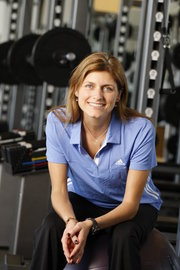
BSMPG is proud to announce Sue Falsone to speak at Northeastern Univeristy on Sept. 22nd from 12-2 pm.  


Sue Falsone


In this lecture and lab, Sue will talk about the inter-connection of
the neck, upper back and shoulders and how these three areas are
dependent on each other. She will discuss anatomic and kinetic
connections, breathing and mobility issues as well as stability
needs. She will explore how upper quarter dysfunction is truly a
comprehensive integrated problem needing comprehensive integrated
solutions. You will leave this lecture with an improved understanding
of how the upper quarter segments relate to each other and you
will leave lab with integrated solutions you can implement Monday
morning with your clients.


Speaker: Sue Falsone

Topic: Cervicothoracic Junction: How the Head, Neck and Shoulders Inter-relate

When: Septemeber 22, 2011

Time: 12:00 noon - 2:00 pm

Cost: There is not cost associated with this program. In lieu of a program fee, attendees are encouraged to donate to InnerCity Weightlifting.

Location: THERE HAS BEEN A CHANGE IN VENUE - This lecture will now be held in the Matthew's Arena - Varsity Club, on the campus of Northeastern University.

Continuing Education: 2 hours of continuing education is awarded for this event for both Certified Athletic Trainers and Strength & Conditioning professionals.

Continuing Education: The Boston Sports Medicine and Performance Group is recognized by the Board of Certification, Inc. to offer 2 hours of continuing education for Certified Athletic Trainers. Provider Number P8108.

athletic training resources


Contact Information:  For additional details please contact us at bostonsmpg@gmail.com. 

Listen to Sue on SportExpertRehab.com by clicking HERE.   


Additional Information on InnerCity Weightlifting

inner city weightlifting


The mission of InnerCity Weightlifting is to reduce violence and promote professional, personal and academic achievement among urban youth. We serve young people on a direct path to gang involvement, former and active gang members, and young victims of domestic abuse through the sport of Olympic Lifting. We work to empower young people with the confidence to say no to violence and yes to opportunity.  We provide our students with career opportunities working for InnerCity Weightlifting and in the field of personal training. We provide frequent adult mentorship, and academic support. Counseling services are offered through several of our partnering organizations. The training not only assists sport performance, but also increases confidence, motivation, and may increase learning skills through cognitive development.

These students want to become bigger, stronger, and faster. They want to participate in weightlifting. The sport, coaches, and training atmosphere, however, facilitate positive change. As a student attempts to set a new personal record (PR) for weight lifted, everyone stops and watches. The lifters help 'pump up' the student's morale and something unexpected happens: children, who have been given limited support outside of a gang, are now encouraging each other. They bond and a team is formed. They gain the confidence needed to succeed despite the odds.

Read this Blog by Sarah Cahill, Strength & Conditioning Coach at Northeastern University, on her experiences volunteering at Inner City Weightling

Interested in supporting Inner City Weightlifting or volunteering your time? Contact Sarah Cahill at s.cahill@neu.edu.

Topics: basketball conference, athletic training conference, Sue Falsone, barefoot strength training, Barefoot in Boston

BSMPG Summer Seminar DVD's Now Available!

Posted by Boston Sports Medicine and Performance Group on Thu, Sep 15, 2011 @ 07:09 AM

Missed this summer's BSMPG summer seminar?

No Problem - We captured three groundbreaking presentations from this once in a lifetime seminar.  Catch three of these Giants in action as they presented at the 2011 "Standing On The Shoulders Of Giants" Summer Seminar.

This conference was held in Boston, MA on June 3rd and 4th, 2011

Included: 3 DVDs with over 4.5 hours of Sports Medicine and Rehabilitation Information

Presentations by: Clare Frank - Muscle Balance and Stability, Tom Myers - Anatomy Trains and Myofascial Fitness and Charlie Weingroff - Trying to Define the Core.

clare frank Tom Myers Charlie Weingroff

Click HERE for complete details.

Topics: basketball resources, athletic training conference, boston hockey summit, athletic training, Charlie Weingroff, boston hockey conference, Tom Myers, athletic training books, Clare Frank

Integrated Care - Part IV : Addressing & Correcting Hip Extension Problems

Posted by Boston Sports Medicine and Performance Group on Mon, Sep 12, 2011 @ 07:09 AM

by Art Horne


As we mentioned last week, our society has clearly become hip flexion dominant. 

This is really no surprised as Janda identified this “epidemic” long ago and termed it, the Lower Crossed Syndrome.  Clearly ahead of his time, and well before Blackberrys and IPhones caused us to hunch over and run into people on the sidewalk, Janda also described and discussed the upper crossed syndrome which is more prevalent today than ever as well.  With that said, so many of the young “healthy” athletes that sign up to play collegiate level athletics no longer are able to express the fundamental movement patterns that we so often take for granted.  This of course is not always a mobility problem, as many athletes are not able to reach end range of these patterns simply out of a reflexive protective mechanism.
 

sports medicine resources


Your body will simply not allow you to go where you have no business going.  (Ever wonder why LBP patients can’t touch their toes? Hint: it has nothing to do with hamstring length and everything with your brain not letting you get to end range flexion, you know, the place you have no business going)
In other cases, mobility is the main culprit and can usually be addressed with a simple movement exam along with some corrective therapy and exercises. 


Let’s take a look at an example to see what I mean.

Case Presentation:

This athlete presented to me many years ago, and unfortunately the overall theme continues year after year despite our best efforts to educate our athletes and their high school and youth coaches.

Here’s the story:

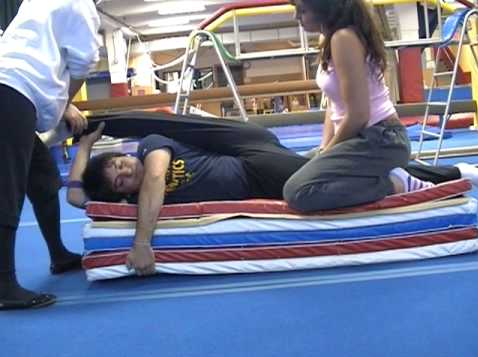
On evaluation athlete complains of having a persistent anterior hip pain from day one of pre-season practice.  She states that she had a “significant” hip injury at age 13 which lasted about one year and limited her from all sporting activities including gymnastics where she originally hurt herself during a coach “assisted” stretch.  At the time of the stretch, the athlete’s injured leg was down and extended behind her pelvis, with knee at 90 degrees and the opposite limb forced into extreme flexion.  At that time she felt intense pain and was not able to return to any physical activities for about one year. 

She went on to a successful high school career and eventually earned a college scholarship for her efforts.
 

sports medicine

(not the same stretch - but close. OUCH!) 
 

movement screen


On movement evaluation utilizing the SFMA, cervical and shoulder motions were FN (functional and non-painful), multi-segmental flexion FN, multi-segmental extension FP (functional but painful), multi-segmental rotation DN (dysfunction and non-painful) away from the injured side, single leg stance was DP on injured side, FN on uninjured side (NOTE: during this test athlete complained of pain with standing hip flexion.  She was however able to get her knee/femur past 90 degrees of hip flexion but had to first abduct her leg then lift it in front – so to basically avoid iliacus involvement and use only psoas with some help from TFL and Sartorius). Lastly,  deep squat was DN. 


(Now, according to the SFMA I should have “broke out” her multi-segmental rotation pattern and addressed her subsequent restriction but given her prior history and description of pain I decided to go directly to the prone hip extension test to confirm my suspicion that she had originally injured her iliacus some 5 years ago.)

On prone hip extension, athlete was unable to extend her injured leg to a minimum of 10 degrees.

Treatment Plan: evaluate and address tissue density changes and restrictions within the hip flexion musculature including both psoas and iliacus specifically.


If you aren’t familiar with manual therapy techniques to address soft tissue restriction within the iliacus consult a co-worker or expert in your area for help or training (If you’re in the Boston area one of the most talent manual therapist I’ve ever had the pleasure working with is Dr. Pete Viteritti.


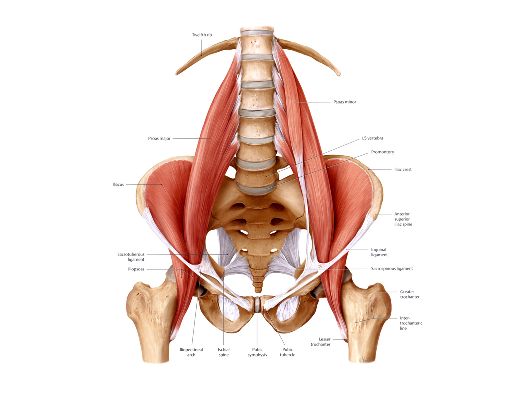
Below are a few key technical points regarding treatment of the Iliacus utilizing a manual therapy release technique.  Remember: the iliacus is to hip dysfunction as the psoas is to lumbar dysfunction.
sports medicine


1. Begin with the patient lying on their side, hip and knee flexed and relaxed.

2. With the contact fingers extended, work the soft contact from the anterior superior iliac spine (above the inguinal ligament) medically onto the iliacus treating from proximal all the way distal to the lesser trochanter.  The adhesion can be anywhere in the muscle.  Also, be sure to move your hand contact treating medially until you bump into the psoas.  The junction of the iliacus and psoas is very important, be sure they are not adhering to one another. (adhesion's between muscles which cause them to adhere to one another is much more of a problem than an adhesion in a muscle itself).

3.The inguinal ligament should also be checked to be sure you can bow it both distal and proximal, as it can adhere to the iliacus underneath it.  Find the inguinal ligament at the ASIS and trace it as it moves medially and deep.  It is only the lateral aspect of it that comes in contact with the iliacus and can become entrapped.

4. As you begin, be sure to move the mesentary medially and not treat through it.  Use care to avoid putting tension on the mesentary as this will not only cause discomfort to the patient, but will significantly limit treatment effectiveness.

5. Once on the tissue, begin to put tension on the tissue superiorly with your inferior hand while the superior hand backs it up.

6. Have the patient extend the hip and knee straight and then extend the hip as far as possible.

Post treatment: Athlete was able to regain full prone hip extension, pain resolved with both single leg stance (athlete was able to lift knee/leg straight up in sagittal plane) and multi-segmental extension pattern.  Deep squat pattern improved significantly but was not yet perfect.  And most impressive post treatment was the look of shock and excitement on her face.

Whether you’re dealing with a shortened iliacus, a tight psoas major or a restricted rectus femoris (or perhaps even a shortened rectus abdominis thanks to the 2 million crunches you’d done), identifying the global limitation first (an extension pattern in this case), and then referring to an expert or addressing the underlying tissue restricting this pattern yourself before high levels of organized activity begins can mean the difference between weeks of treatment post injury or a few moments of your time prior, during your screening process.  Of course identifying the exact limiting factor/tissue/pain generator is the ultimate factor when it comes to whether your treatment will be a success or not.

“So what does this have to do with integrated care?  This sounds like a pure sports medicine problem and treatment approach to me.”

Perhaps – but all strength coaches can look at global movement patterns including extension and make the appropriate referrals.  Whether it’s during your pre-participation examination or during a simple recheck in the weight room – having all coaches, athletic trainers and therapists understanding the normal parameters of human movement and speaking the same language eliminates the language barrier and allows all parties involved in the care and performance of the student-athlete to be provide a unified care approach to the identified problem.  Although many strength coaches won’t be able to apply a manual therapy technique for this identified problem, appropriate strategies within the weight room can certainly maintain this new tissue quality and “cement” this new found range of motion with strength exercises appropriate for the athlete and previous injury.

Although the skill set or specific treatment modality between the two professional groups my vary slightly, the underlying philosophy should not and in this case addressing this extension limitation with whatever tools you are allowed to use will certainly pay dividends at the end of the day.


Next Week: When Not Being Able To Touch Your Toes Is Not A Hamstring Issue



Topics: Art Horne, basketball training programs, athletic training conference, basketball videos, Pete Viteritti, athletic training books, barefoot strength training, barefoot running

Upper Extremity Surgical & Non-Surgical Treatment and Rehabilitation Seminar

Posted by Boston Sports Medicine and Performance Group on Sun, Sep 11, 2011 @ 15:09 PM


Windham Hospital presents, Upper Extremity Surgical and Non-Surgical Treatment and Rehabilitation Seminar upcoming on Saturday Oct. 1st, 2011.

Date: Oct. 1st, 2011

Location: Willimantic, CT

Continuing Education: 5 CEU's for Athletic Trainers

See ATTACHED for complete details.

Art Horne Interviews with Joe Heiler on SportsRehabExpert.com

Posted by Boston Sports Medicine and Performance Group on Wed, Sep 7, 2011 @ 07:09 AM


sportsrehabexpert


Click HERE to listen to this interview.

In this interview, Art discusses his new book, "Barefoot in Boston: A Practical Guide to Achieving Injury Resolution and Enhancing Performance", as well as discussing some research on barefoot walking and training versus wearing shoes, what to look for in minimalist shoes, how he has incorporated barefoot training with his basketball team, and much more..(including how to take a hack saw to a basketball shoe!)

Topics: Basketball Related, Art Horne, BSMPG, functional movement screen, boston marathon, foot pain, foot fracture, barefoot strength training, Barefoot in Boston, achilles pain, barefoot running, barefoot training

Integrated Care - Part III: Breaking Down Extension Based Problems

Posted by Boston Sports Medicine and Performance Group on Mon, Sep 5, 2011 @ 07:09 AM

by Art Horne


Although identifying a poorly executed squat is easy for many sports medicine and strength professionals (especially given the “rules” and guidelines set forth by the FMS standards), identifying the actual underlying problem or major contributor to a deficit squat is never as easy.  However, with a systems based approach during your annual pre-participation screenings your team of health care and performance professionals can tease out these often overlooked deficiencies as part of your movement screen from the very beginning instead of reacting after future injury or poor performance.

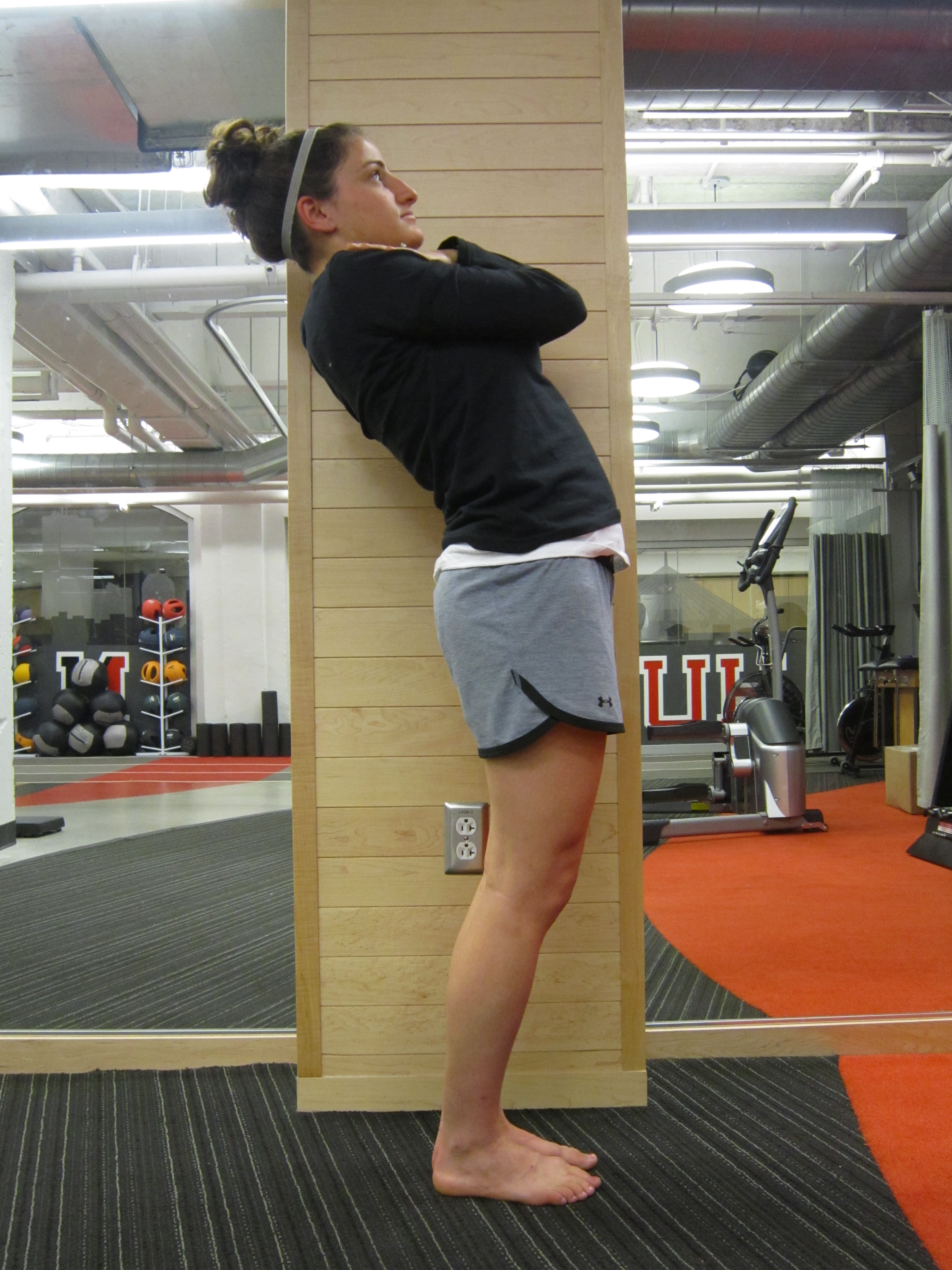
As I mentioned in a prior post the ability to express a proper squat pattern is fundamental to human movement.  Included in this category of fundamental “expressions” is the overhead reach, or what is commonly known through the Selective Functional Movement Screen TM (SFMA) as the Multi-segmental Extension Pattern (MSE) pictured below (figure1).  This easy test that takes literally 10 seconds can produce some startling results when athletes and those observing them, witness an otherwise “healthy”  and  highly skilled athlete in the prime of their life unable to reach behind them while shifting their weight and hips forward. 


functional movement screen

figure 1.


Let’s break it down.


According to the SFMATM rules, or simple human movement fundamentals, normal range of motion during this test includes:

1. With heels together (this is important and often overlooked as it provides a test-retest standardization) an athlete or patient should be able to have their ASIS pass over their great toes while;

2. Reaching overhead with hands in line with their shoulders and have the spine of their scapula clear or pass behind the heels of their feet and;

3. Their hands clear or pass behind the spine of the scapula (Figure 2).


functional movement

figure 2.


These movement minimums allow clinicians and performance coaches a starting point to begin observing their athletes for general restrictions within this pattern.  If an athlete is unable to complete this movement (failure to pass the ASIS over the great toe) then the athlete is asked to cross their arms over their chest and repeat the movement.  If the athlete is unable to still exhibit this fundamental expression of extension then the athlete in my opinion should be referred to a staff athletic trainer for further evaluation with the underlying problem is identified and addressed.  Many times the athlete will not understand why they are being referred since they have never had a “problem” before, but after a quick evaluation and treatment you’ll often find their eyes beam wide open with the additional range and freedom of motion that you’ve given back to them.

To confirm your findings on the examination table (although authentic human movement rarely ever happens on an exam table. Side note: How come you can measure with a goniometer an athlete’s ankle, knee and hip range of motion on an examination table and determine that they have the requisite mobility to perform a normal and unrestricted squat pattern but when you stand them up, the pattern looks like a train wreck? Movement means so much more than just your standard orthopedic examinations), have the athlete lay prone and ask them to tighten up one butt check and extend their leg off the table.  Repeat with the opposite leg and compare.  Rarely will an athlete be able to exhibit the appropriate amount of hip extension during this prone table test and not be able to pass their ASIS over their toes during the standing evaluation with arms crossed over head.

So what’s next? How do I fix it?

Not so fast.  I think it’s worth mentioning here a few items that support adding this simple test into both your yearly screenings along with your general orthopedic examination (regardless of injury presentation).  First off, I have been utilizing the FMSTM screen for a very long time as a strength coach, and over the last year have been utilizing the SFMATM methodology during injury presentation in the clinic and the overwhelming end result to many movement dysfunction and injury/pain cases have always boiled down to two movement impairments – Shoulder Mobility (Which in the end really is T-Spine Mobility) and Hip Extension.  The FMSTM  includes a test called the Active Straight Leg Raise, and this test unfortunately has been deemed a “hamstring” flexibility test or a hip flexion test by most casual observers but this couldn’t be further from the truth or the original intent of the test (future post coming: Are your hamstrings tight or are they just not letting you go somewhere you have no business being?).

For those that are not familiar with the test, an athlete lays on their back with a 2x6 board under their knees and while keeping the bottom leg in contact with the board slowly raises an extended leg upwards exhibiting the DIFFERENCE and available motion between the two legs and NOT the amount of hamstring or hip flexion range that you have.  It is this DIFFERENCE that should be noted, which ultimately leads to an examination and treatment focus of the down-leg in most instances as I mentioned earlier as the limiting factor (hip extension).

This should really come as no surprise since we have clearly become a hip flexion dominant society (sitting at computers, video games, etc not to mention our affinity for sitting on bikes at the commercial gym and watching the TV screen instead of sprinting on an incline treadmill which of course requires a bit of hard work and the aforementioned hip extension) and have basically lost the ability to “express” hip extension.  Although strength coaches and sports medicine professionals alike advocate “stretching” this problematic area after injury I think it’s worth teasing out your future patients sooner than later with a simple test while they are healthy athletes and avoid their inevitable future visit to your sports medicine clinic as patients.


Next week: Addressing and Correcting this Hip Extension Problem from both sides of the wall.


Topics: basketball performance, basketball training programs, BSMPG, FMS, SFMA, functional movement screen, Barefoot in Boston