Boston Sports Medicine and Performance Group, LLC Blog

Sue Falsone and The Cervicothoracic Junction

Posted by Boston Sports Medicine and Performance Group on Sat, Sep 3, 2011 @ 11:09 AM

BSMPG Announces Sue Falsone & The Cervicothoracic Junction


BSMPG is proud to announce Sue Falsone to speak at Northeastern Univeristy on Sept. 22nd from 12-2 pm.  


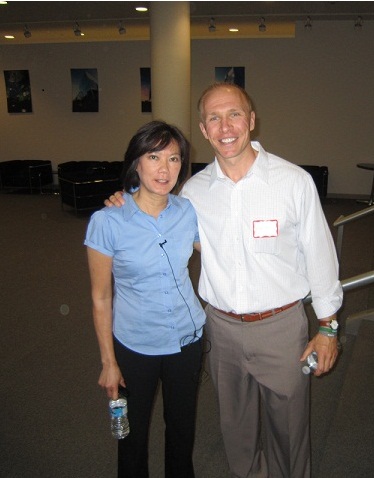
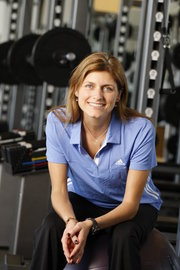
Sue Falsone


Speaker: Sue Falsone

Topic: Cervicothoracic Junction: How the Head, Neck and Shoulders Inter-relate

When: Septemeber 22, 2011

Time: 12:00 noon - 2:00 pm

Cost: There is not cost associated with this program. In lieu of a program fee, attendees are encouraged to donate to InnerCity Weightlifting.

Location: Newly Renovated Cabot Physical Education Building (see Map HERE).  Building #41, enter main doors of building across from Building #42.

Continuing Education: 2 hours of continuing education is awarded for this event for both Certified Athletic Trainers and Strength & Conditioning professionals.

Continuing Education: The Boston Sports Medicine and Performance Group is recognized by the Board of Certification, Inc. to offer 2 hours of continuing education for Certified Athletic Trainers. Provider Number P8108.

athletic training resources


Contact Information:  For additional details please contact us at bostonsmpg@gmail.com. 

Listen to Sue on SportExpertRehab.com by clicking HERE.   


Additional Information on InnerCity Weightlifting

inner city weightlifting


The mission of InnerCity Weightlifting is to reduce violence and promote professional, personal and academic achievement among urban youth. We serve young people on a direct path to gang involvement, former and active gang members, and young victims of domestic abuse through the sport of Olympic Lifting. We work to empower young people with the confidence to say no to violence and yes to opportunity.  We provide our students with career opportunities working for InnerCity Weightlifting and in the field of personal training. We provide frequent adult mentorship, and academic support. Counseling services are offered through several of our partnering organizations. The training not only assists sport performance, but also increases confidence, motivation, and may increase learning skills through cognitive development.

These students want to become bigger, stronger, and faster. They want to participate in weightlifting. The sport, coaches, and training atmosphere, however, facilitate positive change. As a student attempts to set a new personal record (PR) for weight lifted, everyone stops and watches. The lifters help 'pump up' the student's morale and something unexpected happens: children, who have been given limited support outside of a gang, are now encouraging each other. They bond and a team is formed. They gain the confidence needed to succeed despite the odds.

Read this Blog by Sarah Cahill, Strength & Conditioning Coach at Northeastern University, on her experiences volunteering at Inner City Weightling

Interested in supporting Inner City Weightlifting or volunteering your time? Contact Sarah Cahill at s.cahill@neu.edu.


Topics: Basketball Related, BSMPG, athletic training conference, athletic training, Sue Falsone, innercity weightlifting

Children's Hospital Boston Presents: Tackling Concussions Head On

Posted by Boston Sports Medicine and Performance Group on Fri, Sep 2, 2011 @ 07:09 AM


Children's Hospital Boston


Join Mark R. Proctor, MD, director of the Brain Injury Center, as he leads a dynamic discussion on concussions in pediatric patients during a live, interactive Webcast. A multidisciplinary team, including members of Neurology, Neurosurgery, Neuropsychology, Neuroradiology and Sports Medicine, will discuss the signs of mild and severe concussions, on-field symptom management, the psychological toll of concussions, and best practices for treatment and follow-up.

This event will be streamed live on September 12th at 6:00pm. Click HERE for complete details.


Topics: BSMPG, concussion management, concussion, Barefoot in Boston, children's hospital boston

Integrated Care - Assessment and Intervention

Posted by Boston Sports Medicine and Performance Group on Mon, Aug 29, 2011 @ 07:08 AM

by Art Horne


At the college level many times both assessment and intervention decisions are made based on time availability and simple manpower, and not on what the student-athlete requires for optimal health and performance.  Juggling study hall, practice, classes along with rehabilitation and performance training leaves little time for “additional” work for either the student-athlete or the staff professional in charge to provide additional auxiliary services in the form of corrective work, soft tissue manipulation or additional strength training.  With that said, this extra “work” is often neglected or pushed aside until either the student-athlete is no longer able to participate in practices or games due to an injury or becomes crippled due to some form of debilitating pain.  In either case, unfortunately the student-athlete has now become a student-athlete-patient within your facility and the little time you had to address her problem prior (which of course is why it wasn’t taken care of in the first place, or even looked at – ignorance is bliss after all) has now become a major investment and drain on your time and services. 

In order to avoid the initial trap that so many sports medicine and performance departments fall into each fall it is paramount that both departments (Sports Medicine and Strength Training) first reach an agreement to implement a comprehensive screening program TOGETHER to tease out dysfunction, evaluate for painful movement patterns and address these minor “tweaks” before they become major pains.


athletic training


Where to start:


It’s hard to rank which movement pattern is more important over another as each of the “Big Three” (squat, lunge and step) are all integrated and hold value within the context of all sporting events and training.  However, the only pattern among the three that is universally tested among college athletes and Strength Coaches is the squat, and thus, at least with regards to an integrated approach takes precedent over the others if having to choose only one.  Administering the test takes under a minute and produces so much more than just a number via the traditional FMS scoring system.


1. There’s something powerful about having members of both your sports medicine and strength staffs stand beside each other while evaluating a student-athletes overhead squat pattern during a fall pre-participation examination.  Because the strength coaches typically tests each athlete’s squat either later the same day or the next, this “pre-screening” allows strength coaches to see the movement pattern in an authentic form, not to mention in a rare one-on-one format which is never the case in a collegiate weight room due to traditional low coach to student ratios. 

2. When an athlete scores a “1” which means they cannot achieve a proper squat, it’s always nice to see the strength coach cross the name off the list of kids to max test later that day.  If you cannot squat to at least a “2” in the FMS overhead squat test then you simply haven’t qualified to load the pattern and go balls to the wall during testing – PERIOD.  This will sometimes be an issue among sports medicine professionals and strength coaches if the athletic trainer simply tells the strength coach that the athlete shouldn’t squat; but this is never a problem when the strength coach sees for themselves the awful pattern that the student-athlete exhibits.  The strength staff must be involved in your yearly pre-participation screenings to ensure buy in from all those involved in the care and performance of the student-athletes.  Remember: squatting is not a weight room exercise, it’s an expression of health, and allowing a student-athlete to max test a pattern that they cannot perform with their own body weight is simply irresponsible – PERIOD.

3. So, with that said, what do you do with the kid that scores a “1” on the FMS overhead squat test? As we discussed prior, time is of the essence and thus the underlying deficiency needs to be “teased out” and an appropriate intervention applied.  Both the FMS and The Selective Functional Movement Screen (SFMA) allows the clinician and/or strength coach an easy algorithm to follow with suggestions for corrective  work once the underlying deficiency is discovered.  Often times it’s the usual mobility suspects – t-spine, hips and ankle but just as often, these mobility issues requires a skilled clinician’s assessment and intervention.  On the flip side, in the case of a neuromuscular-stability issue a Goblet squat progression can be implemented by a strength coach during a training time in place of the squat, to begin coaching them back towards their end goal of a “3” or at least a “2” prior to max testing. (more on Goblet squat progression in a future post)

4. For all those athletes that score a “0” during the test – which means they experience pain, a comprehensive follow up evaluation is scheduled either later that day or within the week by a skilled clinician, (most likely a member of your Sports Medicine Staff) to determine the pain generator along with a rehabilitation plan to properly address.  So many times athletes will state that they have no pain on intake but then suddenly realize that during a simple movement that pain is actually present.  I’ve never had an athlete experience pain during a simple movement test (“It’s not a big deal, I just put ice on it after I train”) not miss time during preseason due to this pain or another greater underlying problem.


Now, some would say that when evaluating the overhead squat pattern utilizing the FMS scoring criteria that we basically all fall in as a “2” and that only a very few athletes score a “1” or a “3” and therefore  the test may be a waste of time.  Although it is true that the majority of athletes that I’ve evaluated using this methodology score a “2”, the means certainly justify the end, especially when you’ve i. discovered pain in this simple pattern and were able to treat it immediately and ii. Discovered a poor movement pattern and provided corrections which over time allowed the athlete to squat normally (which always makes the strength guys happy) but most importantly allows the athlete to achieve success in their individual sport – the reason they showed up in August for pre-season in the first place.  In the end, the OH squat test really only takes a minute but the effects of this evaluation and correction last throughout their college career.


Next week we will talk about evaluating the Multi-segmental Extension Pattern and what to do when you find a problem.

Topics: Art Horne, basketball performance, BSMPG, athletic training conference, FMS, SFMA, integrated care, Barefoot in Boston, barefoot training

Clare Frank Announces Educational Programs For 2012

Posted by Boston Sports Medicine and Performance Group on Fri, Aug 26, 2011 @ 08:08 AM

Speaker at this past summer's, "Standing On The Shoulders Of Giants" Seminar, Clare Frank continues to educate the nations top sports medicine and rehabilitation clinicians in her upcoming 2012 speaking engagements.

See Clare's 2012 Speaking dates below.

Asuza - 2012 DNS Course

Janda Approach - Arcadia 2012


clare frank

Topics: basketball performance, basketball resources, basketball training programs, BSMPG, athletic training conference, Clare Frank

Self Directed Effort Is The Best Kind by Seth Godin

Posted by Boston Sports Medicine and Performance Group on Wed, Aug 24, 2011 @ 07:08 AM

Self directed effort is the best kind

How much are you paying for a drill sergeant?

Perhaps you can burn 500 calories on the treadmill before you give up for the day. With a personal coach, though, you could do 700. The trainer gets you to exert more effort.

You wake up on a Monday morning after a long hard weekend of misbehaving. You have a splitting headache. You can easily call in sick, no one will freak out. But then you remember that there's a $500 bonus at stake if you keep your attendance perfect. You make the effort because someone else is bribing you.

On the playground, it's tempting to rip into a kid who stole the swing from you. You're about to whack him, but then you see your mom watching. With a great deal of effort, you walk away.

Effort's ephemeral, hard to measure and incredibly difficult to deliver on a regular basis. So we hire a trainer or a coach or a boss and give up our freedom and our upside for someone to whip us into shape. Obviously, you give up part of what you create to the trainer/coach/boss in exchange for their oversight.

Has it become a crutch? Are you addicted to a taskmaster, to someone else's to do list, to short term external rewards that sell your long-term plans short? If no one is watching, are you helpless, just a web surfing, time wasting couch potato? Who owns the extra work you do now that you're being directed?

There's an entire system organized around the idea that we're too weak to deliver effort without external rewards and punishment. If you only grow on demand, you're selling yourself short. If you're only as good as your current boss/trainer/sergeant, you've given over the most important thing you have to someone else.

The thing I care the most about: what do you do when no one is looking, what do you make when it's not an immediate part of your job... how many push ups do you do, just because you can?


Integrated Care - Part I: The Language Barrier

Posted by Boston Sports Medicine and Performance Group on Mon, Aug 22, 2011 @ 07:08 AM

by Art Horne


Over the past several years I have made the integration of Sports Medicine care and Strength Training a core principle within our department.  This is relatively a new concept as strength coaches and sports medicine professionals have often been pitted against each other by sport coaches, athletes and often themselves.  Although this new path to better health and performance is clearly thwart with challenges, there are some simple steps that both departments can make that immediately impacts BOTH the health and performance of the student-athlete and leaves both professionals looking better in the eyes of all those around them.  Below is a question from a colleague that I wanted to share publicly.  In order to answer his question, as well as many others, it is my intention over the next few months to describe and share with you the many small steps that any college or university can implement in order to provide an improved care and performance model.

Question:

I would like to start out by saying that I really enjoy watching the videos and articles that you have released in reference to the approach you use at Northeastern University to bridge the gap between strength and conditioning and sports medicine. I am a strength and conditioning coach for a small Div. I college and also have a background in athletic training. I wanted to see if you could provide more insight as to how you take the results from the screening and testing that you do and then implement them into your programming. We screen our athletes, which consist of the FMS and a couple more orthopedic screens that we feel are applicable to the particular sport (Modified Thomas Test, Bridge w/ Leg Extension, Reach/Roll/Lift, etc….). How would you then use the results in the development of your program? Do you give each athlete individual work or do you use a systematic team approach addressing common faults or dysfunctions? I am torn as to what to do because as I am sure you are familiar with, time I have to spend with athletes is limited and getting them to comply with performing certain exercises on their own time can be very difficult at times. Any advice or examples that you could provide would be very beneficial. Thanks in advance for your time.


The Language Barrier:

birddog


The first step in any “relationship” is being able to understand what the other person is saying, and there is no greater communication gap in existence than the one that currently exists between Sport Medicine and Strength Training professionals.  In order to discuss dysfunctional movement patterns, corrective exercises, rehabilitation goals or substitutions/alternatives for strength exercises both parties must share a common language and then demand continuity with these terms.

I remember many years ago speaking to one of our staff members about a particular athlete and suggesting that she speak to the strength staff about an alternative exercise for an athlete who was suffering from some low back pain.  When asked what I recommended I immediately suggested a more spine sparing approach to her current “core strengthening” exercises and that we recommend McGill’s “Birddog” exercise which has been proven to be safer on the spine than the flexion based crunches the athlete was accustomed to in the weight room.  Not knowing what a “Birddog” exercise was, I quickly demonstrated the exercise to my co-worker at which time she smiled and said that she was familiar with the exercise but learned it as a kneeling opposite arm-leg reach.   Confused, (since McGill made the exercise famous as part of his “Big Three”) I asked another staff member what the exercise was that I was performing to which he replied, “a quadruped contralateral reach.”  Now slightly irritated (but happy that the name at least described the movement), I bolted over to the strength room to inquire about their knowledge of Stuart McGill, his research and what they called this particular exercise.  To my surprise McGill’s work had never been heard of and that this particular exercise was programmed as a “Flying Superman” within the student-athletes performance training.  It became painfully clear that the first order of business was getting both staffs to speak the same language, both within each department and across them. 

Because most of the members on your staff (both Sports Medicine and Strength) have come from a variety of educational backgrounds, continuing education courses and levels of expertise, it is important to begin formulating a shared exercise and assessment language in order for civil conversations to first take place.  By investing only a small amount of time and addressing this often overlooked, yet integral first step your staff will begin to enjoy the following benefits:

1. Provide improved services to your student-athletes.  Imagine the previous example taking place and a student-athlete approaching you for help with their kneeling opposite arm-leg reaches.  Now, the name basically tells you exactly what is needed, but imagine you knowing the exercise as a different name and perhaps emphasizing a different teaching point altogether.  Would you teach the athlete how to do the exercise “your” way? Find the athletic trainer who wrote the rehabilitation program to help them out? Or tell them that you’re sorry but you don’t know what they should be doing?  In any case precious time is wasted and as a fellow athletic trainer, this is something none of us has enough of.  In addition, you can imagine the frustration of the student-athlete witnessing your staff stumble through the most basic exercise descriptions!

2. A shared language allows staff members to be interchangeable because now each staff member is calling the same exercise the same name and teaching it while emphasising the same teaching points.  This allows athletic trainers to jump in and help with all rehabilitation programs, and not just “their own teams” as well as provide continued care during an athletic trainer’s absence (sick day, vacation or travel with another team).

3. Continued care and coaching along the performance continuum.   Here’s where the magic happens: whether the athlete your provide care for is one week into their ACL rehabilitation or the starting point guard for the basketball team pushing 300 pounds in the squat rack, the exercises if named the same, taught the same and progressed the same all fall along the same care-performance continuum.    Let’s examine the above example to really understand the power of the shared language.  Imagine on the far left hand side the student-athlete one week post-op ACL reconstruction and on the far right side the starting point guard pushing serious weight and performing at the highest level.  Moving along the continuum from left to right the athlete will experience and undergo exercises such as: Quad Sets, Straight leg Raises, Clams, Glute-Bridges, Mini-Band walks, Wall Squats, Body weight squats, Lunges, Box Jumps, and the list goes on.  At some time this athlete will be in the weight room and not be able to perform the Olympic lift for example programmed for the team that day but can certainly do pull-ups, side bridges and a number of other exercises that the strength coach has put in place during any particular phase or block of training.  If a shared language exists, the athletic trainer and the strength coach can have a civil and meaningful conversation about where the athlete is and discuss and implement substitutions for exercises that are not appropriate for them all while progressing the athlete safely along this care-performance line.  Not to mention, many of the rehabilitation exercises can be implemented safely within strength training program as substitutions for advanced exercises thus minimizing the athlete’s daily rehabilitation time and allowing the athletic trainer who is providing care for this athlete more time to focus on other athletes or say for example address soft tissue restrictions with the same athlete during “rehab” time which often requires a one-on-one time period, thus making their strength training time much more effective.

Now, some people may say that a couple of exercise names or switching names from time to time is really not a big deal.  Perhaps not.  If you only care for one team, perform all the rehabilitation by yourself and no other staff member helps you, then you can certainly come up with your own language.  But imagine for a moment a car factory where all the parts are all called different names, put on in different orders and actually assembled with various degrees of precision.  Would you ever buy a car from a factory like this?  The answer is a resounding no - so how can we expect our student-athletes to buy in to what we are saying if each staff member is saying something different?  By having an Exercise Pool to draw consistent language from, the number of benefits far outweigh any possible downside while also reducing the amount of confusion among your own staff and encouraging an atmosphere of shared help and patient responsibility. 

Next week: How a shared language during initial assessment can limit overall injury rate and increase performance immediately.

Topics: Art Horne, basketball performance, basketball training programs, BSMPG, athletic training conference, Barefoot in Boston, barefoot running, barefoot training

The Emperor Has New Clothes by Craig Liebenson

Posted by Boston Sports Medicine and Performance Group on Fri, Aug 19, 2011 @ 21:08 PM

Who hasn’t heard one of these refrains “I brought my MRIs”; “I have a herniated disc so I can’t exercise”; “Don’t I need an MRI?” Educating patients about the importance of finding the painless dysfunction (Cook 2 or 3 score) is one of the cornerstones of modern management of musculoskeletal pain (MSP). Karel Lewit called it the “Functional Pathology of the Motor System”. Stuart McGill trumpets the need to make a “functional diagnosis”.  Our job as rehab & athletic development specialists is to help our patients/athletes to re-conceptualize their problem through a functional lens. This will open the door to a patient-centered goal driven approach powered by self-care methods that restore function. A win-win!


Click HERE to continuing reading Craig's latest blog post.

Topics: Basketball Related, Craig Liebenson

What The Giants Are Reading - Jim Snider

Posted by Boston Sports Medicine and Performance Group on Wed, Aug 17, 2011 @ 07:08 AM

We asked what the Giants in Sports Medicine & Rehabilitation, Basketball and Hockey performance training have read or are currently reading and we brought their list to you.  

Click HERE to view our recommended library with an ongoing list from these speakers who presented at the BSMPG "Standing On The Shoulders Of Giants" 2011 summer seminar.

jim snider


Topics: BSMPG, athletic training conference, boston hockey conference, Jim Snider

Barefoot in Boston now available on Amazon.com - Get your copy now!

Posted by Boston Sports Medicine and Performance Group on Mon, Aug 15, 2011 @ 07:08 AM

barefeet


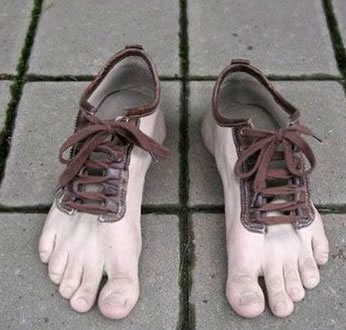
Fashion apparently has greater influence than reason                 

Take a look at your own foot and specifically the space between the toes. Do any of them overlap?  If you examine the feet of barefoot people, one universal characteristic that holds true among them is the very large space between the first and second toe.  As Hoffman clearly points out, the toes of the barefoot people are in direct line with their metatarsals which of course would mean that our foot should look a lot like a triangle (with the apex being the heel and the base of the triangle created by the line drawn from the first phalanx to the fifth).  It is exactly at this juncture that modern shoes are made the narrowest, obviously created from our narrow sense of fashion.

Read more from Barefoot in Boston by ordering your copy from Amazon.com today!

Biorheology : A Missing Link

Posted by Boston Sports Medicine and Performance Group on Thu, Aug 11, 2011 @ 07:08 AM

by: Keke Lyles, DPT, CSCS


athletic training


Okay, so I can understand as a strength coach not learning about Biorheology, but getting my doctorate in physical therapy, I would have thought for sure this would have been learned somewhere along the way. So what is it? Biorheology is the study of the flow and deformation of biological materials.  As most athletic trainers or physical therapy students we had to take some form of physics. We all learned about Newton’s and Hooke’s laws and hopefully something about how air and water play a role within those laws. And more importantly we hopefully learned how it is connected to the human body. The human body is an engineering masterpiece, so of course we can learn a lot from physics and apply it to our assessments and daily treatments. But we can’t learn everything from Newton and Hooke.

The body is not merely air and water. It is made up of blood, plasma, interstitial fluid, synovial fluids, skin, tendons, muscles, vessels and etc. And these bodily materials do not behave the same as typical materials. So in order to become engineers of the body we need to read and learn more about Biorheology, so as care providers we can actually understand the demands placed on the tissues that we are working on, and how exactly they handle the stresses placed upon them. Start with reading the Journal of Biorheology. Consider understanding physiological processes at a molecular level when treating your next patient.

Topics: basketball conference, basketball training programs, BSMPG, athletic training conference, conference video