Boston Sports Medicine and Performance Group, LLC Blog

Barefoot In Boston now available on Kindle

Posted by Boston Sports Medicine and Performance Group on Wed, Aug 10, 2011 @ 16:08 PM


barefoot in boston

You know those fancy, air-filled, arch-cushioned, expensive-as-hell sneakers that you buy to enhance your performance? Well, what if we told you they were most likely not only decreasing your performance, but increasing your likelihood of injury? You would probably call us crazy, but people thought Galileo was crazy once too.  Are we comparing ourselves to Galileo? No, great guy though.  What we are saying is that we are proponents of an idea which is growing in popularity and for some very good reasons.  Barefoot training has recently become popularized as a potential benefit in injury rehabilitation programs. It is also purported to serve as an additional means of injury prevention and to enhance athletic performance.  However, limited clinical research is currently available to justify this practice and even less information is available describing how one may go about safely implementing a barefoot training program.  This book explores the scientific and theoretical benefits concerning the merits of barefoot training and offers real life solutions and alternatives to all the things separating you and your feet from mother earth, including examples of specific programs and training progressions.  By the time you are through with this book, you will be part of the movement and your feet will be on their way to a happier, healthier version of their formerly miserable selves.


Topics: reduce injury risk, foot pain, foot fracture, barefoot strength training, Barefoot in Boston, achilles pain, barefoot running, barefoot training

Weeding The Garden

Posted by Boston Sports Medicine and Performance Group on Mon, Aug 8, 2011 @ 07:08 AM

athletic training


As your student-athletes return this fall I think it’s worth considering a concept that was introduced to me by my mother when I was a young boy.

When caring for plants or vegetables in your garden there is inherently an ongoing process from the time you plant the seed until the time of harvest.

Many outside people will only ever see the final fruits of your labor and not the countless man hours put forth prior to that final stage.  With any successful harvest, much effort has to be placed on the frontend including watering and fertilizing the plants, providing the plant with proper sunlight, protecting it from that first frost and other harsh weather and maybe most important - picking the weeds from around its base and providing it the opportunity to grow and develop.

In a similar scenario, in order to achieve elite athletic success, countless man hours must be put forth prior to actual competition to ensure that your athletes are able to grow and express their athletic ability when the lights come on. 

This of course means weeding the garden on a daily basis.

Many professionals who provide sports medicine care and strength training to collegiate athletes understand that water and fertilizer are of course necessary, but tending to the weeds is so often neglected, at least until it’s too late. 

When your athletes arrive this fall will you look at how they move – squat, toe touch, backwards bend – or will you wait until they have pain or injury to address their ankle dorsi-flexion, lumbar stability and psoas length and quality?

The challenge then is to find the time to take a look at your garden on a daily basis and provide the care and services that it so very much deserves.  In this case, and in the case of your garden at home, it is clear that you will only reap what you sew - and take care of.


Art Horne is the Director of Sports Performance at Northeastern University, Boston MA.  He can be reached at a.horne@neu.edu.

Topics: Art Horne, basketball resources, basketball training programs, BSMPG, athletic training conference

When Reading Is NOT Good

Posted by Boston Sports Medicine and Performance Group on Fri, Aug 5, 2011 @ 07:08 AM


by Keke Lyles, DPT, CSCS

I had a conversation with someone the other day who was telling me about how he has started to train with a guy who is currently in school with aspirations to become a strength coach. He was telling me about all the different books, websites, and articles that his guy has been reading. It is always refreshing to hear about any professional who is trying to do all they can to better themselves. He continued on to tell me how his guy started to use Graston tools on him to help with his soft tissue issues, and then shared with  me how he got all “jacked up” from the Graston. He had to seek medical help to deal with the consequences.


My question to all professionals is at what point is it okay to read about different techniques or skills and then decide you are capable of performing such skill? I don’t want to sound like a bitter physical therapist who doesn’t like the idea of strength coaches trying to expand their knowledge, but as a strength coach myself, we MUST operate within our scope of practice. Even as a physical therapist, I would not recommend anyone just picking up Graston tools or any other such tool without proper training and education beforehand. Yes, it is true that given impairments would greatly benefit from such techniques, but our job as strength coaches, physical therapist, or athletic trainers is sometimes to swallow our pride and refer our clients/athletes to the people who are experts and trained properly to use specialized techniques.

Many techniques are certainly beneficial but at the same time can be very destructive to the tissues that we think we are correcting. As a result, serious consequences may arise from practitioners who are trying to do the right thing, but without the proper skill set. I urge us all to continue to read and learn about the advancements we are making both in the strength world as well as in the rehab world. However, just because I read about how great some patients responded to PRP injection in their patella tendon, doesn’t mean I am going to try to perform injections myself to everyone that comes to me complaining of patella tendon pain.  That is not my decision to make and certainly not the person to perform it.

Be responsible with your actions and continue to read to learn about the current evidence-based practices so that when you come across someone who may benefit from such technique, you can do you part of informing them of the options and then refer them to the right person who is suitable to perform such technique.


Topics: basketball training programs, athletic training conference, boston hockey summit, boston hockey conference, athletic training books, everything basketball

Sorry, Store Policy

Posted by Boston Sports Medicine and Performance Group on Thu, Jul 28, 2011 @ 07:07 AM

athletic training


While taking a walk on vacation last summer with my fiancée, we stopped outside of a boutique when a dress caught her attention.  In town for a wedding the very next day along with a brisk change in weather, she decided that the dress in the window would work perfectly for the occasion.

Upon entering the store at 10:50 am we were quickly met by a sales person who promptly told us that they didn’t open until 11:00 am and that we’d have to wait outside until that time.

“But I’m going to buy that dress in the window – I just love it.  Can I just look?” She said.

“Sorry, You will have to wait outside - Store policy.”

And with those words the store door closed behind us while the three customer services reps inside read the paper, drank their espressos and chatted.  With the bitter taste of the rep’s reception fresh in my mouth we walked next door and dropped $200 on a similar dress.

What store policy doesn’t allow a customer to look at a product that they are obviously willing to purchase?

Would that policy have existed if the store owner was standing nearby?

It’s not that this store had a “policy” that didn’t allow customers inside until they were open that caused my blood pressure to rise, it was the fact that the customer service representative didn’t represent me, the customer.

So maybe you can’t open the cash register until 11, and maybe you really can’t allow anyone inside – but if you’re looking to make me a customer in the long run, you better at least sell me on the short term.

The challenge for many health care providers is that we too have policies that must be followed.  And maybe you aren’t able to care for the kid that walks in for treatment 10 minutes before you close, but knowing that there is a huge difference between telling them “sorry come back tomorrow” and “let me schedule you a time tomorrow where I can dedicate the time you deserve,” means the difference between that customer returning a day later and that same customer seeking services elsewhere.

Topics: Art Horne, basketball training programs, athletic training conference, barefoot running

Just Enough...

Posted by Boston Sports Medicine and Performance Group on Fri, Jul 22, 2011 @ 07:07 AM


Most people only work hard enough not to get fired, and most employers only pay their employees just enough so they don’t quit.

Unfortunately this goes for continuing education funding as well.

I recently attended that National Athletic Trainers Association Annual Meeting and Clinical Symposia only to be disappointed by the large number of attendees that either checked out early or only checked in to pick up their CEU’s then leave.  I understand that annual conventions also serve as an opportunity to blow off some steam and catch up with old friends, but if your “yearly quota” of continuing education units are picked up by the poolside then maybe the limited continuing education funding provided by your employer that seems to be “just enough” is really good enough for you?

But if you want to break this cycle of “just enough,” the first step is going to have to start with you doing more than enough.

More than enough is a much better way to approach your work day and if your employer doesn’t appreciate the extra effort, no worries - there are plenty out there that pay more than enough for employees that end up doing more than enough.


Art Horne is the Director of Sports Performance at Northeastern University, Boston MA.  He can be reached at a.horne@neu.edu.

Action Steps

Posted by Kate Gillette on Wed, Jul 20, 2011 @ 07:07 AM

athletic training


Do your actions steps match your goals?

Lots of people talk the talk, but few walk the walk.

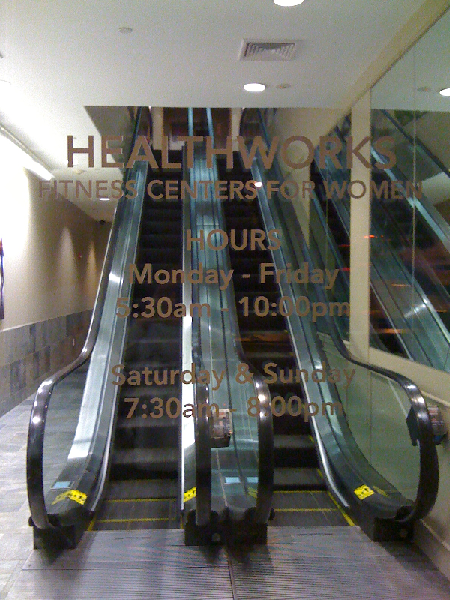
If you want to achieve your goals you’re going to have to understand that there is no escalator or elevator taking you to where you want to go.

Goals require walking the walk, plenty of hard work, and sweat.

Now get out there and take that first step.


Art Horne is the Director of Sports Performance at Northeastern University, Boston MA.  He can be reached at a.horne@neu.edu.

Topics: Art Horne, BSMPG, athletic training conference, evidence based medicine

Squatting - An Expression of Health

Posted by Boston Sports Medicine and Performance Group on Mon, Jul 18, 2011 @ 07:07 AM

at


I was recently working with a patient who had injured her hamstring previously and was preparing for her upcoming sport season but just couldn’t seem to get over the hump in terms of running without pain.  I asked to see her squat, (which raised her eyebrows – because what does squatting have to do with running right?) but she appeased my wishes anyways only to fall backwards on her initial try, and then grab a table on her second attempt in order to gain some stability.

“How do you go to the bathroom?” I asked her jokingly to ease her embarrassment.

“I just kinda fall back on to it like everyone else does.”

Needless to say our evaluation really started then (as did a long conversation about sitting, squatting and getting her butt in gear).

As health care professionals we have to stop thinking about squatting as a strength coach’s responsibility, a weight room exercise, or something that causes tall guys knee pain and therefore shouldn’t be done.

Squatting is a movement that we all need for everyday activity and one of the purist expressions of health.  If your patients can’t squat or can’t squat without pain then this MUST be addressed, and addressed just as closely as the primary reason they first presented to you.  To no one’s surprise this particular athlete had difficulty recruiting her glutes and therefore was utilizing her poor hamstrings as the primary mover instead – a recipe for hamstring strains and continued pain.

A closer look into how your patients move might just reveal that their troubling squat pattern is the underlying cause to the problem that brought them in to see you in the first place. 


Art Horne is the Director of Sports Performance at Northeastern University, Boston MA.  He can be reached at a.horne@neu.edu.

Topics: Art Horne, BSMPG, athletic training conference, evidence based medicine

What the Giants are Reading - Norman Murphy

Posted by Boston Sports Medicine and Performance Group on Fri, Jul 15, 2011 @ 06:07 AM

We asked what the Giants in Sports Medicine & Rehabilitation, Basketball and Hockey performance training have read or are currently reading and we brought their list to you.  

Click HERE to view our recommended library with an ongoing list from these speakers who presented at the BSMPG "Standing On The Shoulders Of Giants" 2011 summer seminar.

Norman Murphy

Norman Murphy


Topics: basketball conference, basketball training programs, athletic training conference, boston hockey summit

Perception Is Reality

Posted by Boston Sports Medicine and Performance Group on Wed, Jul 13, 2011 @ 07:07 AM

by Shaun Bossio 

A while back, I went out to lunch with an old friend that was in town and was introduced to his father-in-law. We started talking about social media and its prominence (necessity really) in today’s business environment. The father-in-law was a little nervous about getting involved in social media as he was not as tech savvy as most, so we did our best to explain the ins and outs and the benefits that he could expect vs. the precautions he had to make sure he took. His biggest apprehension though was that anybody could post negative remarks on his Facebook page for the world to see. He was concerned that unhappy clients would take it upon themselves to write up negative reviews and drive business down. I explained to him that they could of course control what was posted on his page, but also that negative comments can be seen on virtually any company’s website. If the volume of negative comments outweighs the positive ones then the real issue at hand is not their use of social media, but how they are perceived by their consumers.

Let’s just put it on the table; how your customer-base views your business is reality. No matter how great things may seem from the view of yourself or management, the customers are the ones that drive your business perception. In that manner of speaking, even negative feedback is good feedback in that it helps to alert you to issues that may have arisen within your organization. If a customer perceives an aspect of your business as not fully meeting their needs, then it only makes sense to examine that portion to see if things can be improved. Sure, in some instances it might be a case of a particularly picky client and they might only be a single voice among the crowd, but more often than not, feedback comes from a constructive place and helps you identify areas for improvement. The problem rests in seeing feedback, both positive and negative, as an excellent way to keep you customers in touch with your business. Not only does it help you pinpoint the weak points in your organization, but it also lets your clients know that you are genuinely interested in the job you are doing. Regular interaction and personal responses to customer concerns shows them that you are willing to go the extra mile to keep their business.

So first off, do not be afraid of social media. It is your friend and there to help you grow your business. Like any business tool though, you have to know how it works and be careful while you are using it. That being said, it can be a great help in soliciting feedback from your clients and also in attracting new ones. Sure, you may get some negative feedback, but it is a great opportunity to respond to those folks to let them know how their issues are being addressed. What better way is there to show current/future customers that you value their business? Despite what you may think, their perception is your reality. After all, your business may be the best in your field, but if your customers do not see it that way then you will not be the best for long.


Shaun Bossio is the Assistant Business Manager at the Boston University FitRec.

Topics: Guest Author, athletic training conference, Good to Great, discipline, customer service, Leadership

What the GIANTS are Reading - Brijesh Patel

Posted by Boston Sports Medicine and Performance Group on Mon, Jul 11, 2011 @ 07:07 AM

We asked what the Giants in Sports Medicine & Rehabilitation, Basketball and Hockey performance training have read or are currently reading and we brought their list to you.  

Click HERE to view our recommended library with an ongoing list from these speakers who presented at the BSMPG "Standing On The Shoulders Of Giants" 2011 summer seminar.

Brijesh Patel

Brijesh Patel


Topics: Basketball Related, basketball performance, basketball resources, athletic training conference, Brijesh Patel, athletic training books