Boston Sports Medicine and Performance Group, LLC Blog

Cookies and Customer Service

Posted by Boston Sports Medicine and Performance Group on Wed, Nov 10, 2010 @ 08:11 AM

basketball resources

My friend at a PT clinic told me a story of her co-worker who brings in cookies for the staff and patients every Monday morning – she’s the most popular person in the clinic each Monday,  even though she also has the lowest number of patients and the greatest number of requests for referrals to other PT’s within the clinic.  Her customer service just doesn’t match her ability to make cookies and when you’re dealing with patients who have a frozen shoulder or debilitating back pain, well, customer service and patient care just means a little bit more than cookies.

So before you decide between making a batch of cookies or researching the best way to approach chronic tendonopathy, remember this:

Making cookies always goes over well at work and may even score you a few points with co-workers and your boss. But unless your customer service matches your Betty Crocker apron you’ll soon be in need of more than just cookies to win over your customers.  Because your customers, even though your cookies tasted good, know your service is salty.


Art Horne is the Coordinator of Care and Strength & Conditioning Coach for the Men’s Basketball Team at Northeastern University, Boston MA.  He can be reached at a.horne@neu.edu.

Topics: Basketball Related, Art Horne, basketball resources, boston hockey conference, customer service, BSMPG baseball conference

False Hustle

Posted by Boston Sports Medicine and Performance Group on Tue, Nov 9, 2010 @ 06:11 AM

basketball resources


In basketball we call it false hustle.

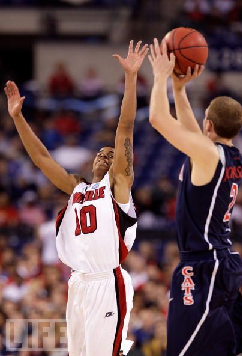
You run towards a shooter and instead of closing out under control with a high hand toward their strong hand you jump aimlessly by their fake shot attempt landing in the first row of fans effectively taking you out of that play, and also the two to three rebounding opportunities that followed because you didn’t have the discipline to sit down and approach the shooter under control.

Ya, it looked good as you showed off your 34 inch vertical, and the freshmen fans in the first row will be talking about how you landed in their popcorn for the rest of the net, and perhaps the school’s photographer will even take a picture of you because it makes for a good story, but the score at the end of the game will essentially show your lack of commitment to the little things.

In business, it’s called Core Values. It’s what you stand for and it’s also what you should never stray from. Yes, it may be tempting to add some new equipment to your weight room or sports medicine area after attending a trade show or because you saw major university “X” has it, but unless it falls within your core values it’s better left on the trade show floor instead of becoming an overpriced and oversized coat rack in your working area.  Of course the way in which you do things, will often change (due to new research and evidence) but that’s clearly different from your core values which should never change.

Sitting down and guarding, like great patient care should never change.

My father would always say take care of the little things and the big things will always take care of themselves. This is true in basketball, patient care and performance training – taking care of your core values and paying attention to the little things will often lead you to much much bigger things without much effort at all.


Art Horne is the Coordinator of Care and Strength & Conditioning Coach for the Men’s Basketball Team at Northeastern University, Boston MA.  He can be reached at a.horne@neu.edu.

Topics: Art Horne, basketball resources, basketball training programs, boston hockey summit, boston hockey conference

If You Listen Just Long Enough...

Posted by Boston Sports Medicine and Performance Group on Mon, Nov 8, 2010 @ 07:11 AM

basketball resources

A college professor and mentor of mine once told me that during an injury evaluation if you listen just long enough your patient will tell you exactly what is wrong with them; and, if you listen just a little bit longer they’ll also tell you exactly what makes them better. 

No need for special tests off the start, just listen and let them talk.

It’s become too easy to interrupt our patients during an injury history, because, well, we know exactly what’s wrong with them. No need to listen to their sob story – just order the MRI, X-ray or other diagnostic test and let’s keep moving.

“A well-known study of medical education found that medical students' interpersonal skills with patients declined as their medical education progressed (Helfer, 1970).  This was particularly true for the student’s ability to take a good social history.  It seems that as students learned more about the science of medicine they found it harder simply to talk with patients, and came to devalue this kind of activity.  What were easy exchanges during the first years became an awkward and unproductive series of closed-ended, usually yes-no, questions later on.  No doubt related to this narrowing of focus, Martin et al. (1976) found that as training progressed, physicians seemed increasingly to lose their grasp on the patient's total health picture and to focus more and more on biomedical issues. 

Although the improvement of physicians' skills in interviewing is valuable, skill does not go to the heart of the matter.  Medical school needs to do a better job of inculcating different attitudes in young doctors - in defining for them what is truly important about being a doctor and what are effective, and humane, doctor-patient roles.  Our society must figure out how to influence their attitudes so that they come to value certain aspects of patient care differently.  Then, of course, when these doctors become mentors themselves, they will provide a different kind of example to their students.  If physicians saw themselves more as patient educators, medical education would be different, and the profession would engage in a different kind of self-scrutiny.  More attention would be paid to the education of patients, which would translate into more sensitive involvement of doctors in the process of healing.” (p.18-19)

Doctors Talking With Patients/Patients Talking With Doctors: Improving Communication In Medical Visits by Debra L. Roter and Judith A. Hall

The challenge then for us as health care providers is to put away the blackberry for a moment and get back to the lost art of patient talk.

Get back to real patient interaction and patient centered care – which places the patient as the center of focus and not our schedule or outside responsibilities.

Of course, ordering an x-ray just to be sure and sending the patient on their way is a lot easier then sitting down and talking with them.

Art Horne is the Coordinator of Care and Strength & Conditioning Coach for the Men’s Basketball Team at Northeastern University, Boston MA.  He can be reached at a.horne@neu.edu.


Martin, D.P., Glison, B.S., Bergner, M., Bobbitt, R.A., Pollard, W.E., Conn, J.R., & Cole, W.A. (1976).  The Sickness Impact Profile: Potential use of a health status instrument for physician training. Journal of Medical Education, 51, 942-947.
 
Helfer, R.E. (1970).  An objective comparison of the pediatric interviewing skills of freshman and senior medical students.  Pediatrics, 45, 623-627.


Topics: Art Horne, basketball performance, basketball resources, athletic training conference, boston hockey conference, autonomy

Are You Worth Your Salary?

Posted by Boston Sports Medicine and Performance Group on Fri, Nov 5, 2010 @ 07:11 AM


In athletic development or fundraising this question should be easy to answer.

Your salary is 100K and you fundraised 500k for your organization in the first quarter. Net profit of 400K for your organization right?

Nice job.

But what if you work in sports medicine or strength and conditioning?

I often hear professionals groan about needing to get paid more, (and just for the record I agree with you) but what did you do this past year to deserve more pay? What makes you believe this?

Was it a salary survey that clearly shows you at the low end of the pole within your athletic conference?  Maybe it was that nifty online salary conversion tool that shows how much you would make if you worked in Alabama rather than Boston?

How about looking at this instead - What interesting problem did you solve this year?  Show your boss that.

Did you save your department 10K in tape and bracing because you researched and found a better way to do business? Did you move your summer strength manuals to an online Iphone application making them accessible to athletes at home saving your department 4K in annual printing costs?  How about starting an injury prevention plan lowering your school’s athletic injury insurance premium?

Before you begin to start looking for a new place to work because you aren’t getting paid enough at your current job, ask yourself what interesting problem needs solving and show your current employer  that you are worth your salary first.

** thanks to Seth Godin who opened my eyes to solving interesting problems rather than working the “ordinary” job where waiting to be told what to do gets you paid ordinary amounts of money.


Art Horne is the Coordinator of Care and Strength & Conditioning Coach for the Men’s Basketball Team at Northeastern University, Boston MA.  He can be reached at a.horne@neu.edu.


Topics: Art Horne, basketball resources, athletic training conference, Seth Godin

Coach As Teacher And Motivator

Posted by Boston Sports Medicine and Performance Group on Wed, Nov 3, 2010 @ 08:11 AM

    After a few years of coaching at my university, I noticed that some of my athletes performed much better in practice than in competition. (I was both a strength and conditioning coach and a shot put discus, hammer, javelin coach). I noticed this manifestation both in the event preparation and the conditioning phases as well. I studied this at length, trying different methods to make the competition the ’real’ event and not the prep. What I concluded was that a combination of two major factors; Lack of Confidence and Pleasure/Excitement had combined to displace and redirect the purpose of the training.

    What was practice and training had become pleasurable and confident. The ’real’ event had become unsure and reluctant. It was if a schizoid atmosphere had embraced the athlete. I watched more closely at their body/eye cues and compared the two disparate venues. Given my limited observations I began to prepare a new way to train for them, using the following devices.

    When they did their supportive training they would, at specific times, as the conditioning exercise came closest to their ’real’ event, image the event as they did the training. An Example; A shot putter who ’puts’ a heavy metal ball, would image this while pushing a barbell or a medicine ball in the exercise. I would often ask them to exhibit similar sounds (a yell, loud groan) similar to when they did the real event. In the event training, as in throwing the shot put, I would cue them, at specific lowered arousal times, how what they were doing , in specific terms, matched what they did in there prep work.

    This is a form of parallel chunking (a way of comparing a similar event under a different general category) and reframing but the emphasis , cued by my own posture and voice would emphasize that the goal was to ’throw’ far which would occur at anytime soon. My verbal and body cues always matched what I would use in the actual event practice. I would raise my arms and shout FAR!

    2. They would not be allowed to throw their limit in practice and must stay within proscribed ranges low to high until a specific time period before a championship. (this created a paradoxical effect that, a long throws might accidentally ’pop out’ without effort to do so) It often built up a developing anxiety which would be released in the ’real’ competition. I would adjust the range upward as the throws approached the higher range indicator in greater numbers. That release would bring as wave of excitement and pleasure at being successful, which would reinforce the competition environment in practice learning.

    This high level competition and performance is a skill with a particular mind and skill set. Practice also has its own mind set and skill. The ’range’ of performance allowed, widened their expectant focus and allowed them to accept lesser throws with the higher, lowering their arousal. Once an achieved number of performances within the current range had been performed, the range was moved upward.

    My rational was that if I could get them to raise their actual performance at lower arousal levels then a natural rise in arousal in competition would result in increased result with only the awareness of a slightly improved effort. Using numbers to categorize effort as an example, 10 would be a maximum effort and 1 the lowest effort. The training regime should result in a self reported long competition effort as feeling like a ’6’ when in performance it looked like a ’8’ to me the observer/coach. The athlete had successfully brought their arousal mechanisms under control and let the natural CNS reaction take place. As a coincidence to this competition goal I found that the athlete’s well being both mental and physical affected in real ways their self report. They would report an ‘8’ effort when I observed a ‘5’. This would alert me that something important was happening to the level of fitness at that critical point in time. It could be long hours of study, the onset of a cold, an emotional conflict, lack of sleep etc.

    3. I rarely if ever measured a practice throw, emphasizing the work done and the goals of the practice. I would constantly link an improvement as noted, with a presupposition of a further effort in ’real’ competition. The links were always to a future competition, which was then linked with another. Here is a verbal presupposition for an athlete that whose longest throw is 180’ in the hammer (about 54 meters).

“Good you’re getting more in that range. That shows the jump will come anytime now so you must be prepared for it! We’ll probably move your range up a meter on Thursday (pacing forward).

“When you are at 200 feet you will begin to notice that you.re now ’hanging’ on the hammer in the back (he’s never done this prior. It is a result and cannot ’be’ willed!)

“This will keep you in contact with the ball better. You will love the feeling (expectation of result and I demonstrate the position)( future pacing ) as the hammer throws itself.”

“Your range will probably move up 10 feet in practice so (beware, you are about to improve!), save your energy for then” ( throw what you have been doing with an easier effort and arousal level)

    4. Do NOT explain what is happening to the student/athlete, let it happen. The student/athlete does not need to intellectualize the event…just do it. A former world record holder in the Javelin Al Cantello, once said to me “Analysis leads to paralysis!” Explanation takes away from the excitement of learning. it becomes a “it’s just ……” IT’S NOT,’ it’ for the doer is SPECIAL and you can link that feeling to future results.

    I used these devices first as a coach then in the classroom with my behavioral handicapped students. They had similar results which I will write about later. All my NLP (Neuro Linguistic Psychology) training came after these events. The training’s confirmed what I observed. It works because we both expected it to and we LET it happen!

Joseph J. Donahue M.Ed. is in his 41st season as Throws Coach for Northeastern University in Boston, MA. Under Donahue’s tutelage NU has been the top throwing school in New England and one of the best on the East coast. Donahue coached the only NCAA champion in Northeastern history, Boris Djerassi, who won the national hammer title in 1975 and competed in the World’s Strongest Man Competition in 1978. Donahue also coached Zara Northover, who represented Jamaica in the 2008 Olympics in the shot put. As an athlete, Donahue set several NU throwing records, all of which were broken by athletes he coached. He was inducted to the Northeastern Hall of Fame in 1993. Coach Donahue can be reached at donahuej2@comcast.net .


BSMPG and Boston Promise

Posted by Boston Sports Medicine and Performance Group on Tue, Nov 2, 2010 @ 08:11 AM

basketball resources

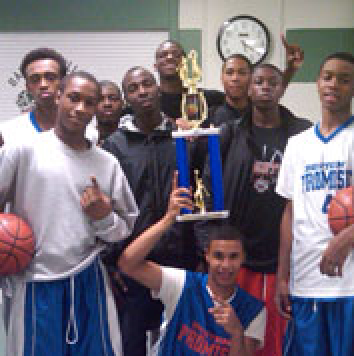
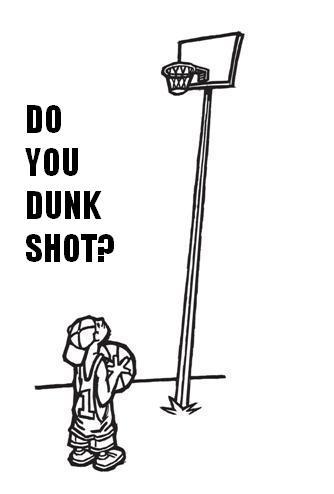
Help BSMPG help Boston Promise by attending their upcoming 3 v 3 basketball tourney on Saturday, November 20th.   You can also help support Boston Promise by purchasing a Dunk Shot T-shirt online or at the event. All proceeds go directly to Boston Promise.

basketball resources


Saturday, November 20, 2010
1:00 - 5:00 p.m.
Charlestown Community Center
255 Medford Street, Charlestown, MA
Registration fee: $80 per team / $25 for individuals


To register:

  • Email Steve Cassidy at steve.cassidy@bostonpromise.org by midnight on Monday, November 15th.
  • Tell us your team name and captain's contact information including phone number and email address.
  • Indicate which bracket you would like your team to be placed in:
    (A) serious ballers
    (B) has-beens
    (C) doing it just-for-fun
  • You'll receive payment instructions upon registering. We are are voluntter-run organization and 100% of your tournament fee goes directly to Boston Promise programs.

We'll send out the bracket and tournament schedule by midnight on Wednesday, November 17th.


About Boston Promise:


Our mission is to assist Boston's youth basketball players in fulfilling their promise as scholars, athletes and leaders in their communities.  We aim to increase these young players' opportunities for higher education by providing them with the knowledge and experiences that will prepare them for college-level academics and basketball.


As a volunteer-run organization, we rely on dedicated individuals who generously donate their time and talents.  If you would like to volunteer for Boston Promise, please contact Steve Cassidy at 617-968-4262 or steve.cassidy@bostonpromise.org.  We'd love to have you join us! 

Topics: basketball performance, basketball training programs, Boston Promise, Dunk Shot

This Is You, Outside The Box

Posted by Boston Sports Medicine and Performance Group on Mon, Nov 1, 2010 @ 08:11 AM

The NBA has been in the news recently because of the impending lockout coming next summer.  With the current collective bargaining agreement set to expire, the time has come to reevaluate how the league works.  The problem (at least from the owners’ and league’s perspective) is that despite the fact that the league makes upwards of $2 billion a year, the owners as a whole are projected to lose $340 to $350 million this upcoming season.  Of course, there are still a number of profitable franchises in the NBA, but owners that play in small markets, paid above-market price for their teams in the last ten years, or both (yikes) are playing with a serious disadvantage as opposed to owners in Boston, Los Angeles and other major markets.  So what is a small market team to do?  Sell the team at a loss?  Attempt to move to a larger market?  If you are Clay Bennett, owner of the former Seattle Supersonics and current Oklahoma City Thunder, then the answer is the latter.  When times got tough, Bennett said goodbye to the city that had been the Sonics’ home since 1967 for greener pastures.  However, if you are like most small market teams with an investment in and appreciation for their city, you think outside the box.  For instance, this year a number of small market teams that only sell out a handful of games each year have begun charging increased prices for tickets to those more popular games.  Simple, but it is also as effective as it is untraditional.   It’s something that scalpers have been doing for years, so why can’t it work for the franchises themselves? 

In any environment, thinking outside the box is often the key to strategic growth.  I know what you’re thinking, “Shaun, thinking outside the box is a phrase I have heard for years.  This is nothing new.”  That’s a fair argument, but think about this for a second;  how often in your office environment do you and your coworkers choose the path of least resistance over a new way of doing things?  I am willing to bet that the phrase “that’s how we have always done things” is used a lot whenever somebody brings up a new idea.  Everybody talks about innovation, but how innovative is your office really?  True innovation is fostered on a regular basis to help small businesses play on a more level playing field, to help organizations recover from a downturn in the economy, or even to help the most successful corporations stay on top.  After all, how do you think they got there in the first place?  So take a while to evaluate what you and your business does on a daily basis to stay competitive.  Figure out what tasks are non-essential, which ones take more man hours than they should, and if there are more efficient ways of doing certain things. 

Hint: there usually are. 


Shaun Bossio is the Assistant Business Manager and ProShop Manager at Boston University FitRec.
He can be reached at sbossio@bu.edu

Topics: basketball conference, basketball training programs, athletic training conference, basketball videos, LeBron James, NBA

BSMPG Announces Ray Eady To Speak At Basketball Specific Conference

Posted by Boston Sports Medicine and Performance Group on Fri, Oct 29, 2010 @ 08:10 AM

BSMPG is proud to announce that Ray Eady, Basketball Strength and Conditioning Coach at the University of Wisconsin will join Brandon Ziegler and Brian McCormick at the BSMPG Basketball Specific Conference featuring Dr. Shirley Sahrmann as a keynote speaker next June 3rd and 4th, 2011.

everything basketball

Ray Eady is currently the strength and conditioning coach for the women’s basketball program at the University of Wisconsin. He has been the strength and conditioning coach for the Wisconsin basketball program since 2008.  Previously, he was the head strength and conditioning coach for men’s and women’s basketball at the University of Akron in Akron, Ohio (2004 - 2008) and Northeastern University in Boston, MA (2003 - 2004).

Originally from Springfield, Massachusetts, Eady holds a Masters degree in Exercise Physiology from the University of Akron and is a Certified Strength and Conditioning Specialist (NSCA – CSCS), a Performance Enhancement Specialist (NASM – PES), and a Club Coach with the United States Weightlifting Association.  He is also a member of the Black Coaches Association (BCA).

See articles written by Ray Eady:

Female Basketball Athletes Need To Get Strong

Push-up Progression


Topics: Ray Eady, Strength Training, basketball performance, basketball resources, basketball training programs, boston hockey summit, boston hockey conference, basketball videos, Shirley Sahrmann, female strength training, everything basketball

Water Please

Posted by Boston Sports Medicine and Performance Group on Thu, Oct 28, 2010 @ 07:10 AM

everything basketball

A friend of mine and I were discussing the roles and responsibilities of athletic trainers the other day when he brought up a story about his time in graduate school.  He recounted the days where a fellow staff member’s (a full-time Certified Athletic Trainer with a Master’s Degree no less) only job during the fall semester was to drive from practice to practice filling up water coolers and bottles.

No patient care. No injury evaluation. No Assessment. No Prevention Strategies.

Just Water.

I shared a very different story with him about water service.

I remember a few summers ago when I traveled with our Men’s Basketball Team to Canada to play the defending Canadian national champions (six National Championships in the last seven years) - University of Carleton.   It was our first day on campus and we were preparing to practice when I noticed our hosts didn’t put out any water on the sideline for our team (Carleton was practicing down court and finishing up their practice time).  I approached their athletic therapist asking if I could obtain a cooler of water and some cups for practice – a standard practice I would assume across both Canadian and American Colleges.
Just as the words dripped from my mouth I looked a bit closer at the Carleton area and saw about 20 various bottles ranging from gallon sized water containers to reused Gatorade bottles lining their bench.  Each and every player had brought their own water to practice.  From that moment forward my view on water changed forever.

That was the day I stopped catering.

I’m not saying water isn’t important.  On the contrary.  In fact, I think it’s so important that I encourage each and every student-athlete to carry a water bottle with them at all times.  You can’t expect to just hydrate during practice can you? And if you can carry a water bottle with you all day – because that’s how important it is, then you can also bring it to practice can’t you?

I was actually scolded by a fellow athletic trainer when I brought up the idea of athletes bringing their own water to practice.

“What if they forgot their bottle one day? What would they do then?”

My response was simple.

What extraordinary patient care are you not delivering because you are so busy delivering and catering water?

If the defending national champions in Canada can bring their own water to practice I think our student-athletes can fill up a bottle and bring some H2O to practice too.

It only takes one time that you forget and you’ll never leave that bottle at home again.


Art Horne is the Coordinator of Care and Strength & Conditioning Coach for the Men’s Basketball Team at Northeastern University, Boston MA.  He can be reached at a.horne@neu.edu.

Topics: Basketball Related, Art Horne, basketball resources, basketball conference, athletic training, athletic trainer, female strength training

Why Athletes Should Avoid The Bars by Steve Myrland

Posted by Boston Sports Medicine and Performance Group on Wed, Oct 27, 2010 @ 08:10 AM

(An intemperate look at barbell-centric training)

by Steve Myrland

 
“Get out of the weight-room boys.  I don’t need you weight-room strong . . . I need you farm-strong.”

Irving “Boo” Shexnayder
LSU Track & Field Coach
(to his team)


Perhaps the most persistent blunder athletes and coaches make in training to compete is regularly mistaking “strength” for “athleticism,” so let’s clear this up right away:  Athleticism—the ability to express one’s physical self with optimal speed, agility, strength, balance, suppleness, stamina and grace while avoiding injury—is the goal.  Strength, as you will note by re-reading the sentence, above, is a single element of the collective term:  athleticism.  You cannot be athletic without being strong; but you can be strong without being athletic. 

Peek into any high school weight-room and you will see big, slow guys lifting weights under the misguided notion that strength is the holy-grail.  It isn’t.  Big strong guys are a dime-a-dozen. Big strong guys who can move get recruited . . . get scholarships . . . get drafted . . . get rich. Therefore, the strength you create in training must necessarily be strength that augments the whole, rather than constrains it.  It must be athletic strength; that is, it must always promote better movement.

Strength and stamina are among the easiest athletic qualities to improve—provided you disconnect both from all other athletic qualities (speed and agility, for instance).  Absent any connection to those genuine game-breakers, it is not at all difficult to create stronger muscles and bodies that are conditioned to work for longer and longer periods of time.  Creating better athletes, however—athletes that are able to project the qualities most rewarded in competition—requires a more refined approach to training.

In the quest for athletic strength, the lines of the argument are generally drawn between the free-weight advocates and the health-club machine crowd.  I tend to fall in with the free-weight folks in this but such a simplistic line of separation gives a free pass to one particular piece of equipment that is every bit as non-functional as any chrome-plated, stack-loaded, one-plane-wonder health-club machine:  the barbell. 

On a “functional continuum” of training equipment, I would place machines well down towards the non-functional end of things and I would place the venerable Olympic bar right next to them, even though it sails under the free-weight banner.

Here’s why:  When you grab hold of a barbell with both hands, you are virtually locking yourself into the sagittal plane.  Movement in the other two available planes of motion, frontal and transverse, is theoretically possible, but it is unlikely, at best; and if you are doing a traditional barbell exercise (squat, deadlift, snatch, clean, bench press) your body will do all it can to minimize any potential movement in those two unwanted planes.  Effectively, the bar locks you into one plane and out of two.  It restricts—not unlike health-club machinery. 

Unfortunately, the neural patterning that results from this kind of training is decidedly unfriendly to a body that will be regularly required—in competition and life—to move; to react, stop, start, twist, generate speed and withstand impact.  Strength-training programs based primarily on barbell lifts do a poor job of preparing bodies for the competitive environment because they “teach” the body to be stiff and unyielding—brittle—rather than strong and supple.

If you think of the spine as a length of chain, with each link making its individual contribution to movement in three planes, you get a sense of what a wonderfully elegant, supple design the human spine is.  If several links in that chain are (effectively) fused together, all flexion, extension, leaning and rotation that would normally come from those links will necessarily be handed on to the nearest available segment of the chain where the links are still able to move. 

Moreover, with the exception of back-squats, a barbell puts the resistance on the front of the body, contributing to the development of shoulders that round forward.  This front-emphasis affects all bodies differently because of individual differences in lever-lengths (arms, legs and torsos). Big-chested, short-armed power-lifters always have the advantage when it comes to bench-pressing.  Short-legged, short torso, long-armed lifters make the best squatters and deadlifters. 

Barbells are an insult to the inherent “uniqueness” of human beings. A bar treats all bodies as if they were the same by limiting things to the sagittal plane and by requiring loads to be carried either in front or behind, not where an individual’s own center-of-gravity is optimized. This requires all manner of nasty postural compensations that are directly or indirectly related to many athletic deficiencies and (even) injuries.  After all: a barbell is designed to accommodate the load rather than the lifter; while dumbbells and other similar resistance tools both require and allow bodies to be wholly integrated, connected and self-organizing. 

I have trained two high level hockey players in the past few years (one male and one female) who are both strong, but who suffer from significant movement impairments and all the recurring pain that generally attends dysfunctional athletic bodies.  I realize that two athletes hardly constitute a reliable research cohort; but even so, both of these athletes share one significant training detail: both relied (heavily!) on the barbell as their primary off-ice training tool.  I believe this to be a major mistake.

The female hockey player competed in the 2006 Olympic Games in Turin, and was desirous of competing in the 2010 Games as well, but she was struggling with chronic back pain and feared it would end her playing career prematurely.  Her strength-training and strength-testing were predominantly barbell based.

In watching this athlete move, it was evident that a large segment of her spine didn’t (move, that is).  Her thoracic spine appeared to be a single undifferentiated mass, never contributing its share of rotational or lateral movement.  There didn’t (even) appear to be much flexion and extension in that part of her back; so even in the sagittal plane, she struggled.  Her lower back-pain was a constant constraint on her ability to perform—in training and on the ice.  She worked with a chiropractor/active-release therapist, a physiatrist and me, and we all combined efforts to try to re-mobilize her thoracic spine and provide her with training strategies that would permit her to maintain and enhance that mobility, herself.  Prominently included in that sackful of strategies was the admonition to “STAY AWAY FROM THE BAR!”

The male hockey player left college early, a high draft-choice; but he spent three years in the up-and-down (minor-league – NHL) holding pattern that is often a frustrating feature of the professional experience.  When I first worked with him, he weighed 205 lbs, and he moved pretty well.  Two years later when we trained together again, he weighed 215 lbs and he did not move as well as he once did.  His additional ten pounds wasn’t fat; but neither was it muscle that enhanced his movement capability.  In fact, it detracted from it.

In both these cases, I believe the problem was far too much emphasis on barbell generated strength.  I know the female player agrees;  I hope the male player does too—but male athletes (and male coaches) are far more easily seduced by the charms of the bar than females.

For both athlete and coach, the bar offers the ripest, low-hanging, easily quantifiable fruit.  It is so simple to measure barbell progress.  You can do absolute one-rep max-testing and force your athletes to be power-lifters and Olympic lifters for one day each month (a risky idea!); or you can project 1RM’s using any of a number of mathematical models.  I learned this one from Jerry Martin (U-Conn) when he was the head Strength & Conditioning coach at Yale:
 
(.03 x reps [failure]) x weight + weight

so:  (.03 x 7) x 200 + 200 = .21 x 200 + 200 = 42 + 200 = 242.

An athlete who “fails” at seven reps using a weight of 200 lbs has a projected 1 RM of 242 lbs.  I found this formula to be acceptably accurate—for barbell lifts.  (Still do; I just don’t have much cause to use it, these days.)

It is probably the ease with which strength can be quantified that makes the bar so irresistible to athletes and coaches.  Walk into any weight-room and ask any male in the place: “Who benches the most?  Who squats the most?  What’s your max in the deadlift?”  You will get quick answers to all your questions.  Or:  you can simply consult the inevitable “record board” listing the top bench-pressers, squatters, deadlifters etc., etc., etc..

The bar is an easy way to measure strength and (I believe) easily measured strength is the first refuge of a poor coach.  We can happily report strength-gains to convince sport-coaches that we are doing our jobs in the weight-room and that the coach’s athletes are benefiting from the time they spend with us.

Unfortunately, easily measured strength is rarely competitively useful strength. That is something far more difficult to quantify in the simplistic terms of pounds lifted.  Better measures of the efficacy of any strength program would be such things as acceleration speed; multi-directional speed and agility; vertical / horizontal jump and lateral bound; balance; speed-stamina; and the real holy-grail of all evaluative criteria by which any training program ought to be judged:  injury rates.

It is my contention that if more athletes were as devoted to gaining true athleticism as they are to enhancing their numbers in the weight-room, we would have more good athletes and fewer injuries. 

The strength-training required to build bodies that are adaptable rather than simply adapted—bodies able to survive and thrive in the wholly unpredictable (and therefore dangerous) competitive arena—cannot be done using a steady diet of restrictive barbell lifts.  Rehearsing single-plane movements with an awkward, restrictive tool does not provide performance benefits or insurance against injury when the ball is snapped, the pitch is delivered, the puck is dropped, the serve is struck or the gun goes off and chaos reigns. A barbell tells a body what it can do rather than asks a body what it can do, and that is the real line of functional differentiation.
“Simplicity yields complexity.”  I heard Vern Gambetta say that in the first seminar I ever attended as a young coach and the statement hits the bullseye.  Equipment that poses genuine physical puzzles for bodies to solve has a far greater chance of being useful in creating truly athletic athletes than equipment that “dumbs ‘em down” as the saying goes.

We work, after all, with people who are generations removed from naturally physically challenging childhoods.  Movement for all young people is now entirely optional throughout the childhood years.  Indeed, movement is now the least likely choice for children and adults, which partially explains our current health crises of obesity and diabetes.  We must coach physically inarticulate people to be able to perform physical tasks that were once taken for granted in all young people (like the ability to skip!) but which are often maddeningly beyond reach for many these days.

Our job, as coaches charged with improving the performance capabilities of athletes, requires that we be prepared to continually evaluate and re-evaluate our tools and methods and jettison all those that fail to achieve our desired objectives, even if the tools we must jettison include a few sacred-cows like the much revered—and still ubiquitous—barbell.

We have so many excellent ways to impose athletically appropriate resistance challenges.  Dumbbells, medicine-balls, kettlebells, stretch-cords, water, sand and hills all share performance enhancing advantages that barbells lack.  All are (relatively) inexpensive and most are also portable, as well, adding a huge measure of program versatility into the bargain.  Why not choose and use them? 

Topics: basketball performance, basketball conference, basketball training programs, boston hockey summit, boston hockey conference, Steve Myrland