Boston Sports Medicine and Performance Group, LLC Blog

Join my community

Posted by Boston Sports Medicine and Performance Group on Tue, Sep 28, 2010 @ 07:09 AM

There’s a big difference between 1) surrounding yourself with random people of a like mind, whether it’s a social club, a network of professionals that share the same passion, or simply the running group you belong to that meets every Saturday morning and 2) actually knowing someone.

Your buddy at the running club may get you a free cup of coffee and muffin, but knowing someone, I mean really getting to know someone, will get you a job.

The community of people that you lightly associate yourself with may become a future asset, but the people that you have been investing time with will become your currency today.


Art Horne is the Coordinator of Care and Strength & Conditioning Coach for the Men’s Basketball Team at Northeastern University, Boston MA.  He can be reached at a.horne@neu.edu

Topics: Art Horne, Good to Great, development, Leadership

Leaders and Managers

Posted by Boston Sports Medicine and Performance Group on Mon, Sep 27, 2010 @ 07:09 AM

everything basketball

There is a fundamental difference between leaders and managers. The manager will lead her group through the jungle with a machete, hacking away and clearing a path for the group to follow.

A leader, however, will climb the tallest tree and discover that they are actually heading in the totally wrong direction.


(paraphrased from Jim Collins, Good to Great)

Are you blindly working away day after day? Head down in your outlook calendar managing this week’s tasks and your “to-do” lists, delegating cleaning duties and administrative responsibilities or have you taken a moment to climb the tallest tree and discover that the work you’re so busy at on a daily basis is actually keeping you from realizing that you’re heading in the wrong direction?

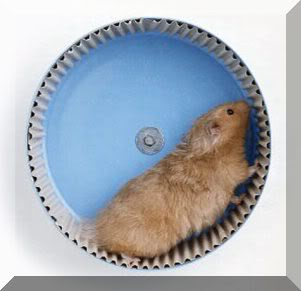
The challenge of course is putting down the blackberry and looking up long enough to realize that you’re actually trapped in a hamster wheel.  Hint: Hacking away will only keep the wheel spinning.  The only way to get out is to climb the tallest tree.

 
Art Horne is the Coordinator of Care and Strength & Conditioning Coach for the Men’s Basketball Team at Northeastern University, Boston MA.  He can be reached at a.horne@neu.edu.

Topics: Art Horne, Good to Great, discipline, development, Leadership

Join my network

Posted by Boston Sports Medicine and Performance Group on Fri, Sep 24, 2010 @ 06:09 AM

everything basketball

They say it’s not what you know, but who you know.

They’re right. But take it a step further; it’s not WHO you know, but HOW you know someone.

It’s easy to meet someone at a conference, send them a LinkedIN connection and, voila, that person is permanently in your network. But I recently went through my LinkedIN “network” and realized I don’t even know who some of those people really are. What kind of network is that??? The same holds true for Facebook: How many of your “friends” do you consider your friends in real life?

Social networks like LinkedIN and Facebook are simple and often fake. Real networks take time to cultivate and develop. Shoot an email to someone when their team or school is in the news. Pick up the phone to ask for advice.  Send a note if a somebody loses a loved one. A real network is about people looking out for one another.

So when that dream job finally opens up at that company you’ve always wanted to work for, a good networker will pick up the phone and feel comfortable calling to ask for that recommendation. A great networker, meanwhile, doesn’t need to call because that person on the other end already knows who you are and what you’re capable of.


Mark Harris
Associate Director, Athletics Annual Giving

Loyola University Maryland

Topics: basketball resources, Good to Great, customer service, everything basketball, development, networking

Real time feedback

Posted by Boston Sports Medicine and Performance Group on Thu, Sep 23, 2010 @ 06:09 AM

everything basketball


Every four years, athletic administrations across the country conduct student-athlete exit interviews. It’s a time where student-athletes can reflect on their athletic achievements and make comments like how a pineapple-lemonade soda machine would have been helpful in the student-athlete lounge or a Swedish masseuse would have been nice during their training.  They hand it in, administration pats themselves on the back noting that the student-athlete didn’t make any “realistic” comments on problems that they could have fixed and then the paper is quickly crumpled and discarded in the nearest receptacle. 

The problem with these exit interviews is that they provide little opportunity for improvement.  First, the feedback is not asked in real time. Do you really want to wait four years to fix a problem that could have been addressed at the end of the first semester?

Second, the questions are never specific or thought provoking … it’s usually a formality put into place so that management can have a safety net to fall back on, claiming after a problem surfaces that they did their due diligence and asked for comments year after year, “how was I suppose to know that our cafeteria wasn’t open past our last practice time? I asked for general comments every year.”

Lastly, asking for general comments only ensures you of one thing: general, non-specific comments in return (read: vanilla).  If you are serious about making change, then your questions will reflect this. Asking specific questions regarding the hours of operation of your facility and if it meets the needs of your student-athletes will evoke a much different response then simply asking for comments about the Athletic Training Room or Strength and Conditioning Room in general.  Basically, specific questions generate qualified comments.

I once heard a story of a department that placed a suggestion box out for their customers to leave comments in.  They didn’t read them of course; but having customers leave suggestions made them feel as if they had a voice, they said.  Talk about a lost opportunity to tap into your customer base. 

Is your exit process an interview or does it provide opportunity?


Art Horne is the Coordinator of Care and Strength & Conditioning Coach for the Men’s Basketball Team at Northeastern University, Boston MA.  He can be reached at a.horne@neu.edu.
Topics: Art Horne, hockey conference, motivation, customer service, development

The exit opportunity

Posted by Boston Sports Medicine and Performance Group on Wed, Sep 22, 2010 @ 06:09 AM

everything basketball


A friend of mine recently left his job at a major academic institution where he worked his way up from the ground floor into a middle management position before leaving for the upper ranks at a competitor’s on the west coast.  As a courtesy to the organization in which he had given so much, and so much given to him, he approached his superior's administrative assistant and asked if there was a formal “exit interview” that he was to partake in prior to his final day at the end of the week.

“Usually only people that want to complain ask for exit interviews,” the administrative assistant explained, “did you still want to speak with him?”

“ummm, well, no, not anymore,” my friend replied.

Wouldn’t an exit interview be the perfect opportunity to gain feedback into your organization’s weaknesses, customer service, and operating procedures?

Sure the employee may be salty that they are leaving, but what chance for feedback do you have otherwise once they’ve walked out the door?

You should search out that employee and simply ask, “what can we do better?” This is the only time they won’t be afraid to tell you exactly how it is.  You can sift through the salt and substance after, but once they’re gone, they’re gone, and hence so is the opportunity for your organization to improve.


Art Horne is the Coordinator of Care and Strength & Conditioning Coach for the Men’s Basketball Team at Northeastern University, Boston MA.  He can be reached at a.horne@neu.edu.

Topics: Art Horne, basketball resources, Ownership, Good to Great, discipline, customer service, everything basketball, development, managing

Hello my name is:

Posted by Boston Sports Medicine and Performance Group on Tue, Sep 21, 2010 @ 06:09 AM

everything basketball


At the end of this next semester how will you introduce yourself?

Will your boss know you simply by the name on your driver’s license or as the leader of a new project? The staff nutrition expert? The master coach? The staff liaison to the health center, athletic training room or weight room?

If you want your colleagues and prospective employers to know your name you must be willing to bring your work to the world.  You must be willing to rename yourself as "the person who gets things done."  If you are not willing, well, that work will simply get outsourced to someone else who is.

Either or, the work will eventually get done.

You might as well have your name on it.


Art Horne is the Coordinator of Care and Strength & Conditioning Coach for the Men’s Basketball Team at Northeastern University, Boston MA.  He can be reached at a.horne@neu.edu.

Topics: Art Horne, Strength Training, motivation, Ownership, Good to Great, discipline, athletic trainer, managing

Mirror, mirror on the wall...

Posted by Boston Sports Medicine and Performance Group on Mon, Sep 20, 2010 @ 06:09 AM

everything basketball

We’ve all done this at one time or another; walk into a weight room, watch an athlete train, and know exactly who their strength coach was or what strength coach programmed their training.

Whether you know Tony Testa, Director of Sports Medicine at Seton Hall or not, you’d know exactly which kids he taught the Olympic lifts to and which ones he didn’t. Tony is a perfectionist and a first rate teacher of the Olympic lifts, in fact, probably the best I’ve ever seen. Whether he was helping out in the weight room during training or implementing the clean as part of his rehabilitation program, his athletes are a direct reflection of his affection for the Olympic lifts.

With other strength coaches, its bench press Mondays.  10 sets of Bench… doesn’t matter if you have time for anything else.

“I’ve competed in bench press competitions so you’ll bench too.”

On the flip side, you’ll find other “performance coaches” with little actual training experience avoid weights all together.

 “It’s all about flexibility.  Feel the stretch”

So what exercises are your athletes performing today, or should I say, which ones are they not doing simply because you don’t perform them yourself?  Are you looking to fill in the gaps or just simply looking to fill time?


Art Horne is the Coordinator of Care and Strength & Conditioning Coach for the Men’s Basketball Team at Northeastern University, Boston MA.  He can be reached at a.horne@neu.edu.

Topics: Art Horne, basketball resources, Strength & Conditioning, hockey conference, Ownership, development, Leadership

Excuse me. That's my daughter you're caring for

Posted by Boston Sports Medicine and Performance Group on Thu, Sep 16, 2010 @ 06:09 AM

everything basketball

Do you treat your each patient as if they were your daughter?

Do you listen attentively while taking an injury/illness history as if you were listening to your grandmother?  Do you welcome each patient into your treatment room with a smile and thank them for stopping in? Do you call your patients after surgery just to make sure they are doing ok – you know, just the way your mother used to with you?

I remember being an athletic training student at Canisius College when I was challenged by my mentor, Pete Koehneke, to treat every patient as if they were his daughter or a family member. 

Boy, did my attention to detail quickly change.

How would the quality of your patient care change if you were treating your daughter/son or better yet your boss’ child?

Would you still be texting on your cell while performing that ultrasound treatment? How about the “advice” of rest and ice you gave the long distance runner without examining them first?

Would that change?

What if that track athlete was a family member? Your sister? Your child?

How would you treat your patient then?


Art Horne is the Coordinator of Care and Strength & Conditioning Coach for the Men’s Basketball Team at Northeastern University, Boston MA.  He can be reached at a.horne@neu.edu.

Topics: Ownership, Health, Good to Great, athletic trainer, customer service, evidence based medicine, Leadership

My boss won't let me

Posted by Boston Sports Medicine and Performance Group on Wed, Sep 15, 2010 @ 06:09 AM

everything basketball


Is just an excuse for not wanting to do the work required to get a project shipped.

If your boss truly won’t let you, it’s probably because you are asking the wrong questions.

If you want your boss to support you during a project which will ultimately reward you if it works, but punishes the boss if fails then of course you’re asking the wrong questions.

What exactly won’t your boss let you do?

Did you investigate it? Research it? Find a gap in your current operating procedures that is worth filling? Does it fit into your core principles? Values?

If the answer is yes, and your boss really won’t let you, then you might want to find another job where your boss supports the extraordinary work that you’re doing.

Unless of course, your happy with ordinary?

(rant inspired by Seth Godin and his most recent book, Linchpin)

Art Horne is the Coordinator of Care and Strength & Conditioning Coach for the Men’s Basketball Team at Northeastern University, Boston MA.  He can be reached at a.horne@neu.edu.

Topics: basketball conference, Strength & Conditioning, Ownership, discipline, athletic training books, customer service, development, Seth Godin

How well do you know your athletes?

Posted by Boston Sports Medicine and Performance Group on Tue, Sep 14, 2010 @ 06:09 AM

everything basketball

“Almost all the master coaches I met followed Wooden’s rule. They wanted to know about each student so they could customize their communications to fit the larger patterns in a student’s life.”

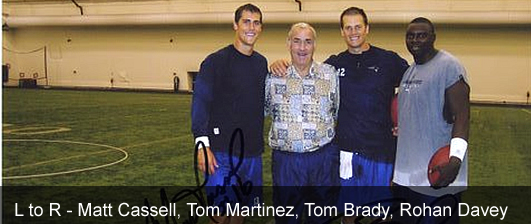
Famed football coach and quarterback specialist, Tom Martinez, has a vivid metaphor for this process.

“The way I look at it, everybody’s life is a bowl of whipped cream and shit, and my job is to even things out,” he said. “If a kid’s got a lot of shit in his life, I’m going to stir in some whipped cream.  If a kid’s life is pure whipped cream, then I’m going to stir in some shit.”

(Excerpt from, The Talent Code by Daniel Coyle)

Looking at some of Tom's successes it's clear his recipe might just be working. 

Art Horne is the Coordinator of Care and Strength & Conditioning Coach for the Men’s Basketball Team at Northeastern University, Boston MA.  He can be reached at a.horne@neu.edu.

Topics: basketball performance, athletic training conference, Strength & Conditioning, Sports Pyschology & Mental Training, The Talent Code, Daniel Coyle, autonomy, development, Leadership