Boston Sports Medicine and Performance Group, LLC Blog

Do The Opposite - Part III

Posted by Boston Sports Medicine and Performance Group on Wed, Feb 16, 2011 @ 07:02 AM

I once heard Mike Boyle say if you ever want to get fit, simply go to your nearest commercial gym and do the exact opposite of what everyone is doing.  I decided to put his theory to the test at our general student fitness facility this past week. 

Number 7-9


7. Commercial Gym Choice: Lifting Slow

Nearly 100% of all exercises you’ll see are performed slow and steady, (well, except for the guy on the seated calf raise machine that’s popping his heels up and down like a jack rabbit!)  That’s fine if your goal is to move slow, but most of us still want to kick butt on the weekend playing tennis, changing direction on the soccer pitch or simply running down their friends in a game of ultimate Frisbee.  Like the treadmill, it never hurts to crank it up a notch and vary the speed or tempo of your core lifts.


sports medicine resources


Opposite: enter heavy stuff moving fast. Now if you really want to scare people at your local commercial gym start performing an Olympic lifts or a variation thereof.


athletic training resources


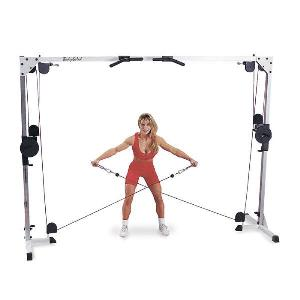
8. Commercial Gym Choice: Only Training in the Sagittal plane – besides the cable cross-over exercise I saw, every exercise was sagittal plane dominant, not to mention each and every piece of cardio equipment (treadmill, bike, elliptical and stair climber) was all set in the sagittal plane.

“Well how is anyone suppose to design a machine that can exercise in multiple planes? – it’s just not possible!”

That’s my point (well, not this point, but another point – go run around outside, play tag, racketball, sprint, whatever – just do it in multiple planes, multiple speeds and multiple directions.


basketball resources


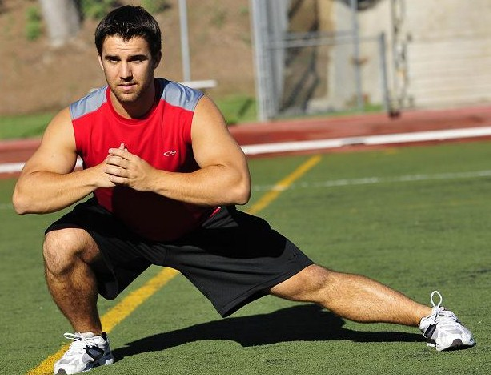
Opposite: I think I covered that in the above – but for this day it was simply finishing off with a lunge series in all directions (Gary Gray made this famous with his lunge matrix)


boston hockey summit


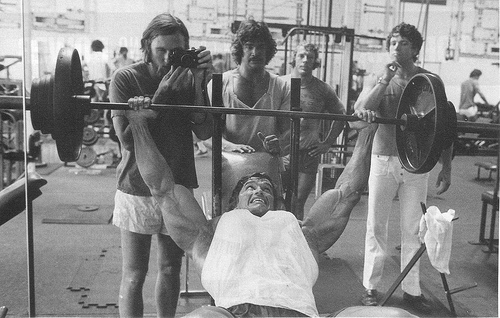
9. Commercial Gym Choice: Only Bench for upper body strength.

I know that bench is king when it comes to developing upper body strength but it certainly doesn't have to be the only exercise.  There is nothing worse (besides bicep curls in the squat rack) then watching a group of guys standing around another group of guys waiting for them to finish their bench routine so they can start theirs. 


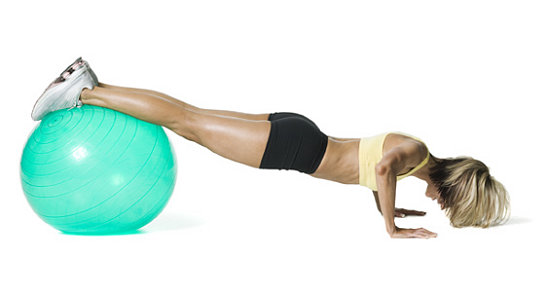
Opposite: Push-ups and push-up variations.  I'm a huge push-up fan so this was easy for me to incorporate into my workout (not to mention there wasn't an available bench in site anyways).  Push-ups only require gravity, and well, that can be found pretty much everywhere.  Put your hands in various positions - close together, far apart, one ahead of the other, feet up, on a buso-ball - just start pushing.athletic training resources
Read a great article on push-ups by Ray Eady, Strength and Conditioning Coach from University of Wisconsin by clicking HERE.


Art Horne is the Coordinator of Care and Strength & Conditioning Coach for the Men’s Basketball Team at Northeastern University, Boston MA.  He can be reached at a.horne@neu.edu.

Topics: Basketball Related, Art Horne, basketball conference, basketball training programs, athletic training conference

Do The Opposite - Part II

Posted by Boston Sports Medicine and Performance Group on Tue, Feb 15, 2011 @ 06:02 AM

I once heard Mike Boyle say if you ever want to get fit, simply go to your nearest commercial gym and do the exact opposite of what everyone is doing.  I decided to put his theory to the test at our general student fitness facility this past week. 

Number 4-6


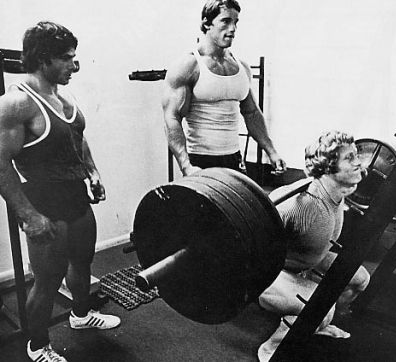
4. Commercial Gym Choice: Bicep Curls in the Squat Rack


athletic training resources

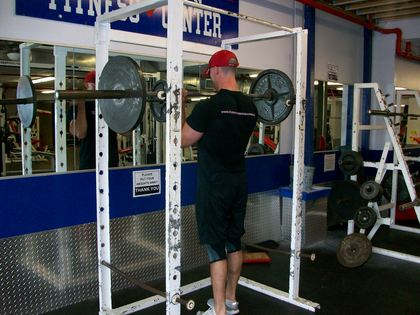
Squat Racks are for squatting – not barbell curls!  Why must everyone feel the need to curl inside of a squat rack? I know, the weight is soo heavy that if you were ever to fail you’d have the safety bars there – gotcha.


Opposite: This one is easy – I squatted.
Side note: apparently squatting in a rack designated for arm curls is not appreciated at commercial gyms – if you choose to squat – avoid eye contact with the gym members; you’re interrupting their bicep time.

basketball resources


5. Commercial Gym Choice: All Show – No Go.
If one thing became clearly evident during my squat time, it was the need to exercise and only exercise those muscles that can be seen in the mirror.  A quick survey of those around me included: cable cross-over, more bicep curls, overhead DB press, seated bench press and leg extensions. 

athletic training conference


Opposite:  decided to superset some scapular stabilization work with the squatting then finish up in the squat rack with some dead-lifts. (I know I’m not squatting in a squat rack but figured it was better than bicep curls – still getting weird looks)

boston hockey summit


6.  Commercial Gym Choice: All Push – No Pull

If there is one exercise, ok, the one other than bicep curls that seems to dominate commercial gyms it’s the bench press.  I’m not sure why no one likes pulling, I guess it’s because there is not enough mirrors in the gym – maybe if gyms put in mirrors like at department stores where you try on clothes and can see all angles people would start emphasizing other body parts in their training?

boston hockey conference


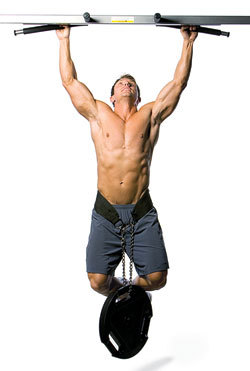
Opposite: Pull-ups (not lat machine pull downs), inverted body rows and bent over DB rows.

It’s not by accident that I added three pulling exercises to contrast the one dominant pushing exercise that is most popular.  3:1 ratio seems to clean up a lot of dysfunction and sure makes your shoulders feel a lot better.


basketball resources


7-9 tomorrow....


Art Horne is the Coordinator of Care and Strength & Conditioning Coach for the Men’s Basketball Team at Northeastern University, Boston MA.  He can be reached at a.horne@neu.edu.

Topics: Art Horne, basketball performance, basketball conference, boston hockey summit, athletic training

Do The Opposite

Posted by Boston Sports Medicine and Performance Group on Mon, Feb 14, 2011 @ 07:02 AM

I once heard Mike Boyle say if you ever want to get fit, simply go to your nearest commercial gym and do the exact opposite of what everyone is doing.  I decided to put his theory to the test at our general student fitness facility this past week. 


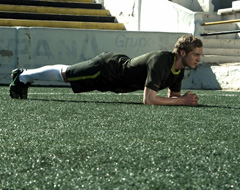
1. Commercial Gym Choice: Laying down and lumbar flexion

athletic training conference


I think this exercise choice can be summed up best when I heard one kid ask another,”Are you sure this is suppose to hurt like this?”


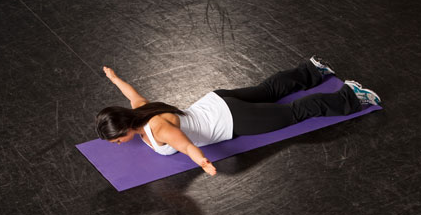
Opposite Choice: anything not involving lumbar flexion including front bridges and McGill’s Big Three.


basketball conference

(ahhh, sweet back relief)

2. Commercial Gym Choice: Slow Paced Jog


boston hockey summit


What’s the definition of crazy? Doing the same thing over and over again and expecting a different result.  I’ve never understood why people continue to jog at a slow pace for hours on end and then act surprised when they haven’t lost any weight or end up injured.


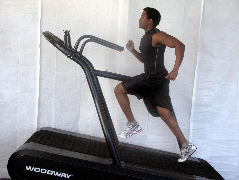
Opposite Choice: it was a nasty Boston day with snow and sleet so elected to stay inside and join the herd of runners on the treadmills except choosing to ramp both speed and incline upwards while jumping on and off in 30:30 second sprint intervals. 

athletic training resources


3. Commercial Gym Choice: Partial Body Weight Movement

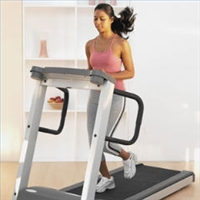
During the aforementioned sprint rest intervals I couldn’t help but notice on the woman on the treadmill beside me. Her treadmill was set to the highest incline possible with both hands on the front rail holding on for dear life!  I’ve never seen anything like it before – it was as if she was in a hurricane and the rail at the front was her lifeline! Not to be outdone, the guy on the stair climber just down from her had the reverse-extended-elbow lock on each hand rail suspending his body weight overtop of the moving stairs below.  If you choose to utilize any type of “cardiovascular” equipment be sure to move your own body weight and not have the machine help you out.


athletic training resources

(ok, so she's not hanging on for dear life, but why is she hanging on at all? Is it that hard to walk?)


Opposite: I was still sprinting without holding on so I figured this one was covered.


More tomorrow....

Art Horne is the Coordinator of Care and Strength & Conditioning Coach for the Men’s Basketball Team at Northeastern University, Boston MA.  He can be reached at a.horne@neu.edu.

Topics: Art Horne, basketball resources, basketball conference, basketball training programs, athletic training conference, boston hockey summit, athletic training books

If you're not fired up with enthusiasm...

Posted by Boston Sports Medicine and Performance Group on Fri, Feb 11, 2011 @ 07:02 AM


.... you might just end up being fired with enthusiasm.


T.G.I.F - Thank Goodness I'm Fired-Up! 

athletic training conference

Topics: Art Horne, basketball conference, athletic training conference, boston hockey summit, athletic training, boston hockey conference

Texting While Working by Seth Godin

Posted by Boston Sports Medicine and Performance Group on Thu, Feb 3, 2011 @ 07:02 AM

athletic training conference


Texting while working

Yes, you shouldn't text while driving, or talk on the cell phone, or argue with your dog or drive blindfolded. It's an idiot move, one that often leads to death (yours or someone else's).

I don't think you should text while working, either. Or use social networking software of any kind for that matter. And you probably shouldn't eat crunchy chips, either.

I don't think there's anything wrong with doing all that at work (in moderation). But not while you're working. Not if working is that the act that leads to the scarce output, the hard stuff, the creative uniqueness they actually pay you for.

You're competing against people in a state of flow, people who are truly committed, people who care deeply about the outcome. You can't merely wing it and expect to keep up with them. Setting aside all the safety valves and pleasant distractions is the first way to send yourself the message that you're playing for keeps. After all, if you sit for an hour and do exactly nothing, not one thing, you'll be ashamed of yourself. But if you waste that hour updating, pinging, being pinged and crunching, well, hey, at least you stayed in touch.

Raise the stakes.


Topics: basketball conference, athletic training conference, boston hockey summit, Seth Godin

Ignorance Is Bliss

Posted by Boston Sports Medicine and Performance Group on Wed, Feb 2, 2011 @ 07:02 AM

athletic training conference


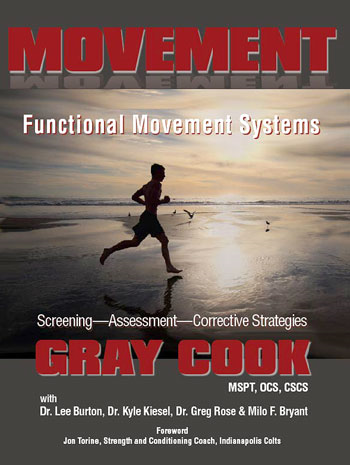
Gray Cook reminds us in his most recent book, Movement, that things are not always what they appear.


• What we view as weakness may be muscle inhibition
• The weakness is a prime mover might be the result of a dysfunctional stabilizer
• Poor function in an agonist may actually be problems with the antagonist.
• What we view as tightness may be protective muscle tone, guarding and inadequate muscle coordination.
• What we see as bad technique might be the only option for the individual performing poorly selected exercises.
• What we see as a low general fitness may be the extra metabolic demand produced by inferior neuromuscular coordination and compensation behavior.

-pg.25. Movement by Gray Cook.

....or we could just ignore these points and sleep a whole lot better at night "knowing" that our patients somehow simply didn't respond to our "traditional" treatment protocol.

... or we could take a look a little bit further down the rabbit hole.

The decision is yours. 


Art Horne is the Coordinator of Care and Strength & Conditioning Coach for the Men’s Basketball Team at Northeastern University, Boston MA.  He can be reached at a.horne@neu.edu.

Topics: basketball conference, athletic training conference, boston hockey summit, Gray Cook, Movement

Mark Toomey and Dr. Di Muro finalize Sports Med/Rehabilitation Track

Posted by Boston Sports Medicine and Performance Group on Tue, Feb 1, 2011 @ 07:02 AM

athletic training conference

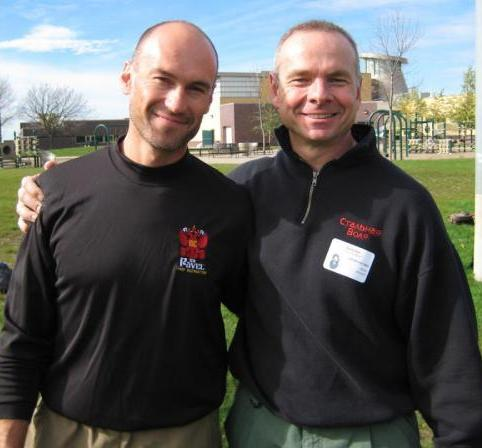
Mark Toomey (right) pictured here with Pavel Tsatsouline.


I first met Mark at an SFMA course this past summer and although I signed up for the two day course and appreciated everything the course had to offer, I found myself returning for the second day solely to speak with Mark. To say Mark is electric and a true master of his trade would be a severe understatement – his energy and world experiences in elite level training along with his many experiences with rehabilitation is sure to enlighten and invigorate all those that hear him speak.  Along with Dr. Di Muro, Mark’s presentation will explore how best to approach pain management, rehabilitation and training from a truly integrated and patient centered approach.

Conference Agenda and Registration details for Standing On The Shoulders Of Giants, are coming soon.

Be sure to save the date and plan on joining us June 3rd and 4th in Boston this coming summer.


Art Horne is the Coordinator of Care and Strength & Conditioning Coach for the Men’s Basketball Team at Northeastern University, Boston MA.  He can be reached at a.horne@neu.edu.


Topics: basketball conference, athletic training conference, boston hockey summit, athletic training, boston hockey conference, Pavel Tsatsouline, Kettlebell Instruction, Mark Toomey

Off-Season Workouts Need Changes Before The Next Funeral by Dennis Dodd

Posted by Boston Sports Medicine and Performance Group on Mon, Jan 31, 2011 @ 06:01 AM

This article originally appeared on CBSSports.com by Senior Writer Dennis Dodd on Jan. 26, 2011

This is The Kill Season. It operates mostly out of mind and certainly out of sight. It has claimed 19 lives since 2000. The annual window of death in college football basically opens this month. And it's all completely accepted. It is a part of the football culture -- winter conditioning, offseason conditioning, summer conditioning. All of it. More specifically, The Kill Season begins in January and stretches to the beginning of fall drills in August. That's a long time for anyone to be at mortal risk, but it's true. There are 21 souls practically screaming from the grave. They represent the number of non-traumatic deaths in NCAA college football since 2000. All but two have come in that January-August window. Jordan Bernstine posted on Facebook last week about the rigors of Iowa's workouts.

That's non-traumatic as in, no game, no hitting. Mostly just ... working out. Eleven of those deaths are clustered at the top level, Division I-A. The latest death, Ole Miss' Bennie Abram, isn't even a year old. Still, the Kill Season moves on, largely unregulated judging by the early returns from Iowa on Tuesday. Twelve Hawkeyes were rushed to the hospital Monday with what the Cedar Rapids Gazette described as exertional rhabdomyolysis. It's a condition caused by overexertion that leads to the breakdown of skeletal muscle. As the muscle breaks down, it releases toxins into the urine. One Iowa player reportedly involved posted this on his Facebook page according to reports: " ... in the hospital ... turns out its bad news bears wen ur wiz is brown."

I'm pretty sure that when parents and players signed those scholarship papers, there was no disclaimer about brown urine. An Iowa release said the players were in "safe and stable condition." That sounds reassuring. But post-winter conditioning news shouldn't have to be reassuring. It's never a good thing when athletes who go into a workout come out "responding well to treatment."

To be fair, there is a long way to go figuring out exactly what happened at Iowa. As of Wednesday morning, the school said that the hospitalizations were "likely related" to the program's offseason drills. Per NCAA rules, players can participate in supervised, two-hour workouts daily. There is a limit of eight hours per week. No one has died in a I-A game in that time frame. No one has died during that period in a formal practice at a I-A program during that time. The deaths have been clustered in the offseason and at big-time programs.

In the past year, noted Oklahoma head trainer Scott Anderson has spoken before the American Football Coaches Association, the National Athletic Trainers Association, the National Association of Collegiate Directors of Athletics and the National Strength Coaches Association. His message:

"The way we're training college football players in this day and age is putting them at risk," said Anderson, also current president of the College Athletic Trainers Society.

Anderson was not speaking specifically about Iowa but it's clear the culture has to end. There is example after example of players being driven too hard, too fast and for too long in offseason conditioning. It's a macho thing for the coaches. It's a badge of honor for (some) players to throw up in a trash can. Thursday marks the 10th anniversary of the Oklahoma State basketball team's plane crash that killed 10 men on the way back from a road trip. Schools across the country have changed their travel and safety policies when it comes to flying. As for offseason conditioning ...

"Twenty-one dead football players and we're still today training them the same way as we did dating back to at least January, February of 2000," Anderson said.

The rash of recent deaths basically started in 2001, when Florida State player Devaughn Darling died during a so-called "mat drill," an intense series of training stations. In 2004, the family settled with FSU for $2 million but contended in the suit that Darling was not provided water during the drills. There is still disagreement about Darling's cause of death but both Devaughn and surviving brother Devard, who transferred from FSU to Washington State after the death, were found to have the sickle cell trait. A portion of those 21 deaths can be traced to the condition that causes blood cells to "sickle" during overexertion.

The first known case of sickle cell trait causing a death at the NCAA level was discovered at Colorado in 1974. It wasn't until last year -- after a lawsuit involving a deceased Rice player -- that the NCAA mandated schools test for the condition.

"The intensity with which it [offseason drills] is done is not sport specific," Anderson said. "The intensity becomes irrational. The intensity, if not the drill, is wholly, fully irrelevant to sport. It's just purely, openly punishment, not performance."

Again, Anderson was speaking in general, not about Iowa. Hawkeyes strength coach Chris Doyle, 42, has been at the school since 1999. He previously worked in strength and conditioning at Utah and Wisconsin. Doyle did not immediately return a phone call seeking comment. Anecdotally, though, the picture is becoming clearer. The Des Moines Register reported that six days ago the Facebook page of Iowa player Jordan Bernstine stated, "Hands down the hardest workout I've ever had in my life! I can't move!"

The NCAA Manual states that a member of the "sports medicine staff" must be present at all voluntary conditioning drills conducted by the strength coach. That medical staff member must have the "unchallengeable authority" to cancel or modify workouts for safety reasons. An Iowa spokesman said Wednesday he did not know whether a medical staffer was present at the workout.

We probably won't know the Iowa details for a while, but one player going to the hospital is unacceptable. When 13 players go to the hospital, all with the same condition, I'm not the only one who thinks someone should be fired. The workout culture of a football program must be changed. The shame of it is, none of this is new. It's no secret that most of college football's deaths in the past decade largely haven't resulted from playing college football.

The question is why coaches feel compelled to carry on this brutal practice. Mat drills. Throwing up. Championships may be won in the offseason but lives are put at stake, too. Depositions in a wrongful death lawsuit against Missouri showed "trainers and strength coaches ... knew little about warning signs of exercise-induced trauma brought on by sickle cell trait," according to a 2009 wire story.

Players are being worked to death and there is no reason. When the Iowa story broke, a highly placed source involved in student-athlete health care e-mailed me Tuesday night to say, "We are at the onset of the most dangerous and deadly season -- NCAA off-season football conditioning ... or what passes for conditioning."

Until the culture of football changes, might as well call it what it really is: The Kill Season.

Topics: rhabdomyolysis, iowa football, football off-season workouts

Three Ways To Help People Get Things Done by Seth Godin

Posted by Boston Sports Medicine and Performance Group on Thu, Jan 27, 2011 @ 07:01 AM

Three ways to help people get things done

basketball resources


A friend sent me a copy of a new book about basketball coach Don Meyer. Don was one of the most successful college basketball coaches of all time, apparently. It's quite a sad book—sad because of his tragic accident, but also sad because it's a vivid story about a misguided management technque.

Meyer's belief was that he could become an external compass and taskmaster to his players. By yelling louder, pushing harder and relentlessly riding his players, his plan was to generate excellence by bullying them. The hope was that over time, people would start pushing themselves, incorporating Don's voice inside their head, but in fact, this often turns out to be untrue. People can be pushed, but the minute you stop, they stop. If the habit you've taught is to achieve in order to avoid getting chewed out, once the chewing out stops, so does the achievement.

It might win basketball games, but it doesn't scale and it doesn't last. When Don left the room (or the players graduated), the team stopped winning.

A second way to manage people is to create competition. Pit people against one another and many of them will respond. Post all the grades on a test, with names, and watch people try to outdo each other next time. Promise a group of six managers that one of them will get promoted in six months and watch the energy level rise. Want to see little league players raise their game? Just let them know the playoffs are in two weeks and they're one game out of contention.

Again, there's human nature at work here, and this can work in the short run. The problem, of course, is that in every competition most competitors lose. Some people use that losing to try harder next time, but others merely give up. Worse, it's hard to create the cooperative environment that fosters creativity when everyone in the room knows that someone else is out to defeat them.
Both the first message (the bully with the heart of gold) and the second (creating scarce prizes) are based on a factory model, one of scarcity. It's my factory, my basketball, my gallery and I'm going to manipulate whatever I need to do to get the results I need. If there's only room for one winner, it seems these approaches make sense.

The third method, the one that I prefer, is to open the door. Give people a platform, not a ceiling. Set expectations, not to manipulate but to encourage. And then get out of the way, helping when asked but not yelling from the back of the bus.
When people learn to embrace achievement, they get hooked on it. Take a look at the incredible achievements the alumni of some organizations achieve after they move on. When adults (and kids) see the power of self-direction and realize the benefits of mutual support, they tend to seek it out over and over again.

In a non-factory mindset, one where many people have the opportunity to use the platform (I count the web and most of the arts in this category), there are always achievers eager to take the opportunity. No, most people can't manage themselves well enough to excel in the way you need them to, certainly not immediately. But those that can (or those that can learn to) are able to produce amazing results, far better than we ever could have bullied them into. They turn into linchpins, solving problems you didn't even realize you had. A new generation of leaders is created...

And it lasts a lifetime.

Topics: basketball conference, athletic training conference, boston hockey conference, Seth Godin

BSMPG Announces Finalized Hockey Speaker Set For June 3/4 Conference

Posted by Boston Sports Medicine and Performance Group on Wed, Jan 26, 2011 @ 08:01 AM

boston hockey summit


BSMPG is proud to announce the finalized speaker set for this year's Hockey Summit in Boston June 3rd and 4th.  This will be the third consecutive year that BSMPG has hosted the nations top Hockey Training Conference with this year boasting the most impressive speaker set yet! 

With Speakers representing Boston College, University of Wisconsin, University of Minnesota and Quinnipiac University along with the NHL's Carolina Hurricanes joining Keynote speakers which include Dr. Shirley Sahrmann, Tom Myers, Clare Frank, Charlie Weingroff and Pete Viterriti - this event is a must for anyone involved in the training and care of the hockey athletes.

Topics: boston hockey summit, Brijesh Patel, Charlie Weingroff, hockey conference, Russ DeRosa, Jim Snider