Boston Sports Medicine and Performance Group, LLC Blog

Focus On The Fundamentals Pays Off

Posted by Boston Sports Medicine and Performance Group on Tue, Jan 25, 2011 @ 18:01 PM

athletic training conference


An Update on Boston Promise

by Steve Cassidy 

Boston Promise experienced a remarkable first year on the court. Basketball (and academic) skill sessions were held at Basketball City twice a week from April through November. Through grueling sessions focused on fundamentals, players showed marked improvement in their games. On the weekends the program competed in tournaments both locally and regionally. The schedule included such challenging events as the Hoop Mountain Classic and the Gym Rat Challenge which brought in teams from all over the northeast. All the hard work paid off when Boston Promise earned its first tournament championship by capturing the Middlesex Magic Classic in October.

Learn more about the Boston Promise approach and values by visiting their website.

Boston Promise:

Our mission is to assist Boston's youth basketball players in fulfilling their promise as scholars, athletes and leaders in their communities. We aim to increase these young players' opportunities for higher education by providing them with the knowledge and experiences that will prepare them for college-level academics and basketball.

Learn how you can get involved by clicking HERE.


Topics: basketball performance, basketball conference, athletic training conference, Boston Promise

Inner City Weightlifting by Sarah Cahill

Posted by Boston Sports Medicine and Performance Group on Mon, Jan 24, 2011 @ 10:01 AM

athletic training resources

For the past three months I have been dedicating my Saturdays to an incredible program called Inner City Weightlifting.  The program takes young people who are on a direct path to gang involvement and provides them with opportunities to participate in the sport of Olympic Lifting.  Inner City Weightlifting provides students with career opportunities working for the nonprofit itself and in the field of personal training.  The sport, coaches, and atmosphere facilitate a positive change for these students.  As a student attempts to set a new personal record (PR) for weight lifted, everyone stops and watches.  The lifters help ‘pump up’ the student’s morale and something unexpected happens: children who have been given limited support outside of a gang, are now encouraging each other, and a bond and team is formed.  Every Saturday I look forward to spending time with this group of amazing young people and am reminded of the power of believing in the potentiality of others.

Stories demonstrating the success of the program

One student came to us 2 months ago. He was a member of one of the most high-profile gangs in Boston, and had been in and out of jail since his early teens. In January, 2010 he was shot 5 times in the torso. He was left paralyzed from the waste down, and homeless.

When we first started working with him, his future was dim. Over the last two months, however, his attitude has changed. We found him a job opportunity working with us, he is considering furthering his education, and he has made incredible progress in the strength and motion of his legs.

A few weeks ago, we got a call from his caseworker at Boston Medical Center. In the background we heard his voice shouting "ask them how many pull ups I do now!"

At the next practice he approached the coaches.   He was getting papers signed, so we can work closely with his psychiatrist as well. Our coaches said, "Of course. Always let us know if there is anything we can do to help."

His response, "You already are."

Another story about one of our students….
 “Eduardo” grew up on streets claimed by MS-13. He joined the gang at age 13. By 14, he was locked up for a year. Upon release he was stabbed and jumped several times.  He faces an almost overwhelming pull to return to a life of violence.
Eduardo was under house arrest when we met. We set up equipment in his basement. At this time he was considering dropping out of school. During our sessions he spoke about what he had been through. We listened.  At his next court appearance we lobbied his probation officer to let us work with him in a proper training facility.

Eduardo has been training at our gym for four months now. In truth, he has a chance. He’s set a goal of lifting more weight than anyone else in his weight class. He’s begun to speak about turning his grades around and attending Michigan State.  Lifting, he’s told us, is his way to stay out of trouble. It is something he cannot do drunk or stoned. He cannot be at the gym and wandering the streets simultaneously. Eduardo now wants to come to practice every day.

Program Update

The biggest obstacle which we are facing at Inner City Weightlifting is finding facilities where we can bring our students to train.  Many facilities have closed their doors after learning more about the students we work with and what backgrounds they have.  Less than 1% of the population in Boston is responsible for more than 50% of the youth violence.  Inner City Weightlifting is providing these youth with the confidence to say no to violence and yes to opportunity.  It’s amazing what can happen if we open the doors for opportunity.


Links and Videos


Here is a news clip which aired on Channel 5
http://www.thebostonchannel.com/news/26134469/detail.html
 
Here is a link to the Inner City Weightlifting website
http://www.innercityweightlifting.org/

-Sarah Cahill

Topics: innercity weightlifting, sarah cahill

Load vs Mechanics

Posted by Boston Sports Medicine and Performance Group on Thu, Jan 20, 2011 @ 07:01 AM

athletic training resources


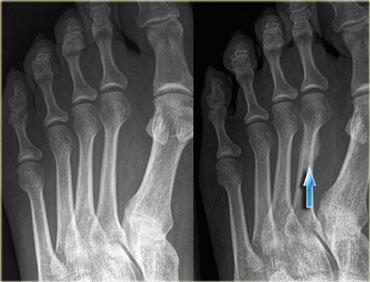
In discussing a case of stress fractures with some friends recently, the concept of Load vs. Mechanics was discussed.

“It’s all load. Too much running, too much conditioning heading into the season,” suggested the athletic trainer in the room.

“No, no, no – that kid was set up to fail from the start. She’s got funny feet and that’s the reason. Everyone else ran the same distance and didn’t have a problem.”

The conversation ultimately boiled down to this:

Are you applying an unreasonable amount of load to normal mechanics or are you applying a reasonable amount of load to unusual mechanics?

Yes, too much load too fast will always get you there, but having “abnormal” mechanics will certainly ensure that you get there a whole lot faster.

My father would always tell me that every time you point your finger there are three others pointing right back at you.

So the next time your athlete walks in reporting a stress fracture don’t be so quick to point the finger at the group down the hall, and instead ask yourself if that athlete suffered their injury from load or mechanics and what you did to screen, monitor and address the problem BEFORE it sidelined them.


Art Horne is the Coordinator of Care and Strength & Conditioning Coach for the Men’s Basketball Team at Northeastern University, Boston MA.  He can be reached at a.horne@neu.edu.


Topics: Art Horne, basketball performance, basketball conference, athletic training conference, boston hockey summit, boston hockey conference

Your Engine Light Is On

Posted by Boston Sports Medicine and Performance Group on Tue, Jan 18, 2011 @ 07:01 AM

athletic training resources

I’m always amazed during fall pre-participation screenings how accepting we’ve become to athletes reporting pain.

“Ya, it hurts, but it never keeps me from playing.”

That line is often followed by:

“Ok, let me know when it really bothers you” (which is usually too late) or, “just make sure you ice after practice each day (like that was some magic bullet which was going to keep them from missing practice or playing time during the year).

One of the most important reasons to screen your athletes prior to participating in athletics is to “filter” out those that experience pain during simple motions and motor patterns. If an athlete reports pain during a deep squat or a simple McKenzie press up, how do we expect them to get through fall camp?

Reporting pain is not a bad thing.  It’s simply an opportunity for us to address dysfunction before that pain becomes a problem.


“Pain is a warning sign. Long before pain represents a chronic problem, it can alert us to poor alignment, overuse, imbalance and inflammation.  We embrace all the other warning signs in our lives – computer virus alerts or the oil light on the dashboard – but when it comes to the body, we act as if the warning sign of pain is an inconvenience.  We cover it up so we can keep moving. If we ignore pain’s natural self-limiting nature, we are ignorant to the lessons its ancient design provides.”
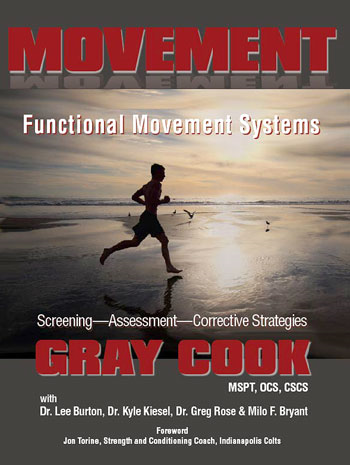
p. 50. Movement by Gray Cook.


Art Horne is the Coordinator of Care and Strength & Conditioning Coach for the Men’s Basketball Team at Northeastern University, Boston MA.  He can be reached at a.horne@neu.edu.


Topics: Art Horne, basketball resources, athletic training conference, boston hockey summit, boston hockey conference, basketball videos

Listen and Silent

Posted by Boston Sports Medicine and Performance Group on Mon, Jan 17, 2011 @ 07:01 AM

athletic training resources


Is it any wonder that both Listen and Silent contain all the same letters?
How many times have you been listening to a colleague only to find your mouth moving the entire time?

They say silence is golden; rearrange the letters and you’ll find listening might just be as valuable.


Art Horne is the Coordinator of Care and Strength & Conditioning Coach for the Men’s Basketball Team at Northeastern University, Boston MA.  He can be reached at a.horne@neu.edu.

Topics: Art Horne, basketball conference, athletic training conference, boston hockey conference

Doing What You're Told

Posted by Boston Sports Medicine and Performance Group on Wed, Jan 12, 2011 @ 07:01 AM

athletic training resources


Some people don’t do what they’re told, and others only do what they are told.

Both are problems.


Topics: Basketball Related, Art Horne, basketball resources, basketball conference, basketball training programs, athletic training conference, boston hockey conference

Present and Accounted For

Posted by Boston Sports Medicine and Performance Group on Tue, Jan 11, 2011 @ 07:01 AM


A few weeks back, I was asked to place an order for one of my coordinators.  “No problem,” I thought, “this should be a quick phone call.”  I phoned the salesperson listed on the quote and was greeted by a voicemail that told me they were on vacation (no timetable for their return) and advised me NOT to leave a message.  Really?  Ok.  For attempt number two, I called the company’s direct line and instead of being able to speak to a person who could help me I was greeted with a number of confusing options, none of which appeared to be sales or customer service.  I hit zero on my phone and was put on hold.  When someone picked up and I explained my dilemma I was told that they weren’t positive, but they thought I should speak with Sales.  After I hastily agreed, I was transferred there and got the voicemail of another salesperson.  Two days later that salesperson returned my call and after I explained myself again I was told that I really should speak with the salesperson that had sent the quote over.  For the third time over the course of three days, I explained that I had unsuccessfully attempted to do this, only to be rebuffed by his out of office message.  When the salesperson told me that their colleague would be returning next week “he thought”, I explained to him that if they could not help me place my order today that I would find another company that could.  Suddenly, they were very helpful. 

What can we learn from this experience? Quite a bit actually.  First of all, automated messages may save you some time in answering common questions or directing people to the proper source, but I think everyone appreciates the personal touch of an organization that has an actual person picking up their phone during business hours.  What a novel concept!  Secondly, if you do not know the answer to someone’s question, find it.  I do not ever want to hear the phrases “I’m not sure” or “I don’t know” unless they are followed by “but let me find that out for you”.  Finally, when you get passed around repeatedly, the easiest solution is to go somewhere else.  If you are not the person that can help me, then . . . and get ready for this, it is a real doozy . . . how about finding someone that can?

The lessons from this story are many, but they all boil down to making sure that you and your staff are present.  It is a simple concept, but making sure that you are willing and able to assist your client base goes a long way towards furthering your performance and reputation.  This does not mean that you should be available 24/7 or that you should not be taking personal time.  What it does mean is that your clients understand how they can get what they need, when they need it.  For instance, if you are not available during regular business hours, is someone else on your staff ready to step up and assist or will the customer be brushed off?  We have all had those miserable experiences as customers from time to time, but ask yourself this; when you do have a miserable customer experience, are you likely to go back?  We are all consumers of differing varieties whether you are a student-athlete, patient, or just a person looking to buy a pair of sneakers.  If your customers cannot get what they need from you, it will not be long before they start looking somewhere else. 


Shaun Bossio is the Assistant Business Manager and ProShop Manager at Boston University FitRec.
He can be reached at sbossio@bu.edu

Topics: Guest Author, Good to Great, discipline, customer service

Consult A Physician

Posted by Boston Sports Medicine and Performance Group on Mon, Jan 10, 2011 @ 07:01 AM

basketball conference


Too good not to share....

This article originally appeared on ESPN.com - TrueHoop by Henry Abbott on 1/3/11

So, it's a new year, and thanks to the power of resolutions, the gym is crowded again.

All these people who have not worked out in a long time are back at it, for now.

Doesn't that picture worry you just a little? All that sedentary living, followed by a frenzy of playing hoops again, or running, or spinning or whatever ... that's like an injury waiting to happen. Muscles and tendons and joints that have been aging without conditioning, now tested once more.

It's no wonder that every advertisement pushing workouts includes the line about consulting a physician before beginning an exercise regimen.

But this is what strikes me: Really? You need a doctor's note to exercise?

Isn't that entirely backwards? Shouldn't you need a doctor's note to sit on the couch instead?

In other words, if you don't exercise for six months, then sprain your ankle playing hoops one time, it's the sitting that needs to stop, not the hooping. Right?

These days, we spend the vast majority of our lives sitting still in the dim light, or lying down, watching screens. And you can make a pretty strong case it's killing us.

We're descended from people who moved their bodies just about all day every day to stay alive. They got tons of sunlight. If you believe Christopher McDougall's thesis in "Born to Run," at a key stage in human evolution, our ancestors literally chased animals all day -- until the deer dropped from exhaustion. Imagine whole families together, including the children and the old people -- running one ultramarathon after another, for survival.

Now imagine getting those people, or their descendants, to sit in the car, at the desk, or on the couch all day. They'd go nuts! They'd have obesity, heart disease, diabetes, depression, and all the other leading killers in modern society.

So hell yeah, let's get out there. Let's honor those New Year's resolutions. Let's move these bodies that were meant to move. And when you find yourself slipping, a month or two from now, and thinking about spending less time in the gym and more time on the couch ... cal

Topics: Basketball Related, Art Horne, basketball performance, basketball resources, basketball conference

If You Don't Know Where You're Going, Any Road Will Take You There

Posted by Boston Sports Medicine and Performance Group on Thu, Jan 6, 2011 @ 08:01 AM

basketball conference


I ran into an old friend a few weeks ago and asked him what he did for screening at the end of his soccer season as I was looking to improve on our year end procedure.

“What do you mean?” he asked, “once the fall season is done I don’t really think about them until next fall again – maybe a few post-season surgery follow ups but that’s it.”

Puzzled, I asked,

-    How do you know what specific weaknesses each athlete should work on individually during the spring and summer to avoid injury next fall?
-    How do you know if your rehabilitation programming was successful? Did the athlete with the ankle sprain ever regain their single leg hop test distance (oh, I guess you have to measure that to be able to compare)
-    How do you know if your strength program lowered the team’s injury rate from previous years? Did it maintain lower extremity strength and power over the course of the season?

How do you know where you’re going if you don’t know where you are to begin with?

Art Horne is the Coordinator of Care and Strength & Conditioning Coach for the Men’s Basketball Team at Northeastern University, Boston MA.  He can be reached at a.horne@neu.edu.

Topics: Basketball Related, Art Horne, basketball resources, boston hockey summit, boston hockey conference, basketball videos

Mobility and Stability - Things Aren't Always As They Appear

Posted by Boston Sports Medicine and Performance Group on Wed, Jan 5, 2011 @ 07:01 AM

basketball conference

How closely are you looking at your athletes?


"Loss of mobility is sometimes the only way the body can achieve a point of stability, but that stability is not authentic. It is often seen or observed as stiffness or inflexibility, but on a sensory motor level, it is part of a system with no other available choice. It is basically engineered dysfunction at a local level to allow continued physical performance at a global level."

Pg. 27. Movement by Gray Cook.

Topics: Basketball Related, Art Horne, basketball resources, basketball conference, boston hockey summit, Gray Cook, Movement