
Boston Sports Medicine and Performance Group, LLC Blog

Mental toughness training meet your good friend Rhabdo

Posted by Boston Sports Medicine and Performance Group on Thu, Aug 26, 2010 @ 06:08 AM

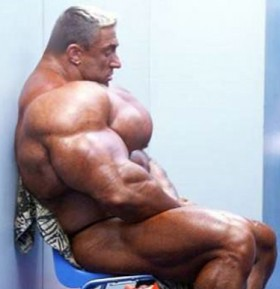
Just in case you missed it, earlier this week 19 Oregon Football Players were hit with a “very weird” illness after a  workout session.  One doctor called it a compartment syndrome, I’m guessing this one smells a bit more like Exertional Rhabdomyolysis (RAB-DOE-MY-O-LIE-SIS) or Rhabdo. 

What is this strange animal you may ask? Simply stated, Rhabdo is a rapid breakdown and destruction of skeletal muscle resulting in the release of muscle fiber contents or myoglobin into the bloodstream. Symptoms include:muscle pain, weakness and swelling along with cola colored urine.

No problem right? That’s how you build big muscles, you tear um down first to then build them bigger and better! What doesn’t kill you makes you stronger!
dunk shot
Well, not exactly. You see, Rhabdo can ultimately lead to death via kidney failure.

So what causes Rhabdo?

The list includes but not limited to:

• muscle trauma or crush injury
• severe burns,
• physical torture or child abuse
• prolonged lying down on the ground (people who fall or are unconscious and are unable to get up for several hours)
• prolonged coma,
• severe muscle contractions from prolonged seizures
• cocaine use with related hyperthermia (increased body temperature),
• extreme physical activity (running a marathon),
• low circulating phosphate, potassium, or magnesium levels in the blood (electrolytes)
• prolonged drowning or hypothermia (low core body temperature)
• lack of blood perfusion to a limb

Pretty extreme stuff isn’t it?  Here is some more info: http://www.bsmpg.com/exertional-rhabdomyolysis

Other contributing factors include: initial fitness level at the beginning of a training program, extreme heat and levels of dehydration.

Now I wasn’t in Oregon this week, nor do I have any additional information regarding the type of training these young men were doing and for the purpose of this rant it doesn’t matter.  My only goal is to provide a basis for conversation between your Sports Medicine and Performance Departments on how to recognize the onset of Rhabdo, and better yet avoid it all together.  And although there’s plenty of football and hockey dads out there that pay good money to coaches around the country to make their kids puke during workouts, I hope that a culture of “superdiscipline” and common sense instead becomes the standard conditioning test this fall.

Now drop and give me 500!


Art Horne is the Coordinator of Care and Strength & Conditioning Coach for the Men’s Basketball Team at Northeastern University, Boston MA.  He can be reached at a.horne@neu.edu.

Topics: athletic training, Strength & Conditioning, Health, mental training, rhabdomyolysis, discipline, evidence based medicine, mental toughness

What's your definition of evidence based medicine?

Posted by Boston Sports Medicine and Performance Group on Wed, Aug 25, 2010 @ 06:08 AM

everything basketball


On line resources define Evidence Based Medicine as the following:

ev•i•dence-based med•i•cine

noun

Definition:
 
treatment based on reliable evidence: the use of clinical methods and decision-making that have been thoroughly tested by properly controlled, peer-reviewed medical research.

Now that we got that out of the way we can move forward with your definition?

The same?

You sure?

No other phrase has infiltrated both sports medicine and strength and conditioning more in the past decade, and for good reason. It guides clinical practice and allows us to allocate resources, time, and personnel towards obtaining best practice.  The problem is not with evidence based medicine but with individuals providing “their own definition” in defense of the work they are conducting.

So the next time your co-worker starts ultra-sounding an entire thigh simply ask them what their definition of evidence based medicine is.  Hint: we are not allowed to each have our own definition.


Art Horne is the Coordinator of Care and Strength & Conditioning Coach for the Men’s Basketball Team at Northeastern University, Boston MA.  He can be reached at a.horne@neu.edu.



Topics: basketball conference, basketball training programs, athletic training conference, athletic training, Strength & Conditioning, Health, Good to Great, discipline, evidence based medicine, development, Leadership, managing

Are you filling the right gaps?

Posted by Boston Sports Medicine and Performance Group on Tue, Aug 24, 2010 @ 06:08 AM

dunk shot
A business friend of mine is always talking about gaps in the market and turning a profit.  Always looking to fill only those gaps that have a market and thus place only resources where they are best utilized.  In discussing our department and without knowing anything about Sports Performance, the first question he asked me was this,

“Is there a gap in the market? And is there a market in the gap?”

A classic example of a gap in the market was the introduction of the Segway.  At the time, and still to this day, there was no machine that enabled a person to stand upright and zip around at a running speed with little or no effort. A clear example of a gap in the market. 

The problem that the makers of the Segway ran into was that they never followed up the first question with the second and asked themselves, “Is there a market in the gap?”

Besides a few mall rent-a-cops, the Segway basically was a flop – no market in the gap despite the massive gap in the market.

If you follow the NBA, you’ve no doubt heard the story of Kevin Durant’s failed bench press attempt at the NBA combine his rookie year.  Kevin Durant can’t bench 185 lbs; some would say a clear a gap in his physique (market).  What many failed to see though, was that there was absolutely no need to fill this gap in Kevin’s physique.  Developing Kevin’s physique so that he could bench press 225 lbs, although fulfilling your ego, will not make him play any better… and hence no market in that gap. When examining your athletes both in rehab and performance the question we need to ask when addressing these programs is simple.

Is there a market in their gap? And if not, we need to start putting our resources into gaps that are marketable.


Art Horne is the Coordinator of Care and Strength & Conditioning Coach for the Men’s Basketball Team at Northeastern University, Boston MA.  He can be reached at a.horne@neu.edu.

Topics: basketball resources, athletic training, Strength & Conditioning, Ownership, Kevin Durant, discipline, development, Leadership, managing

I'm not a businessman, I'm a BUSINESS, man

Posted by Boston Sports Medicine and Performance Group on Sat, Aug 21, 2010 @ 17:08 PM


dunk shot

There's an employee outside of my department that I've known for some years.  For pretty much the entire time I have known them they have been telling people they were planning on leaving for greener pastures soon enough.  This has been going on for about five years now, but for some reason they have been unable to find a situation that better suits their needs.  In the interim, let's just say that they have not been the model of ownership.  Sure, they do their job, but along the way they also complain about their responsibilities, their poor compensation, and the state of their department in general to anyone willing to listen.  They also fail to understand why it is that they are still stuck in a less than ideal circumstance and are unable to find another job.  Hmmm, baffling.

You may recognize it, but the title of this post is taken from a quote by entrepreneur Shawn Carter who you may know better as Jay-Z.  Over the years Carter has continually reinvented himself and excelled in every avenue that he's explored.  He has gone from being a successful artist to owning a record label, his own major clothing line, a chain of upscale sports bars, and an ever increasing number of other ventures.  Carter continually excels because he has the drive to succeed, but also because he understands that his name is a brand.  In today's age many artists, athletes and other celebrities continually make poor decisions that ultimately paint their names in a negative light and simultaneously limit their future potential.  While many of these people do not fully understand that their name is their brand, Carter grasps the notion that while he is marketing all of his businesses, more importantly he is marketing himself. 

What does this have to do with you?  Let's forget about the effect your actions have on your workplace for a minute and focus on the effect they have on you.  Every decision you make, every meeting you attend, and every conversation you have impacts the way that supervisors, employees, and co-workers perceive you.  When you complain about your surroundings, belittle your fellow employees or put forth a mediocre effort you are definitely influencing your image, but is that really the image you want to put forth?  Your brand is what ultimately makes the difference between advancing in your profession and continuing to work in a position that is less than your ideal circumstance.  You are your own business and you should be marketing yourself accordingly.  Shawn Carter knows it.  Why don't you?


Shaun Bossio is the Assistant Business Manager and ProShop Manager at Boston University FitRec.
He can be reached at sbossio@bu.edu

Topics: basketball performance, athletic training conference, athletic training, Strength & Conditioning, Ownership, shawn carter, jay-z, Good to Great, discipline, development, Leadership

When the gym is closed, the gym is closed

Posted by Boston Sports Medicine and Performance Group on Fri, Aug 20, 2010 @ 06:08 AM

If rules were meant to be broken, why do we even bother with them? We set policies for our student-athletes to help us maintain control over the things we are responsible for. So when Star Athlete says, ‘Mind giving me the security code to the weight room door so I can get in a lift after hours?’, no big deal right.

Except that Star Athlete might share that code with a roommate, and he/she might pass it along to two friends. All of the sudden, everyone has the code and even though the weight room is officially closed, it’s more open than ever. Now you have liability issues, and equipment will start to slowly disappear. All because you made an exception.

The hardest thing to do with masses of people is to implement a new policy. It is human nature to resist change. So when our job dictates we change the way something is done, we have to stand by that policy with no exceptions, even if it means being the bad guy every now and then. Once people realize that no actually means no, they will start to respect and follow your policy and your policy will be effective.

But then don’t start making exceptions!


Mark Harris is the Assistant Director of Athletic Development at Northeastern University.

Topics: basketball training programs, athletic training conference, Ownership, john wooden, customer service, development, Leadership

More facts please

Posted by Boston Sports Medicine and Performance Group on Thu, Aug 19, 2010 @ 06:08 AM

Everyone’s entitled to their own opinion but not their own facts.

When meetings boil down to people’s opinions, I usually have to leave. I know that we are each entitled to our own opinion.  I get that.

But don’t confuse your opinion with facts.

“Well, I feel this would be the best solution…”

Did you look at the distributor? Is there a cheaper way to get the same product? What about the warranty? How does it fit into our business model or fit our core principles? Is there evidence based literature that supports its use and price tag? Will it serve a large group or can it only be used by one individual at a time?

Facts take time to investigate.  They take energy and a “superdisciplined” approach. Opinions are like talk at the barbershop.

I’ll take an order of more facts please.


Art Horne is the Coordinator of Care and Strength & Conditioning Coach for the Men’s Basketball Team at Northeastern University, Boston MA.  He can be reached at a.horne@neu.edu.

 

Topics: basketball resources, athletic training conference, athletic training, Strength & Conditioning, Ownership, Good to Great, discipline, customer service, development, Leadership, managing

Running with scissors

Posted by Boston Sports Medicine and Performance Group on Wed, Aug 18, 2010 @ 06:08 AM

Sometimes it feels like we have so much to do, so many little fires to put out, so many tasks to accomplish in so little time that we forget we are running around with scissors.  Although this may not be literally speaking, the fact is that running with scissors, at least as my mom always told me, was dangerous.

Instead of running around with scissors in your hand, pass them off to someone that should actually be doing the trimming.   You see, when you’re doing the job that other people were suppose to do, you’re wasting your time as well as theirs.  When you do other people’s jobs you are actually making your organization worse.
Your job as a leader is to ask tough questions and challenge the scope of your job and the jobs of those around you.

Don’t confuse activities with accomplishments.

Now put down the scissors.


Art Horne is the Coordinator of Care and Strength & Conditioning Coach for the Men’s Basketball Team at Northeastern University, Boston MA.  He can be reached at a.horne@neu.edu.
Topics: Strength Training, basketball resources, athletic training conference, Ownership, Good to Great, discipline, athletic trainer, customer service, development, managing

Your Ownership Stake Equals 100%

Posted by Boston Sports Medicine and Performance Group on Tue, Aug 17, 2010 @ 06:08 AM

I had a manager from another company give me a call recently for a reference on a employee that worked for me several years ago.  He explained a little about the position and then I in turn told him a little about the employee's responsibilities here and how this particular person fit in with the group.  When I was done, he asked me how this employee stood out from the rest.  Great question.  My answer was immediate and without hesitation; they were one of my top students because they took ownership of their position. 

What is ownership exactly?  It's the difference between someone who does the minimum of what is expected of them and someone that takes a legitimate interest in improving their workplace.  Let's take the Ownership Quiz . . .

* During staff meetings, are you the person who volunteers for new tasks/projects or are you the person who lowers their eyes hoping someone else raises their hand?
* Do you take pride in the work you do on a day to day basis or do you simply do what is asked of you and be glad it's done?
* Do you take the initiative, bringing ideas for positive change to your office or are you the person that simply complains about how things could be better?
* If there is an issue outside of business hours, do your coworkers know it's alright to contact you or are they under the impression that would be a cardinal sin?
* Do you subscribe more to the idea of getting your job done rather than the phrase "business hours" or are you punching a clock at 9a and 5p every single day?

What if your well-being was tied directly into the performance of your whole office?  Well, I've got news for you.  It is.  Ownership is about treating your position as if you owned your own business.  It is about being a catalyst for positive growth in your environment regardless of whether you are the VP or an entry-level employee.  When you own your position, you are telling your supervisors, your co-workers, and the employees under you that you care.  You are providing a positive example for all and working towards bettering your environment regardless of the situation.  The highest compliment that I can give to any of my employees is that they took ownership of their position.  These are the ones that stood and continue to stand out from the crowd, even years later. 

Are you taking ownership of your workplace or just getting in the way of those that do?


Shaun Bossio is the Assistant Business Manager and ProShop Manager at Boston University FitRec.
He can be reached at sbossio@bu.edu

Topics: basketball resources, basketball training programs, athletic training conference, boston hockey summit, athletic training, Ownership, Good to Great, discipline, athletic trainer, customer service, everything basketball, development, managing, Announcements

Investing is tough

Posted by Boston Sports Medicine and Performance Group on Mon, Aug 16, 2010 @ 06:08 AM

The initial part of investing is tough. 

Whether its withdrawing a thousand dollars from your checking account to be placed in a high interest bond you can’t touch for 4 years, or the time you spend filling out your salary withholdings for your 401K retirement plan.  Putting “money in the bank” is tough.

It’s a whole lot easier to buy that extra pair of shoes you don’t need, or dine out at the restaurant down the street (again) instead of making dinner at home.

The same can be said at work.

Whether it’s investing time in a project to unify the language and exercise descriptions between the sports med and the strength staff, working with student-athlete welfare to design, manage and implement a comprehensive sports nutrition strategy or designing and tracking an injury assessment and prevention protocol for all athletes.  Putting “money in the bank” is tough.

It’s a whole lot easier to just let the weight room do their thing then complain about it , tell your athletes not to eat fast food (then sneak a McDeal Meal to your desk without them seeing), and just take vitals as your normal incoming screening process (I mean, that’s all the NCAA asks you to do)

What makes investing so difficult is that the investor, rarely ever sees a tangible return on investment within any “reasonable” amount of time.  That’s what makes investing in mutual funds so successful though. If you invest in them, they almost always pay off long term.  The same can be said for your investments at work; your return on investment is rarely within site, even though you know it will pay off eventually. 

Will you ever see the lack of arteriosclerosis that your nutrition plan and cooking classes had on your athletes? What about the injury you may or may not have prevented from your screening and intervention strategies?

The answer is you probably won’t. Your athletes and patients are only yours for four years. And like any good mutual fund, these investments take time to mature.  But just because you can't see the end result next week doesn't mean you stop investing.

The only return you’ll see now is a smile and a thank you.  But just like mutual funds, the investments you make at work today will always pay off in the future just as long as you keep putting money in the bank.


Art Horne is the Coordinator of Care and Strength & Conditioning Coach for the Men’s Basketball Team at Northeastern University, Boston MA.  He can be reached at a.horne@neu.edu.

Topics: basketball conference, basketball training programs, athletic training conference, athletic training, Good to Great, female strength training, Leadership, managing

In Any Asset, Appreciation is Key

Posted by Boston Sports Medicine and Performance Group on Fri, Aug 13, 2010 @ 06:08 AM

Every fall, we host a team-building/appreciation event for our student staff at the beginning of the school year.  It is a mixture of games, team activities, and learning in a fun environment.  I find that it's an important event for a few reasons.  First off, it is a chance for a large chunk of the 400+ students that work for our facility to get to know each other when otherwise they might not have an opportunity to.  Secondly, it is an opportunity for us to teach them a number of things about the facility and what we do in general and impart some basic departmental philosophies in them.  Finally, it is a way to give back to them for the excellent job that most of them do and for us to say that we encourage them to enjoy what they do, who they work with, and where they work.  It takes some work to pull off during a busy time of year, but it is something that the students have really enjoyed participating in and we feel that it is not an opportunity to be missed.

Recreation centers, athletic and other university departments all over the country are staffed by large numbers of the very students that their university has been built to service.  While their contributions can range from simple office tasks to critical on-the-job training and internships, they are a crucial cog in making any department run smoothly.  Let me ask you this question though; how often do you take time out to recognize them for their contributions?  I know some departments where students are just employees paid to do a task, no different than a Walmart.  They fill out their timesheets, they receive their check and they are told when they do things well/poorly.  Shouldn't that be enough?  Well, if you expect the bare minimum of effort from your student staff, then yes, the bare minimum of attention is what you should provide.  If however, you are trying to cultivate an environment where your students are enjoying where they work and giving out a maximum effort as a result, then I would encourage you to try a little harder to recognize them.  It doesn't take a lot of effort on our part, but the results can be phenomenal. 

When is the last time that you thanked your students?  What are you doing tomorrow?


Shaun Bossio is the Assistant Business Manager and ProShop Manager at Boston University FitRec.
He can be reached at sbossio@bu.edu
 

Topics: basketball resources, athletic training conference, athletic training, Good to Great, customer service, development, Leadership