Boston Sports Medicine and Performance Group, LLC Blog

Are We There Yet?

Posted by Boston Sports Medicine and Performance Group on Wed, Oct 20, 2010 @ 08:10 AM

ev

I heard a story recently about a basketball coach that will “get lost” on his way back to campus from the airport after picking up a recruit in an effort to intentionally place the recruit in an uncomfortable situation.

Two things happen.

1. The recruit will sit quietly, put their head down and perhaps jump on their cell phone, text message friends, headphones in and wait for the coach to find his/her way back to campus.
or
2. The recruit will ask questions about general directions, look for street signs that may aid in their quest back to campus and even some will use their technology packed phone to locate their whereabouts on GPS and plug in the schools address providing the coach a clear and decisive path back to campus.

With all things being equal, which kid would you rather have on your team?

Are you worth being recruited to a better team or are you quietly sitting at your desk, minding your own business waiting for others to figure things out?


Art Horne is the Coordinator of Care and Strength & Conditioning Coach for the Men’s Basketball Team at Northeastern University, Boston MA.  He can be reached at a.horne@neu.edu.


Topics: Art Horne, basketball conference, athletic training conference, hockey conference, motivation, Good to Great, everything basketball, development

The Future Of Sports Medicine Must Mirror Dentistry

Posted by Boston Sports Medicine and Performance Group on Mon, Oct 18, 2010 @ 08:10 AM

everything basketball

There are certain things you just have to do each day – brushing your teeth is one of them.

I first heard the analogy from an old friend of mine when discussing implementing an ACL prevention program with our soccer team and the struggles to keep the coaches on it once the season started,

“You wouldn’t brush your teeth everyday for six months and then stop for six months would you?”

Dentistry has is right.

Not just the brushing every day part, (although clearly important) but their whole approach.

You probably don’t even remember your first visit to the dentist do you?  That’s my point.  Dentists get you right from the get-go. You’re evaluated, x-rayed for a baseline to compare future visits to, you get picked at, poked and prodded and then they finish your visit with a cleaning, rinse and some fresh minty breath.

If you have good insurance you get to go back twice a year – Shoot, sometimes you go in and you don’t have any tooth pain at all. But isn’t this the point?

If the dentist finds tarter build up – BAM that little hook comes in and blasts that gunk right out of there.  No use in letting that sit until it causes a cavity – your dentist wouldn’t be doing their job if they did. 

Yet, many times (I really mean all the time) in sports medicine we see athletes and patients with poor movement patterns, dysfunctional squats, steps and lunges and we do nothing.

We wait.

Their knee doesn’t hurt yet.

No need to take a look.  No baseline assessment. No poking. No prodding.

Once in a while an athlete or patient comes in on the advice from a friend – they have back pain.

“No problem. I’ll help – let’s just get some ice and e-stim on that, there, that should do the trick.  See you tomorrow.”

If you went to a dentist and you had a tooth ache and they rubbed some Novocain on your gum and told you to come back the next day to do it again you’d soon find another dentist to go to. One that addressed the problem and not just the symptom, and one then that gave you some advice on how to avoid future problems.

Dentists do it right – Baseline Evaluation, Regular On-Going Assessment, Treatment/Maintenance  and Education.

I remember when I was a child brushing my teeth three times a day and then if on the rare occasion I was allowed to have some ice cream or candy my mother would make me do it again!

33 years later not a single cavity.

I wish I could say the same for my back pain.


Art Horne is the Coordinator of Care and Strength & Conditioning Coach for the Men’s Basketball Team at Northeastern University, Boston MA.  He can be reached at a.horne@neu.edu.

Topics: Art Horne, Health & Wellness, basketball performance, basketball training programs, boston hockey summit, Strength & Conditioning, basketball videos, orthopedic assessment, everything basketball

Are You Qualified? Preparing Your Athletes For Rotational Training

Posted by Boston Sports Medicine and Performance Group on Thu, Oct 14, 2010 @ 08:10 AM

everything basketball

In the vast majority of well planned programs in both Strength and Conditioning and Sports Medicine, athletes and patients must “qualify” for a particular exercise prior to being introduced to it as a formal part of their training or rehabilitation program.  For example, it would be ill advised to simply ask an athlete to perform depth jumps without knowing they had a sufficient strength base first (1.25 x BW for females and 1.5 x BW for males seems to be standard).  Hang Cleans are rarely taught until an athlete or patient shows proficiency in a box jump, good front squat technique and a reasonable strength base.  Even in Sports Medicine, one must “qualify” to drop the crutches after injury in favor of full weigh-bearing so long as they are abel to demonstrate normal, pain-free gait.  Yet, when it comes to addressing “core” exercises many are often prescribed without thought or prior planning.  This is especially true when evaluating rotational exercises.

McGill has demonstrated time and again that people with troubled backs simply use their backs more during activities.

“But you need a strong back don’t you?”

Well yes, but there’s more to it than that.  In fact, the guys that have these troubled backs most often have much stronger backs but are less endurable than matched asymptomatic controls (McGill et al, 2003).  In addition, those that have back pain (and a stronger back mind you) tend to have more motion in their backs and less motion and load in their hips.  And we all know what poor hip mobility means don’t we – you got it, back pain.  (McGill SM et al. Previous history of LBP with work loss is related to lingering effects in biomechanical physiological, personal, psychosocial and motor control characteristics. Ergonomics 2003;46:731-46.)

"So what does all this hip, back and stability stuff have to do with rotational core and power training? I just want to throw some heavy medicine balls against the wall and wake up the neighbors!”

Not so fast, as I mentioned, mobile hips and a stable and strong mid-section are paramount and a MUST prior to any type of rotational medicine ball or rotational power training.  The Mobility-Stability/Joint by Joint Approach to Training made famous by Boyle and Cook is of course a must, yet very few actually test to see if their athletes have “stability” where stability should lie – the lumbar spine. This is especially important for post players who require a decisive and strong drop step to establish position in the post. Any leakage in energy or disconnect between their shoulders and lower body will surely afford them a less than desirable position on the low post.

To view this complete article and view associated videos click HERE.

Art Horne is the Coordinator of Care and Strength & Conditioning Coach for the Men’s Basketball Team at Northeastern University, Boston MA.  He can be reached at a.horne@neu.edu.


Topics: Art Horne, basketball performance, basketball resources, basketball conference, Strength & Conditioning

Caught In The Middle

Posted by Boston Sports Medicine and Performance Group on Tue, Oct 12, 2010 @ 07:10 AM

everything basketball


This past week a good strength coach friend of mine from a major BCS school called me complaining about the Athletic Trainer that cared for the team that she coordinated the performance training for asking me if I thought teaching and training a body weight squat was contraindicated in an athlete’s progression back to sport after ankle surgery.  Apparently the athletic trainer told her that the athlete was not to do ANY lower extremity work in the weight room, even though she was weight bearing without crutches and performing about 100 heel raises daily in her rehab plan. 

I told her I didn't think so but then asked her if she had ever put on an in-service for the athletic trainers on what exercises and progressions they used in the weight room to safely return athletes back to activity.

…. Long pause….. “But that’s not my job.”

A few days later an old athletic trainer friend emailed me asking me how many female soccer athletes we had with stress fractures this season. I told him none and he went off about how the strength coach at his institution “just didn’t get it and was causing all the stress fractures.” I asked him if he evaluated the soccer team for hip and ankle dysfunction prior to the year to see if they were “qualified” to do take on the training program.

….. long pause…… “But that’s not my job.”

If it’s not your job, then whose job is it?

Unfortunately, when we make it someone else’s job and fail to make the initial investment needed to help our athletes we only end up making more work for ourselves.  You may 'lose' the argument with the athletic trainer or strength coach that day, but the only one that really ends up losing is the athlete stuck in the middle.


Art Horne is the Coordinator of Care and Strength & Conditioning Coach for the Men’s Basketball Team at Northeastern University, Boston MA.  He can be reached at a.horne@neu.edu.

Topics: Art Horne, Strength Training, athletic training, Health

Would your athlete's choose you?

Posted by Boston Sports Medicine and Performance Group on Fri, Oct 1, 2010 @ 08:10 AM

everything basketball

The free market doesn’t exist in college athletics.  But let’s just say it did, just for a day.  When “your” athlete walks into your Athletic Training Room, or into your Strength and Conditioning Room and could choose from any member of your staff to help them, would they choose you?

What about the athlete from the rowing team? The Softball team? A male athlete? A female athlete? The freshmen athlete?

College athletes usually don’t have a choice, but if they did, would it be you?

Are you known as the “Football Guy” or the “Shoulder Girl” and those are the only athletes you work with or care about?

What does that say about your customer service?  Your willingness to listen to your athletes and patients? Your ability to follow up with them after an incredible training session or a devastating injury? Your ability to send an email, a text message or a simple word of encouragement?

What does it say about you if your designated athlete was able to choose their care and chose someone else on your staff…?

Would you choose you?


Art Horne is the Coordinator of Care and Strength & Conditioning Coach for the Men’s Basketball Team at Northeastern University, Boston MA.  He can be reached at a.horne@neu.edu.


Topics: Art Horne, basketball conference, athletic training conference, Strength & Conditioning, Leadership

It's never too early to panic

Posted by Boston Sports Medicine and Performance Group on Thu, Sep 30, 2010 @ 08:09 AM

everything basketball

It’s been 6 weeks since the date of injury and the athlete you’ve been working with is nowhere near ready to return to play. The coaching staff is breathing down your neck demanding answers and the rest of your staff is raising their eyebrows wondering what could have gone wrong.

Panic sets in….

Instead of panicking after it’s too late, try allowing panic to set in early.

Have a work-study student do a lit-review on the injury as soon as it happens, research the probable causes, latest rehabilitation techniques, running progressions, alternative therapies, and similar cases.

Better yet, let panic set in real early.

Prior to the date of injury, research and implement prevention strategies alongside your performance staff prior at the beginning of the season. Perform a meaningful orthopedic and movement screen with your athletes on the same day as your traditional pre-participation screenings to identify asymmetries and dysfunctional movement patterns with prescribed intervention to address these problems.

Let panic set in before there is anything to panic about.

Panic just like a duck. Calm above the water, and paddling like mad underneath.

Panic is good.

Panic keeps you a float and moving forward.


Art Horne is the Coordinator of Care and Strength & Conditioning Coach for the Men’s Basketball Team at Northeastern University, Boston MA. He can be reached at a.horne@neu.edu.


Topics: Art Horne, athletic training conference, boston hockey summit, Strength & Conditioning, Good to Great, customer service, development

Join my community

Posted by Boston Sports Medicine and Performance Group on Tue, Sep 28, 2010 @ 07:09 AM

There’s a big difference between 1) surrounding yourself with random people of a like mind, whether it’s a social club, a network of professionals that share the same passion, or simply the running group you belong to that meets every Saturday morning and 2) actually knowing someone.

Your buddy at the running club may get you a free cup of coffee and muffin, but knowing someone, I mean really getting to know someone, will get you a job.

The community of people that you lightly associate yourself with may become a future asset, but the people that you have been investing time with will become your currency today.


Art Horne is the Coordinator of Care and Strength & Conditioning Coach for the Men’s Basketball Team at Northeastern University, Boston MA.  He can be reached at a.horne@neu.edu

Topics: Art Horne, Good to Great, development, Leadership

Leaders and Managers

Posted by Boston Sports Medicine and Performance Group on Mon, Sep 27, 2010 @ 07:09 AM

everything basketball

There is a fundamental difference between leaders and managers. The manager will lead her group through the jungle with a machete, hacking away and clearing a path for the group to follow.

A leader, however, will climb the tallest tree and discover that they are actually heading in the totally wrong direction.


(paraphrased from Jim Collins, Good to Great)

Are you blindly working away day after day? Head down in your outlook calendar managing this week’s tasks and your “to-do” lists, delegating cleaning duties and administrative responsibilities or have you taken a moment to climb the tallest tree and discover that the work you’re so busy at on a daily basis is actually keeping you from realizing that you’re heading in the wrong direction?

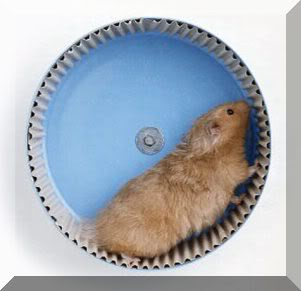
The challenge of course is putting down the blackberry and looking up long enough to realize that you’re actually trapped in a hamster wheel.  Hint: Hacking away will only keep the wheel spinning.  The only way to get out is to climb the tallest tree.

 
Art Horne is the Coordinator of Care and Strength & Conditioning Coach for the Men’s Basketball Team at Northeastern University, Boston MA.  He can be reached at a.horne@neu.edu.

Topics: Art Horne, Good to Great, discipline, development, Leadership

Real time feedback

Posted by Boston Sports Medicine and Performance Group on Thu, Sep 23, 2010 @ 06:09 AM

everything basketball


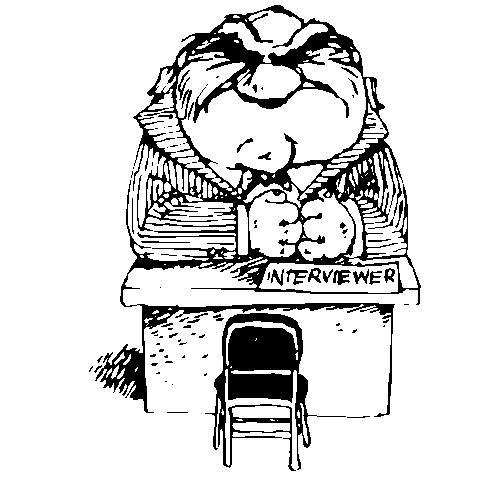
Every four years, athletic administrations across the country conduct student-athlete exit interviews. It’s a time where student-athletes can reflect on their athletic achievements and make comments like how a pineapple-lemonade soda machine would have been helpful in the student-athlete lounge or a Swedish masseuse would have been nice during their training.  They hand it in, administration pats themselves on the back noting that the student-athlete didn’t make any “realistic” comments on problems that they could have fixed and then the paper is quickly crumpled and discarded in the nearest receptacle. 

The problem with these exit interviews is that they provide little opportunity for improvement.  First, the feedback is not asked in real time. Do you really want to wait four years to fix a problem that could have been addressed at the end of the first semester?

Second, the questions are never specific or thought provoking … it’s usually a formality put into place so that management can have a safety net to fall back on, claiming after a problem surfaces that they did their due diligence and asked for comments year after year, “how was I suppose to know that our cafeteria wasn’t open past our last practice time? I asked for general comments every year.”

Lastly, asking for general comments only ensures you of one thing: general, non-specific comments in return (read: vanilla).  If you are serious about making change, then your questions will reflect this. Asking specific questions regarding the hours of operation of your facility and if it meets the needs of your student-athletes will evoke a much different response then simply asking for comments about the Athletic Training Room or Strength and Conditioning Room in general.  Basically, specific questions generate qualified comments.

I once heard a story of a department that placed a suggestion box out for their customers to leave comments in.  They didn’t read them of course; but having customers leave suggestions made them feel as if they had a voice, they said.  Talk about a lost opportunity to tap into your customer base. 

Is your exit process an interview or does it provide opportunity?


Art Horne is the Coordinator of Care and Strength & Conditioning Coach for the Men’s Basketball Team at Northeastern University, Boston MA.  He can be reached at a.horne@neu.edu.

Topics: Art Horne, hockey conference, motivation, customer service, development

The exit opportunity

Posted by Boston Sports Medicine and Performance Group on Wed, Sep 22, 2010 @ 06:09 AM

everything basketball


A friend of mine recently left his job at a major academic institution where he worked his way up from the ground floor into a middle management position before leaving for the upper ranks at a competitor’s on the west coast.  As a courtesy to the organization in which he had given so much, and so much given to him, he approached his superior's administrative assistant and asked if there was a formal “exit interview” that he was to partake in prior to his final day at the end of the week.

“Usually only people that want to complain ask for exit interviews,” the administrative assistant explained, “did you still want to speak with him?”

“ummm, well, no, not anymore,” my friend replied.

Wouldn’t an exit interview be the perfect opportunity to gain feedback into your organization’s weaknesses, customer service, and operating procedures?

Sure the employee may be salty that they are leaving, but what chance for feedback do you have otherwise once they’ve walked out the door?

You should search out that employee and simply ask, “what can we do better?” This is the only time they won’t be afraid to tell you exactly how it is.  You can sift through the salt and substance after, but once they’re gone, they’re gone, and hence so is the opportunity for your organization to improve.


Art Horne is the Coordinator of Care and Strength & Conditioning Coach for the Men’s Basketball Team at Northeastern University, Boston MA.  He can be reached at a.horne@neu.edu.

Topics: Art Horne, basketball resources, Ownership, Good to Great, discipline, customer service, everything basketball, development, managing