Boston Sports Medicine and Performance Group, LLC Blog

Interview with Coach Schexnayder : 2012 BSMPG Seminar Keynote Speaker

Posted by Boston Sports Medicine and Performance Group on Mon, Apr 30, 2012 @ 07:04 AM

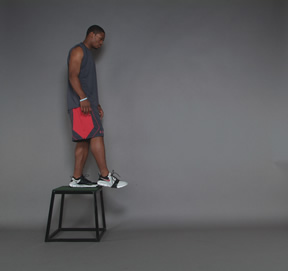
LSU jump


This is part 1 of the weekly “Friday Five” series where I ask 5 tough questions to world class elite coaches.

Irving "Boo" Schexnayder is regarded internationally as one of the leading authorities in training design, especially in the Jump events.  He coached triple jumper Walter Davis, long jumper John Moffitt, and 19 NCAA Champions.

Boo will be speaking at the Boston Sports Medicine and Performance Group (BSMPG) on May 19-20, 2012.

You can also see his complete jumps DVD package for the Long, Triple and High Jump (plus a weight training bonus).

Q1 – SpeedEndurance.com:  A lot of confusion and mystery lies with the true volumes of jump training that is sufficient for stimulating neuromuscular adaptions and teaching. While small doses are often looked at as the goal, teaching takes repetition. Could you expand on how important the sequence of the training year and the quality of foot strike?  Can you explain why it seems that some programs thrive off of higher volumes while some just lead to injury?

BOO:  As far as foot strike, the ability to properly dissipate impact forces through full-footed landings is obviously a huge help to staying injury free while jump training. I think there are two other, more subtle keys to successful progression and remaining injury free in jump training. The first lies in variety, specifically advancing training cycles in a timely fashion. The other is taking a purposeful approach to the process.

Just as athletes do, we as coaches tend to settle into comfort zones. You get your athletes doing particular forms of jump training. Then, as mastery is approached, it’s time to move on to something else, but our natural tendency is to breathe easy and admire our work for a while. Periodic shifts in exercise choice, volume and intensity are critical, even though they might make life for the coach tougher. Successful higher volume programs do this and show a bit of a pioneer spirit.

Also, everything done must have a very specific purpose. That purpose might be establishing initial volumes, technical development, high end or low end elastic strength development, or whatever. It’s easy to fall into a “this is my fallback workout” philosophy if you are not targeting something specific. This is the primary rationale behind the small volume programs, and I think this is the key with high training age athletes who have already accumulated injuries and other physical issues over the course of a career.

In either case, whether it is failure to progress or mindless repetition, at this point jump training quits being a stimulus and becomes simply another piece of baggage that must be carried around that increases injury risk.

Q2 – SpeedEndurance.com: You mention that Olympic lifts are great harmonizing agents to a program. With your experience could you address what mechanisms and systems such as posture and coordination enable the lifts to transfer to sprinting and jumping?

BOO:  The results I see in my program are the main reason I feel strongly about using Olympic lifts. I don’t want to give anyone the impression that I researched them first and then started to use them. My personal journey was more of a matter of seeing huge gains and then figuring out why.

I think the orders of joint firing and the mixing of absolute strength, power, and eccentric activity show huge transfer into sport specific skills. Also, the need to stabilize the core while performing something functional like an Olympic lift does more for the body’s core than all the crunches in the world. In short, they are highly functional.

I am a fan of functional training. But I have never gone completely that way, always keeping a base in more old school approaches. Maybe it’s because I started my career in football, but it’s also because I have watched too many great athletes train that way to scrap it.

I think a key variable in strength training is the amount of muscle tissue activated in the course of a repetition. That variable, more than any other, affects blood chemistry and endocrine responses. Many exercises are functional but don’t elicit enough muscle fiber activation to accomplish this. Olympics are where gross movements meet functional training and old school meets new school.


Continue reading on speedendurance.com   


See Coach Schexnayder at the 2012 BSMPG Summer Seminar as he talks, "Mulitjump Exercises: Applications for Teaching, Training, and Rehab"


Coach Schexnayder joins Chris Powers, Craig Liebenson, Bill Knowles, and Alan Grodin as Keynotes speaers.  See these world class speakers along with the best Sports Medicine, Hockey and Basketball therapists and performance coaches throughout the weekend - May 19-20.


Register today before seats fill up!



Click me


Topics: basketball conference, BSMPG, boston hockey summit, Craig Liebenson, boston hockey conference, athletic training books, Cal Dietz, Bill Knowles, Barefoot in Boston

Up the Chain it Goes...

Posted by Boston Sports Medicine and Performance Group on Sun, Apr 29, 2012 @ 15:04 PM

By Art Horne


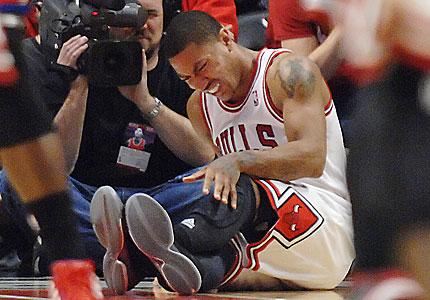
derrick rose torn acl


With recent season ending ACL injuries to New York Knicks Iman Shumpert, and Chicago Bull’s point guard Derrick Rose coming on the same day, (not to mention Eric Maynor from the Thunder and Spanish Star Ricky Rubio earlier this season) discussion has arisen as to how these terrible injuries could have been avoided.  Although the possible contributing factors are endless, ranging from previous injury to simply fatigue, one area worth shedding more light on, especially in the case of young Rose, is the implication of the kinetic chain as a whole.

Let’s start at the ground and work our way up.

I think we’d all agree that the big toe is a big deal.   But how closely are we looking at this “pivotal” body-ground juncture?

In a study by Munuera et al, researchers found that “Hallux interphalangeal joint dorsiflexion was greater in feet with hallux limitus than in normal feet.  There was a strong inverse correlation between first metatarsophalangeal joint dorsiflexion and hallux interphalangeal joint dorsiflexion.” (Munuera et al, 2012). 

TRANSLATION: People with abnormally stiff or limited motion at the great toe had excessive motion at the joint just distal.

If you don’t have mobility where you need it, you’ll surely get it somewhere else.

Let’s move up the chain shall we?

In a study by Van Gheluwe and his group,  researchers looked at how a stiff or limited great toe joint changes the way we walk.  In their study, “two populations of 19 subjects each, one with hallux limitus and the other free of functional abnormalities, were asked to walk at their preferred speed while plantar foot pressures were recorded along with three-dimensional foot kinematics.  The presence of hallux limitus, structural or functional, caused peak plantar pressure under the hallux to build up significantly more and at a faster rate than under the first metatarsal head.  Additional discriminators for hallux limitus were peak dorsiflexion of the first metatarsophalangeal joint, time to this peak value, peak pressure ratios of the first metatarsal head and the more lateral metatarsal heads, and time to maximal pressure under the fourth and fifth metatarsal heads.  Finally, in approximately 20% of the subjects, with and without hallux limitus, midtarsal pronation occurred after heel lift, validating the claim that retrograde midtarsal pronation does occur.”

TRANSLATION: if you have a limited motion in your great toe, pressure changes will occur – increase pressure changes will cause pain over time (think blister on your foot).

And pain changes the way we move – period.

Let’s take a look at the ankle.

In an article  by Denegar et al, the authors outline the importance of regaining normal talocrural joint arthrokinematics following an ankle injury.   The authors note,

 “All of the athletes we studied had completed a rehabilitation program as directed by their physician under the supervision of a certified athletic trainer, and had returned to sports participation.  Furthermore, all had performed some form of heel-cord stretching. None, however, had received joint mobilization of the talocrural complex.  Despite the return to sports and evidence of restoration in dorsiflexion range of motion, there was restriction of posterior talar mobility in most of the injured ankles.  Posterior talar mobilization shortens the time required to restore dorsiflexion range and a normal gait.  Without proper talar mobilization, dorsiflexion range of motion may be restored through excessive stretching of the plantar flexors, excessive motion at surrounding joints, or forced to occur through an abnormal axis of rotation at the talocrural joint.” (pg. 172)

TRANSLATION: I repeat, Without proper talar mobilization, dorsiflexion range of motion may be restored through excessive stretching of the plantar flexors, excessive motion at surrounding joints, or forced to occur through an abnormal axis of rotation at the talocrural joint.” (pg. 172)

If you don’t have normal ankle motion, and specifically at the talus, your ankle motion (although appearing normal) is probably coming from other joints and/or in a combination with foot pronation.


Foot Pronation = Tibial Internal Rotation

Tibial Internal Rotation = Femoral Internal Rotation

Tibia and Femur Internal Rotation  =  Knee Valgus (or knee collapse)

Knee Valgus = BAD


But just because you have some extra motion doesn’t mean you’re doomed right?

No.

But, excessive motion without the ability to control that motion certainly does.  So where does knee control come from? The Hip!

But hip strength, control, and neuromuscular timing is seldom appreciated, and in the case of the basketball athlete it is certainly poorly measured, especially after ankle injury.

In a study by Bullock-Saxton, researchers investigated muscle activation during hip extension after ankle sprain and showed a changes in timing of muscle activation in the ankle sprain grouped compared to the non-injured group.

 “the results highlight the importance of the clinician’s paying attention to function of muscles around the joints separated from the site of injury.  Significant delay of entry of the gluteus maximus muscle into the hip extension pattern is of special concern, as it has been proposed by Janda that the early activation of this muscle provides appropriate stability to the pelvis in such functional activities as gait.” (pg. 333)


In another study examining ipsilateral hip strength/weakness after the classic ankle sprain, researchers demonstrated that subjects with unilateral chronic ankle sprains had weaker hip abduction strength and less plantar flexion range of motion on the involved sides (Friel et al., 2006)

“Our findings of weaker hip abductors in the involved limb of people with chronic ankle sprains supports this view of a potential chronic loss of stability throughout the kinetic chain or compensations by the involved limb, thus contributing to repeat injury at the ankle.” (pg. 76)


“If the firing, recruitment, and strength of the hip abductor muscles in people with ankle sprains have been altered because of the distal injury, the frontal-plane stability normally supplied by this muscle is lacking, and the risk for repeat injury increases.  Weak hip abductors are unable to counteract the lateral sway, and an injury to the ankle may ensue.”

TRANSLATION: Ankle sprains cause neuromuscular changes up the chain and specifically in the hip.  If this weakness is not addressed after an ankle injury,” frontal-plane stability normally supplied by this muscle is lacking.” 


Lack of frontal-plane stability + Knee Valgus = Injury


Of course suggesting that the above points are exactly the reason for which Rose suffered his injury is certainly a stretch and not the intention of this post, nor is it to question the treatment that he or any other NBA player received prior to their devastating injury (for the record, the Chicago Bulls Sports Medicine and Strength Staff are regarded as one of the very best in the league).  What I am suggesting however is that examining athletes and patients with the use of advanced technology to determine a state of readiness to participate, and/or examine more closely changes in gait and neuromuscular firing is certainly worth pursuing, especially in light of the ever-rising salaries within professional sports.  A quick look is certainly worth the small investment.

One thing is for sure, ACL injury is not limited to teenage females or only seen on the soccer pitch.


Previous Posts:

The NBA Should Have Learned From The NFL - Injuries On The Rise

Did The NBA Lock-out Ultimately End Chauncey Billups' Career?


See lectures directly related to gait, injury prevention, and performance at the 2012 BSMPG Summer Seminar:

1. Dr. Bruce Williams: Hit the ground running: Appreciating the importance of foot strike in NBA injuries

2. Dr. Bruce Williams: Breakout Session: Restoring Gait with evidence based medicine

3. Art Horne and Dr. Pete Viteritti: Improving Health & Performance - Restoring ankle dorsiflexion utilizing a manual therapy approach

4. Dr. Tim Morgan: Biomechanics and Theories of Human Gait: Therpeutic and Training Considerations

5. Jose Fernandez: Advanced Player Monitoring for Injury Reduction


See the most advanced player monitoring equipment currently available at the 2012 BSMPG Summer Seminar:


 zeo affectiva  ithlete

BioSensics  Zflo insideTracker


Dartfish  freelap timing   Tekscanoptosource

Click me


References:

Munuera PV, Trujillo P, Guiza L, Guiza I. Hallux Interphalangeal Joint Range of Motion in Feet with and Without Limited First Metatarsophalangeal Joint Dorsiflexion. J Am Podiatr Med Assoc. 102(1): 47-53, 2012.

Denegar, C., Hertel, J., Fonesca, J.  The Effect of Lateral Ankle Sprain on Dorsiflexion Range of Motion, Posterior Talar Glide, and Joint Laxity.  J Orthop Sports Phys Ther. 2002; 32(4):166-173.


Van Gheluwe B, Dananberg HJ, Hagman F, Vanstaen K. Effects of Hallux Limitus on Plantar Foot Pressure and Foot Kinematics During Walking. J Am Podiatr Med Assoc. 96(5): 428-436, 2006.

Bullock-Saxton, J. E., Janda, V., & Bullock, M. I. (1994) The Influence of Ankle Sprain Injury on Muscle
Activation during Hip Extension. Int. J. Sports Med. Vol. 15 No. 6, 330-334.

Friel, K., McLean, N., Myers, C., & Caceres, M. (2006). Ipsilateral Hip Abductor Weakness After Inversion
Ankle Sprain. Journal of Athletic Training. Vol. 41 No.1, 74-78

Smith RW, Reischl SF. Treatment of ankle sprains in young athletes. Am J Sports Med. 1986;14:465-471.

Topics: Art Horne, basketball performance, basketball training programs, BSMPG, athletic training conference, Charlie Weingroff, boston hockey conference, barefoot strength training, Andrea Hudy, Bruce Williams, Cal Dietz, Alan Grodin, Barefoot in Boston, Dr. DiMuro, Dan Boothby, Chris Powers, achilles pain, Dorsiflexion, ankle problems

Meet Chris Powers - 2012 BSMPG Summer Seminar Keynote Speaker

Posted by Boston Sports Medicine and Performance Group on Sat, Apr 28, 2012 @ 08:04 AM


Over the last decade no one has changed the way we approach and treat knee pain more than Chris Powers.  

Learn how the Hip is a major factor when it comes to the aches and pains associated with your knee at the 2012 BSMPG Summer Seminar!


Chris Powers 

Topic: Proximal Factors Contributing to Running Injuries


Christopher M. Powers is an Associate Professor in the Division of Biokinesiology & Physical Therapy, and Co-Director of the MBRL at USC. He also has joint appointments in the Departments of Radiology and Orthopaedic Surgery within the Keck School of Medicine.  His primary teaching responsibilities include the areas of biomechanics and the mechanics of human gait. He received a Bachelors degree in Physical Education from the University of California, Santa Barbara in 1984, his Masters degree in Physical Therapy from Columbia University in 1987, and a Ph.D. in Biokinesiology in 1996 from USC. Dr. Powers did his post-doctoral training at the Orthopaedic Biomechanics Laboratory, University of California, Irvine.

Dr. Powers studies the biomechanical aspects of human movement. More specifically, his research and publications are concerned with the kinematic, kinetic and muscular actions associated with human movement, the pathomechanics of orthopedic disabilities and issues related to rehabilitation of the musculoskeletal system. He has published over 90 peer-reviewed articles and has received several research awards from the American Physical Therapy Association, including the Rose Excellence in Research Award from the Orthopaedic Section, the Eugene Michels New Investigator Award, the Dorothy Briggs Scientific Inquiry Award and the Helen J Hislop Award for contributions to the professional literature.

Dr. Powers is a Fellow of the American College of Sports Medicine and a member of the American Physical Therapy Association (Orthopaedic and Research sections), American Society for Biomechanics, American Society for Testing and Measures, and the North American Society for Gait and Clinical Movement Analysis. In addition, Dr. Powers is on several editorial boards including the Journal of Applied BiomechanicsJournal of Orthopaedic and Sports Physical Therapy, and the Journal of Athletic Training.  He is an active member of the American Physical Therapy Association, serving as President of the Section on Research.


Education

  • Postdoctoral Fellow, Orthopaedic Biomechanics (1996-1997), University of California, Irvine, CA
  • Ph.D. Biokinesiology (1996). University of Southern California, Los Angeles, CA
  • M.S. Physical Therapy (1987). Columbia University, New York, NY
  • B.A. Physical Education (1984). University of California, Santa Barbara, Santa Barbara, CA

Selected Publications

  • Stefanik JJ, Zhu Y, Zumwalt AC, Gross KD, Clancy M, Lynch JA, Frey LA, Lewis CE, Roemer FW,Powers CM, Guermazi A, Felson DT. The association between patella alta and the prevalence and worsening of structural features of patellofemoral joint osteoarthritis: The Multicenter Osteoarthritics Study. Arthritis Care & Res (In press).
  • Farrohki S, Colletti PM, Powers CM. Differences in patella cartilage thickness, T2 relaxation time and cartilage deformational behavior: A comparison of young females with and without patellofemoral pain. Am J Sports Med (In press).
  • Chen YJ, Scher I, Powers CM. Quantification of patellofemoral joint reaction forces during functional tasks: A subject specific, three dimensional model. J Appl Biomech (In press).
  • Kulig K, Harper-Hanigan K, Souza RB, Powers CM. Measurement of femoral torsion by ultrasound and magnetic resonance imaging: Concurrent validity. Phys Ther (In pre).
  • Souza RB, Draper CE, Fredericson M, Powers CM. Femur rotation and patellofemoral joint kinematics: A weight-bearing MRI analysis. J Orthop Sports Phys Ther. 40:277-285, 2010.
  • Powers CM, Chen YJ, Scher I, Lee TQ. Multi-plane loading of the extensor mechanism alters the patellar ligament force/quadriceps force ratio. J Biomed Eng. 132:024503, 2010.
  • Fithian DC, Powers CM, Khan N. Rehabilitation of the knee following medial patellofemoral ligament reconstruction. Clin Sports Med. 29:283-290, 2010.
  • Powers CM, Blanchette MG, Brault JR, Flynn J, Siegmund GP. Validation of walkway tribometers: Establishing a reference standard. Submitted to: J Forensic Sci. 55:366-370, 2010.
  • Powers CM. The influence of abnormal hip mechanics on knee injury: A biomechanical perspective. J Orthop Sports Phys Ther. 40:42-51, 2010.
  • Wagner T, Behnia N, Ancheta WL, Shen R, Farrokhi S, Powers CM. Strengthening and neuromuscular re-education of the gluteus maximus in a triathlete with exercise-association cramping of the hamstrings: A case report. J Orthop Sports Phys Ther. 40:112-119, 2010.
  • Tonley JC, Dye JA, Kochevar RJ, Yun SM, Farrokhi S, Powers CM. Treatment of an individual with piriformis syndrome focusing on hip muscle strengthening and movement re-education: A case report. J Orthop Sports Phys Ther. 40:103-111, 2010.
  • Pollard CD, Sigward SM, Powers CM. Limited hip and knee flexion during landing is associated with increased frontal plane knee motion and moments. Clin Biomech. 25:142-146, 2010.
  • Tsai LC, Sigward SM, Pollard CD, Fletcher MJ, Powers CM. The effects of fatigue and recovery on knee kinetics and kinematics during side-step cutting. Med Sci Sport Exerc. 41:1952-1957, 2009.
  • Kulig K, Beneck GJ, Selkowitz DM, Popovich JM Jr., Ge TT, Flanagan SP, Poppert EM, Yamada K,Powers CM, Azen S, Winstein CJ, Gordon J, Samudrala S, Chen TC, Shamie N, Khoo L, Spoonamore MJ, Wang JC and Physical Therapy Clinical Research Network (PTClinResNet), The effect of an intensive, progressive exercise program on functional performance in patients post single-level lumbar microdiscectomy. Physical Therapy. 89:1145-1157, 2009.
  • Tsai YJ, Powers CM. The influence of footwear sole hardness on utilized coefficient of friction during walking. Gait & Posture. 30:303-306, 2009.
  • Souza RB, Powers CM. Concurrent criterion-related validity and reliability of a clinical test to measure femoral anteversion. J Orthop Sports Phys Ther. 39:586-592, 2009.
  • Souza RB, Powers CM. Predictors of hip rotation during running: An evaluation of hip strength and femoral structure in women with and without patellofemoral pain. Am J Sports Med. 37:579-587, 2009.
  • Souza RB, Powers CM. Differences in hip kinematics, muscle strength and muscle activation between subjects with and without patellofemoral pain. J Orthop Sports Phys Ther. 39:12-19, 2009.
  • Sigward SM. Ota S, Powers CM. Predictors of frontal plane knee excursion during a drop landing in young female athletes. J Orthop Sports Phys Ther. 38:661-667, 2008.
  • Brennglass A, Souza RB, Meyer J, Powers CM. Identification of abnormal hip motion associated with acetabular labral pathology: A resident’s case report. J Orthop Sports Phys Ther. 38:558-565, 2008.
  • Farrokhi S, Pollard CD, Souza R, Chen YJ, Reischl S, Powers CM. Trunk position influences lower extremity demands during the forward lunge exercise. J Orthop Sports Phys Ther. 38:403-409, 2008.
  • Tsai YJ, Powers CM. The influence of footwear sole hardness on slip initiation in young adults. J Forensic Sci. 53:884-888, 2008.
  • Powers CM, Doubleday KL, Escudero C. The influence of patellofemoral bracing on pain, knee extensor torque and gait function in females with patellofemoral pain. Physiother Theory Pract. 24:1-9, 2008.
  • Powers CM, Beneck GJ, Kulig K, Landel RF, Fredericson M. The effects of a single session of posterior to anterior spinal mobilization and press-ups on pain response and lumbar spine extension in persons with nonspecific low back pain. Phys Ther. 88:485-492, 2008.
  • Burke WS, Vangsness CT, Powers CM. Quantification of glenohumeral rhythm in persons with and without impingement. Am J Orthop. 37:24-30, 2008.
  • Landel RF, Kulig KK, Powers CM. Intertester reliability and validity of motion assessments during lumbar spine accessory motion testing. Phys Ther. 88:43-49, 2008.
  • Burnfield JM, Powers CM. The role of center of mass kinematics in predicting utilized coefficient of friction during walking. J Forensic Sci 52:1328-1333, 2007
  • Ward SR, Terk MR, Powers CM. Patella alta: Association with patellofemoral alignment and changes in contact area during weight bearing. J Bone & Joint Surg Am. 89:1749-1755, 2007.
  • Sigward S, Powers CM. Loading characteristics of female athletes who demonstrate excessive valgus moments at the knee during side-step cutting. Clin Biomech. 22:827-833, 2007.
  • Feller JA, Amis AA, Andrish JT, Arendt EA, Erasmus PJ, Powers CM. Surgical biomechanics of the patellofemoral joint. Arthroscopy. 23:542-553, 2007.
  • Pollard CD, Sigward S, Powers CM. Gender differences in hip joint kinematics and kinetics during a side-step cutting maneuver. Clin J Sports Med. 17:38-42, 2007.
  • Powers CM, Stefanou MA, Tsai YJ, Brault JR, Siegmund GP. Assessment of walkway tribometer readings in evaluating slip resistance: A gait based approach. J Forensic Sci. 52:400-405, 2007.
  • Kulig K, Powers CM, Landel R, Chen K, Fredericson M, Guillet M, Butts K. Segmental lumbar mobility in individuals with central low back pain: In-vivo assessment during passive and active motion using dynamic MRI. BMC Musculoskelet Disord. 8:1-10, 2007.
  • Griffin LY, Albohm MJ, Arendt EA, Bahr R, Beynnon BD, DeMaio M, Dick RW, Engebretsen L, Garrett WE, Hannafin JA, Hewitt TE, Huston LJ, Ireland ML, Johnson RJ, Lephart S, Mandelbaum BR, Mann B, Marks RH, Marshal SW, Myklebust G, Noyes FR, Powers CM, Shields C, Schultz SJ, Silvers H, Slauterbeck J, Taylor D, Teitz CC, Wojtys EM, Yu B. Understanding and preventing noncontact anterior cruciate ligament injuries. Am J Sports Med. 34:1512-1532, 2006.
  • Powers CM, Chen YJ, Scher I, Lee TQ. Influence of patellofemoral joint contact geometry on the modeling of three dimensional patellofemoral joint forces. J Biomech. 39:2783-2791, 2006.
  • Selkowitz DM, Kulig K, Poppert EM, Flanagan SP, Mathews Nd, Beneck GJ, Popovich JM, Lona JR, Yamada KA, Burke WS, Ervin C, Powers CM. The immediate and long-term effects of exercise and patient education on physical, functional, and quality of life outcome measures after single-level lumbar microdiscectomy: A randomized controlled trial protocol. BMC Musculoskelet Disord. 7:1-15, 2006.
  • Ota S, Ward SR, Chen YJ, Tsai YJ, Powers CM. Concurrent Criterion-Related validity and reliability of a clinical device used to assess lateral patella displacement. J Orthop Sports Phys Ther. 36:645-652, 2006.
  • Powers CM, Chen YJ, Farrohki S, Lee TQ. The role of peripatellar retinaculum in the transmission of forces within the extensor mechanism. J Bone Joint Surg Am. 88:2042-2048, 2006.
  • Burnfield JM, Powers CM. Prediction of slips: An evaluation of utilized coefficient of friction and available slip resistance. Ergonomics. 49:982-995, 2006.
  • Pollard CD, Sigward SS, Pelley K, Ota S, Powers CM. The influence of an in-season injury prevention program on lower extremity kinematics during landing in young female soccer players. Clin J Sports Med. 16:223-227, 2006.
  • Sigward SM, Powers CM. The influence of experience on knee joint kinematics, kinetics and muscle activation patterns during side-step cutting in young females. Clin Biomech. 21:740-747, 2006.
  • Ganley KJ, Powers CM. Intersegmental dynamics during the swing phase of gait: A comparison of knee kinetics between 7 year old children and adults. Gait Posture. 23:499-504, 2006.
  • Sigward S, Powers CM. The influence of gender on knee joint kinematics, kinetics and muscle activation patterns during side-step cutting. Clin Biomech. 21:41-48, 2006.


Meet Chris Powers, along with Craig Liebenson, Bill Knowles, Coach Schexnayder, and Alan Grodin as they headline the 2012 BSMPG Summer Seminar this May 19-20th in Boston.

This is an event that you don't want to miss!


Click me


Topics: Art Horne, BSMPG, boston hockey summit, Charlie Weingroff, boston hockey conference, Andrea Hudy, Cal Dietz, Bill Knowles, Alan Grodin, Chris Powers

Monitoring Power Development : A Look at New Technology

Posted by Boston Sports Medicine and Performance Group on Fri, Apr 27, 2012 @ 07:04 AM

by Carl Valle


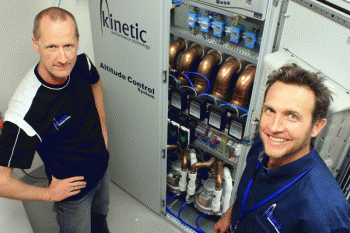
Kinetic


I decided to interview Rob Shugg from Kinetic Performance after hearing a few new definitions of what power is, and felt that we needed more sport science tools to help the performance community understand how to develop power in team sports. Track and field is very objective, but the methodologies tend to be cloudy. I wanted to get Rob's opinion on the matters of true development and monitoring of elite sport as he has many years with the Australian Institute of Sport and in the private sector with technology and performance. The BSMPG is the first conference in the US to promote Gymaware and Kinetic Performance as technology and data is becoming more and more important to help teams find the winning edge. 

Most of the US professional and college teams are familiar with linear transducers for measuring power, could you expand on the differences between Gymaware and the Tendo system, specifically with the advanced analytics and cloud benefits. 

First I’d like to give your readers a quick outline of the GymAware components:GymAware Power Tool - A linear transducer that connects via bluetooth to an iPad, iPod Touch or iPhone. 

iOS apps: 

GymAware Lite App - a stand-alone weightlifting analyzer app withextensive training, feedback and plotting functions. 

GymAware App - a cloud-connected weightlifting analyzer app offering online data and athlete management. 

GymAware/Kinetic-Athlete cloud analysis server - a web based account for managing and analysing Power Tool and other athlete performance data.So as you can see, while the Power Tool and the Tendo weightlifting analyser are both linear transducers, only GymAware offers a complete athlete performance stack, from data collection to athlete performance management. You canstill use the Power Tool like you use the Tendo unit to motivate and train athletes, but in addition you can start to look at[other variables] like dip and lift profile to improve technique. 

The GymAware Power Tool has evolved through 5 different models over the last 10 years with each new release improving accuracy and usability. There is a good comparison [here] between the latest Power Tool and the Tendo Power and Speed Analyzer. To talk about the benefits of the cloud server and advanced analytics, you first need to look at system accuracy as this is fundamental to the success of the advanced features.The high accuracy of the Power Tool opens up new opportunities in preparing athletes for competition. With high accuracy you can look for more subtle changes over time that give you real insight into the state of the athlete. 

Power is often pursued by teams, could you look at how power can act as a marker of both performance and fatigue with team sports? Currently Benchmarks and profiling seem to be important for individualization. 

There’s no doubt that power is a key factor in producing game winning performances, and power profiling to optimize power training plays a vital role in any professional team. But recently in Australia, regular (3 to 5 times per week) power and/or velocity monitoring has proved to be a very reliable way of monitoring for fatigue. At last year’s ASCA conference Dr Kristie Taylor suggested that we should 

Other performance managers have reported to us that the Power Tool measurements are so sensitive that they can see slower power recovery after games played at a particular stadium known to have a hard playing surface. Regular monitoring with GymAware adds a completely new dimension to the knowledge available to the sports performance professional. 

Kinetic Athlete is not new to player monitoring, why does Kinetic Performance's experience make you a leader in player management? I think to answer this you need to look at environment that lead to the development ofGymAware. 
 

Click HERE to continue reading...


Learn more about this new technology along with the most advanced health and performance monitoring tools currently available at the 2012 BSMPG Summer Seminar - May 19/20th.


Click me 


Topics: Art Horne, basketball conference, BSMPG, athletic training conference, Mike Curtis, hockey conference, Logan Schwartz, Andrea Hudy, Bruce Williams, Mike Boyle, Jim Snider, Mark Toomey, John DiMuro, Cal Dietz, Bill Knowles, Alan Grodin, Joel Jamieson, Jeff Cubos, Keith D'Amelio

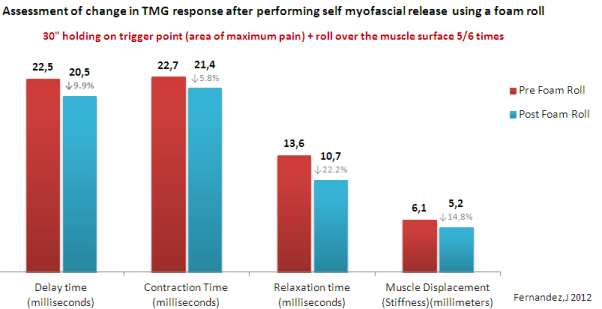
Foam Rolling and Contractile Muscle Properties by Jose Fernandez

Posted by Boston Sports Medicine and Performance Group on Wed, Apr 25, 2012 @ 06:04 AM

article by Jose Fernandez


After reading last week´s posts from Coach Boyle and Carl Valle I decided to do a little research on Self Myofascial Release and foam rolling. What motivated me is that there is not a clear protocol stablished regarding when, how and for how long athletes should use foam rollers. Some coaches recommend to roll before working out and others after, some coaches prefer to just continuously roll over the muscle surface and others recommend to hold on the trigger point for a few seconds.

What is foam rolling? (by wikipedia):

“Foam rolling is a self-myofascial release (SMR) technique that is used by athletes and physical therapists to inhibit overactive muscles. This form of stretching utilizes the concept of autogenic inhibition to improve soft tissue extensibility, thus relaxing the muscle and allowing the activation of the antagonist muscle.

It is accomplished by rolling the foam roller under each muscle group until a tender area is found, and maintaining pressure on the tender area for 30–60 seconds.”

Looking at the scientific evidence, I could not find a lot of published material either. See below some of papers I found:

A comparison of the pressure exerted on soft tissue by 2 myofascial rollers

Foam Rollers Show No Increase in the Flexibility of the Hamstring Muscle Group

The Acute Effect Of Self-Myofascial Release On Lower Extremity Plyometric Performance

In this case study we used Tensiomyography (TMG) to assess the change in contractile muscle properties (contraction time and muscle tone) after applying 2 different protocols with foam rollers. Click here to see one of my previous post with a detailed explanation about TMG and the information that it provides.

Foam Rolling & TMG Case Study:

The purpose of this case study was to analyse the change in contractile muscle properties assessed with TMG before and after applying two different SMR protocols using a foam roller. Characteristics of the roller that we used can be found here.

A professional basketball player (Age:22, H: 6.2ft, W: 198.4lbs, no injuries) with more than 6 months experience using foam rollers volunteered for the test, which was performed after a day off and consisted of assessing the Left Vastus Lateralis (dominant leg) with TMG before and after applying two different rolling interventions.

Protocol 1: Holding on the trigger point

- TMG Initial assessment on resting conditions

- Roll until the area of maximum pain is found. Hold the roll on that point for 30 seconds. Immediately after the 30 seconds continue rolling 5-6 times over the whole muscle surface

- TMG Post treatment Assessment 

Protocol 2: Cotinuous Rolling

- TMG Initial assessment

- Continuously roll over the whole muscle surface for 60 seconds

- TMG Post treatment Assessment

Restults:

Protocol 1:


Click HERE to continue reading this article...


Click me


Topics: athletic training conference, boston hockey conference, barefoot strength training, Andrea Hudy, Bruce Williams, Cal Dietz, Bill Knowles, Alan Grodin, Jose Fernandez

Q: What Has 9 NCAA Ice Hockey Championship Rings and Will Be In Boston May 19th and 20th?

Posted by Boston Sports Medicine and Performance Group on Mon, Apr 23, 2012 @ 07:04 AM


Answer: Attendees at the 2012 BSMPG Summer Seminar!

There's a reason the nation's top Performance Coaches, Athletic Trainers, and Therapists come back to Boston year after year! Join the following coaches and learn how you can help your team this off-season and prepare for a championship run in 2013!


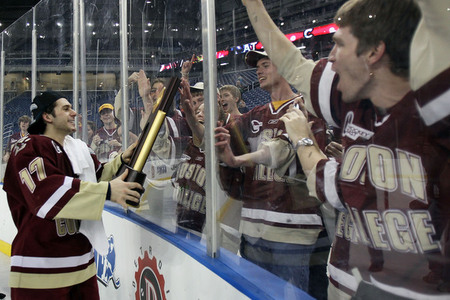
Russ DeRosa - Boston College Men's Ice Hockey 2008, 2010, 2012 National Champions

Mike Boyle - Boston University Men's Ice Hockey 1995, 2009 National Champions

Jim Snider - University of Wisconsin Women's Ice Hockey 2009, 2011 National Champions

Cal Dietz - University of Minnesota Women's Ice Hockey 2010, 2012 National Champions


Looking for that edge in your team's training for this coming season?  Join Hockey's elite performance coaches and therapists at the 2012 BSMPG Summer Seminar!


BSMPG Hockey Summit

Hurry!! Seats are limited - There's only room for so many championship trophy's in the same room!


Click me


Topics: boston hockey conference, Mike Boyle, Jim Snider, Cal Dietz

University of Kansas Strength Coach - Andrea Hudy Speaks at 2012 BSMPG Summer Seminar

Posted by Boston Sports Medicine and Performance Group on Sat, Apr 21, 2012 @ 07:04 AM

Andrea Hudy    BSMPG Summer Seminar


There are people that talk the talk, and then there are the people that actually walk the walk.  Andrea Hudy is the latter (and she probably does it Farmer Walk Style!)

Coach Hudy has put more kids in pro uniforms and judging on the way her Jayhawks played in the national championship game this past year, they'll be plenty more Kansas alums rocking the NBA hardcourt next season.  See Coach Hudy at the 2012 BSMPG Summer Seminar as she headlines a list of the country's top basketball performance coaches including the NBA's Indiana Pacer's Shawn Windle, University of Texas Logan Schwartz and Keith D'Amelio (formally Stanford and Toronto Raptors Strength Coach - currently with Nike).

Read why KU found the right fit with strength coach Andrea Hudy below.


article by Tom Keegan

— Such silly, dangerous things can happen in the weight room, where steel clangs and challenges fly.

And then there is the facility supervised by Andrea Hudy, strength and conditioning coach for the Kansas University men’s and women’s basketball programs.

So much science goes into the planning of the workouts, the study of the progress each individual makes. Decisions are made with intellect, not emotion.

Well, most of the time anyway.

Former Kansas University reserve guard Jeremy Case, now an assistant coach at Southeastern Missouri State, is fuzzy about the details. He just remembers feeling “terrible” about what happened. Still does.

Hudy recalled more details, perhaps because pain has such a long memory.

Hudy said Case complained he couldn’t possibly do four repetitions of the weight she prescribed.

“It was a bet,” Hudy said. “I said ‘If you do that four times, I’ll do a multiple-fatigue set for 30 reps.’ He said, ‘You’re on.’ I took the bar off the rack, lowered it and I heard it (her shoulder popping.) Everybody heard it. I said, ‘I hurt my shoulder.’ He said, ‘You can’t stop now.’ I said, ‘All right, I’ll prove it to you.’ Twenty-nine reps later, I ended up in the training room.”

It’s a painful memory for more than just Hudy.

“Next day her arm’s in a sling,” Case said. “Damn, I feel so bad. Just goes to show how tough coach Hudy is. She’s no ordinary lady. Really tough lady.”

Hudy suffered a torn rotator cuff and torn labrum.

“I lost the battle, but I won the war,” Hudy said. “He didn’t think he could do four reps, and he did six.”


Click HERE to continue reading this article....


Click me


Topics: basketball conference, athletic training conference, Charlie Weingroff, Andrea Hudy, Cal Dietz, Bill Knowles, Alan Grodin

2012 BSMPG Seminar Speaker, Jose Fernandez talks advanced player monitoring

Posted by Boston Sports Medicine and Performance Group on Fri, Apr 20, 2012 @ 07:04 AM


Following the first post about Functional Assessment in Basketball “The Squat Test”, I´d now like to continue explaining another assessment that we do with the basketball players I coach: Tensiomyography (TMG)

I will try an explain 1)what is TMG?, 2) how is the test?, 3) what information does TMG provide?4)what can be assessed with TMG? 5)when do I use TMG during the season


1- What is TMG?

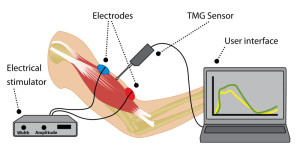
TMG is a technology that entitle S&C coaches  to study the muscle contraction mechanism analysing two parameters, contraction time and muscle stiffness, in a non invasive way. It is simple, reliable and quick. The information is obtained inmediately after the test.


BSMPG Seminar


2- How is the test?

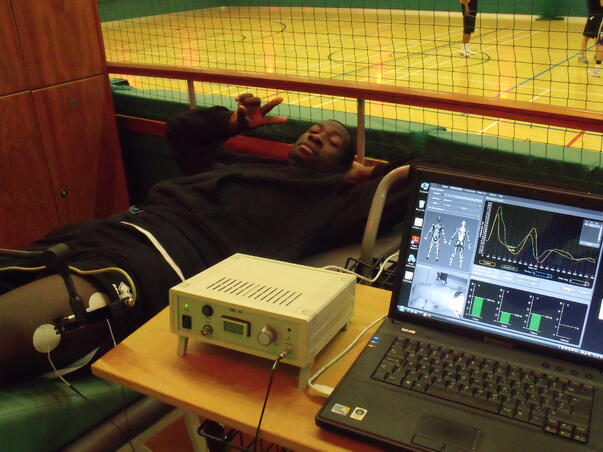
The player rests on the couch. Two electrodes are placed on the proximal and distal part of the muscle. A sensor is then placed on the muscle belly. The muscle is then electrostimulated. The sensor captures the information about contraction time and muscle stiffness and send it to the software where the data is processed and displayed on the screen showing graphs and numerical parameters.


TMG pic


Continue to read this article by clicking HERE.   


See Jose speak at the 2012 BSMPG Summer Seminar May 19-20th in Boston MA.

Keynote speakers include Craig Liebenson, Chris Powers and Bill Knowles.  Three tracks of study are currently available including a Hockey specific training track, a Basketball specific training track as well as an advanced Sports Medicine & Rehabilitation focus.

Seats are limited to sign up today!


Click me


BSMPG Summer Seminar, May 19-20 - Early Bird Extended!

Posted by Boston Sports Medicine and Performance Group on Wed, Apr 18, 2012 @ 12:04 PM

Hey BSMPG Friends and Family!

Ever wanted to see Craig Liebenson and Chris Powers speak? Want to enhance your industry knowledge and performance at work? Ready for some serious networking? You are in luck!

The BSMPG Summer Seminar is on May 19-20 in Boston, MA, and…..

Early Bird Registration has been extended for one more week! This discounted price will end at midnight on Sunday April 22nd – don’t miss out!

Be sure to Register for May 19-20, 2012 for the 2012 Summer Seminar in Boston, offering a multi-disciplinary approach to health and human performance. Keynote speakers this year include researchers, therapists, and strength coaches, including Dr. Craig Liebenson and Chris Powers, who have revolutionized our industry and the way we now approach patient care and performance programming. These five keynote presentations will be interspersed alongside breakout sessions with Giants from the fields of Sports Medicine/Rehabilitation, Basketball and Hockey Performance training throughout the weekend. Check out www.bsmpg.com for complete details!

Also, the Dynamic Neuromuscular Stabilization (DNS) Course “B” has been scheduled for April 27-30, 2013 in Boston, MA! Course “A” this past March was SOLD OUT, and this course is sure to do the same! This is the first time course “B” has been offered on the east coast and BSMPG is proud to be part of this educational effort. Details coming soon - check our website for announcements for future DNS events!

SEE YOU SOON!

-BSMPG

Click me

Topics: BSMPG, athletic training conference, athletic training

Heel Strikes, Sudden Impacts and Running Injuries

Posted by Boston Sports Medicine and Performance Group on Tue, Apr 17, 2012 @ 06:04 AM


If you haven't been living under a rock you know that the annual Boston Marathon took place this past Monday, April 16th.  With it came over 25 000 registered runners and thousands more non-registered runners tackling heartbreak hill and the 26.2 mile Boston course.  Although many of the leaders looked strong heading into the final mile, thousands more never experienced the thrill of victory but instead suffered the agony that so many runners face on a daily basis - a running injury that either limits or completely stops their running.

So what caused this running injury?  The answer might surprise you - it's the way you hit the ground!

Learn more about why you continue to ice your knees and shins and how you may be able to avoid these pains in the future with only a simple change in your stride.


Below is a summary of Professor Davis' article:


Do Impacts Cause Running Injuries? A Prospective Investigation

By Irene Davis, Bradley Bowser and David Mullineaux


“Up to 79% of runners sustain an injury in a given year. Approximately 80% of shod runners are rearfoot strikers. It is plausible that rearfoot strikers with increased impact loads, may be at greater risk for the development of an injury that those with lower loads. In summary, previous studies have documented higher impact loading in runner with a history of injury. However, these studies were retrospective in nature and cannot establish causative relationships. Therefore, the purpose of this prospective study was to compare the impact loads of rearfoot strike runners who go on to develop a running injury to those who have never been injured. It was hypothesized that runner who went on to develop a running- related injury would have higher vertical impact peaks, vertical average loadrates, vertical instantaneous loadrates and peak tibial shock.”

Davis and her group went on to recruit 240 female rearfoot strike runners aged 18-40 who ran a minimum of 20 miles per week.  Data was collected including ground reaction forces, vertical average loadrate, peak vertical force, etc.  Running mileage and injuries were reported monthly for 2 years.


“Our injury findings were consistent with previous literature. It has been reported that between 20-80% of runners get injured in a given year, and 57% of our runners sustained a prospective injury. In terms of injury distribution, iliotibial band syndrome, anterior knee pain, tibial stress syndrome, and plantar fasciitis were also among the top five injuries in much larger study of 2002 runners.

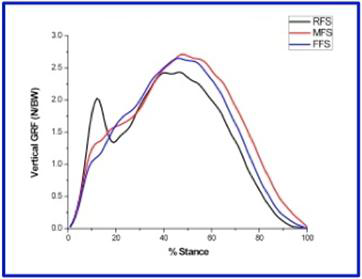
As hypothesized, all impact loading was greater in the injured runners compared with the never- injured group. All impact variables were significantly higher, except for VILR. Interestingly, FZ, the peak value of the vertical force, was identical between groups. This further underscores the importance of impact loads in the development of these injuries."


Barefoot in Boston

Sudden impacts are BAD! Notice the sudden spike with the RFS?

(RFS=Rearfoot Strike, FFS = Forefoot Strike, MFS = Midfoot Strike)


"The fact that all running injuries were included increases the significance of these results. While it is recognized that the etiology of running injuries is multi-factorial, this suggests that impact loading may be global indicator for the development of an injury. Based upon the odds ratio for VALR, reducing impacts is likely to result in an overall reduction of injury risk. Based on previous sports, adopting a midfoot or forefoot strike pattern will reduce these impacts. However future studies of injury patterns in midfoot and forefoot strike runners are needed.”


Want to avoid these sudden impacts associated with injury? Better think about adopting not only a different gait, but also a different pair of shoes.  Many modern running shoes have heels that are simply so thick that they prevent you from making contact with the ground in any other way than with the heel - and thus the dreaded impact forces!

Learn more about transitioning back to mother earth by reading BAREFOOT IN BOSTON: A Practical Guide to Achieving Injury Resolution and Enhancing Performance


Topics: barefoot strength training, Barefoot in Boston, barefoot running, barefoot training