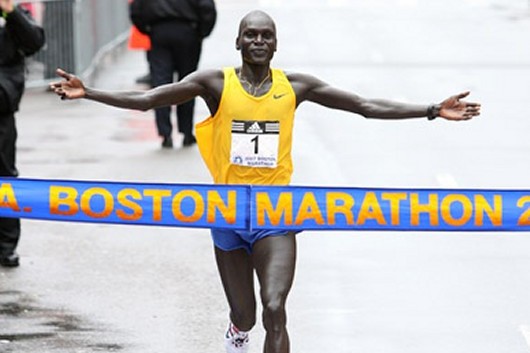
BSMPG wishes the over 30,000 runners in the 2012 Boston Marathon the best of luck!
Run Strong!

Topics: BSMPG, barefoot strength training, Barefoot in Boston, barefoot running, barefoot training
Learn how you too can enjoy the benefits of being barefoot by reading BAREFOOT IN BOSTON, available now in both paperwork and kindle.

Topics: athletic training conference, athletic training, Irene Davis, Christopher McDougall, athletic training books, barefoot strength training, achilles pain, barefoot running, barefoot training
The Barefoot Running Symposium is presented by the New England Barefoot Runners. This symposium is available to the general public at no charge on a first come, first serve basis.
This FREE event occurs during (and is part of) the 1st Annual Boston Barefoot Running Festival. This event showcases well known international speakers who have been studying running biomechanics for years. It includes pioneers of the barefoot running movement who have written books, who have previously shared their experiences through speaking engagements and barefoot running workshops.
Additional speakers are well established barefoot runners with stories of how this change in running has taken them to higher levels.
Boston Public Library
Rabb Lecture Hall
700 Boylston Street
Boston, MA 02216
Saturday, April 14, 2012
1PM – 4PM
Click HERE to read more about this exciting event and the speakers that will be there including the leader in Barefoot research - Irene Davis!
Watch Irene Davis lecture in the video below as she describes the challenges with the traditional heel strike during running and how going with less on your feet might just be the answer to your injury woes.
Not sure if baring your sole is a good idea? Read BAREFOOT IN BOSTON, and learn how the shoes on your feet are doing more harm than good.

Topics: Art Horne, boston marathon, Irene Davis, barefoot strength training, Barefoot in Boston, achilles pain, ankle problems, barefoot training
Recently, there has been a sudden shift from the once poplular and often prescribed high intensity interval training to at least a greater appreciation and understanding of the aerobic system and its contribution to elite physical conditioning and game preparation. At the heart of this subject matter is none other than Joel Jamieson - BSMPG 2012 Summer Seminar Speaker.
Learn more from Joel along with a number of the country's top performance coaches at the 2012 BSMPG Summer Seminar. But don't wait - seats are limited and this event is sure to sell out again this year!

Excerpt from:
At the beginning of this chapter, I told you that it was important to increase how much power you could generate aerobically so that you had to rely less on fatiguing anaerobic processes to generate the necessary ATP. The threshold training method is very effective at helping you increase your aerobic power and achieve this goal. The basic premise of the method is very simple, by working your aerobic system to the maximum limits of its energy production abilities, the body adapts by increasing the total number of aerobic enzymes and improving overall contractile properties. As a result, the maximum rate of aerobic energy production increases.
If you’ll recall from earlier, the point where your body begins to shift the majority of its ATP generation from aerobic to anaerobic is known as the anaerobic threshold. This is a very important point because it reflects the maximum sustainable output that your aerobic system is capable of. If we can raise your anaerobic threshold and/or increase your power output at the threshold, then you’ll have to rely less on the anaerobic systems and you’ll have better endurance.
Although there is definitely some genetic influence that determines where your anaerobic threshold is, it’s also a very trainable quality because we can dramatically increase how much power you’re able to produce aerobically through the proper training methods. Threshold training is one of the methods and consists of training at heart rates at or near your anaerobic threshold for different periods of time. Because you are essentially asking your body to produce ATP as fast as it possibly can while predominantly using the aerobic system, this method places a great deal of stress on the entire system and provides a strong stimulus for it to improve. This is one of the reasons it is so effective, but it also means you have to be fairly precise in determining your threshold.
For maximum effectiveness, you want to train in a heart range that is within +/- 5 bpm of your anaerobic threshold. Unfortunately, there is no simple and easy way for most people to determine where their anaerobic thresholds are exactly. The most accurate way is through a gas exchange test done at an exercise performance lab, but this is obviously impractical for most people. If you have access to a metabolic testing center in your area, this can offer an effective way to determine your threshold and it typically runs between $75 and $125 for the test.
Aside from using a laboratory testing procedure, it can be difficult to get an accurate gauge of where exactly your anaerobic threshold is. The next best alternative is to use a simple test I came up with and perform 3x5 minute sparring rounds at a relatively high pace with a heart rate monitor on. If you don’t spar, then you can do 3x5 minute pad rounds or something comparable such as the modified coopers test as described in a later chapter.
For the test, you will need to use a heart rate monitor with a lap function and I specifically recommend the Polar RS100 for this purpose. If you don’t have one of these yet you can order one directly from my website at www.8weeksout.com. All you have to do is record your average heart rate for each of the three rounds, excluding the 60s break between rounds, and take your average heart rate over the entire 3 rounds. While there is no research on this approach to show it accurately reflects your anaerobic threshold, I’ve found it to be reasonably close for most people and it is much better than just guessing.
Once you have found your average heart rate over the three rounds, this is the heart rate number you should use for the threshold training method. To use the threshold method, all you have to do is keep your heart rate at +/- 5 bpm for repetitions of 3-10 minutes at a time using different types of exercises. Many athletes use this method in the form of circuit style training, although they rarely pay attention to where their heart rate is during the circuit. You can use running, MMA drills and sparring, cycling, etc. But keep in mind you’ll need to lower your heart rate range by 5-10 bpm in activities where you are sitting or lying down.
Topics: athletic training conference, boston hockey summit, boston hockey conference, Joel Jamieson
Excerpt taken from JOSPT, April 2012, Vol 42, Number 4 p. 352.
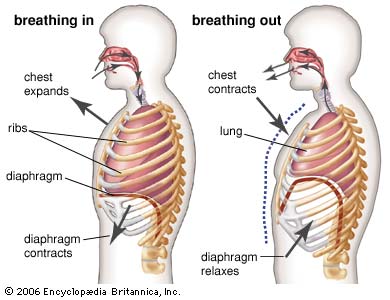
Despite the high prevalence of low back pain in the population, options regarding effective treatment strategies are still limited, possibly due to the lack of knowledge of the underlying mechanisms.9 Trunk stabilization and postural trunk control may play an important role in the etiology of low back pain.9 In turn, the function of the diaphragm may affect how the trunk is stabilized, especially during postural activity.11,15,22 Various studies have shown that the pelvic girdle and lumbar spine are reflexively stabilized and braced prior to the initiation of extremity movements.3,13,17,22 The central nervous system must be able to anticipate movement and stabilize the entire core musculature automatically to provide a stable base from which the muscles performing the movement can pull.
Trunk bracing maintains all spinal segments in a biomechanically neutral position during the course of any movement. Segmental movement (eg, hip joint movement) is therefore related to the synergistic activity of the spinal extensors and all the muscles modulating intra-abdominal pressure (ie, abdominal muscles, the diaphragm, and the pelvic floor). The diaphragm is the muscle that contributes the intra-abdominal pressure modulation and plays an important role in spinal stability.7,16,18,27,31
Insufficient function and poor coordination of postural, or stabilizing, muscles are considered to be important etiological factors in spinal disorders associated with low back pain, such as deformational spondyloarthrosis (with or without spinal disc herniation), spinal disc protrusion, and/or spondylolisthesis.5,12,21,25
Continue to read the remainder of this article by clicking HERE.
CONCLUSION
We found reduced diaphragm movement when isometric flexion against resistance of the upper or lower extremities was applied. The combined, more cranial position in the anterior and middle portions of the diaphragm and, particularly, the steeper slope between the middle and crural portions of the diaphragm in patients with chronic low back pain may contribute to low back pain symptoms. However, given that the results are based on crosssectional analysis, we cannot exclude the possibility of reverse causation. Still, the results support the theory that patients with low back pain complaints present with compromised diaphragm function,
which may play an important role in postural stability.
KEY POINTS
FINDINGS: We found reduced diaphragm movement in patients with chronic low back pain compared to healthy controls when isometric flexion against resistance of the upper or lower extremity was applied, mainly in the anterior and middle portions. This pattern of diaphragmatic recruitment resulted in a steeper angle in the middle-posterior part of the diaphragm and likely a greater strain during activity on the ventral region of the spinal column.
Topics: Craig Liebenson, Pavel Kolar, Barefoot in Boston, Clare Frank, Core Stability Training
by Jeff Cubos
It’s been over a year since I first began the Dynamic Neuromuscular Stabilization program. Since that initial “A” course, my clinical thought process has expanded exponentially through following up with the “B” and “C” courses, my privileged opportunity to visit Motol in Prague, and the day to day reflections of my current practice.
Well recently, I had the privilege of taking part in another DNS A course that was put forth by Michael Maxwell of Somatic Senses and taught by Alena Kobesova and Brett Winchester. This particular experience was quite special for me because not only was it local (hence no flight costs), but it provided me with the opportunity to share my experiences to date with many of my friends and colleagues who attended the course…including my wife.
I would say however, that the most beneficial aspect of being present was that it afforded me the opportunity to “fill in the gaps”.

Continue to read this article by Jeff Cubos by clicking HERE
Meet Jeff Cubos and other top therapists and strength coaches as attendees at the 2012 BSMPG Summer Seminar.
Register today before seats are filled!!
Topics: BSMPG, athletic training conference, Craig Liebenson, Charlie Weingroff, boston hockey conference, Cal Dietz, Jeff Cubos, Barefoot in Boston, Dan Boothby, Clare Frank, DNS course, barefoot training
Topics: basketball conference, athletic training conference, Craig Liebenson, Charlie Weingroff, Andrea Hudy, Bruce Williams, Cal Dietz, Bill Knowles, Alan Grodin, Barefoot in Boston, Clare Frank

University of Kansas Strength & Conditioning Coach
Andrea Hudy
When the 7-foot center Jeff Withey showed up on the Kansas campus in 2009, he was a gawky San Diego kid who weighed a shrimp taco or two above 200 pounds. So how did he develop into the bruiser who has helped put the Jayhawks into the NCAA tournament's Final Four?
Withey describes her as "one of our secret weapons."
Click HERE to continue reading.
Topics: basketball performance, basketball conference, athletic training conference, Craig Liebenson, Andrea Hudy, Cal Dietz, Bill Knowles
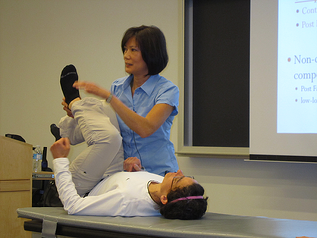
Topics: Art Horne, basketball conference, BSMPG, Craig Liebenson, boston hockey conference, Andrea Hudy, Cal Dietz, Bill Knowles, Alan Grodin, Dr. DiMuro, Clare Frank, dynamic neuromuscular stabilization
by Craig Liebenson
Dysfunction involving excessive T4-T8 kyphosis is common. Symptoms arising from regions at a distance to the mid-thoracic area are often secondary to T4-T8 dysfunction. This article will discuss why (rationale), when (indications), what (skills), and how (practical integration) T4-8 dysfunction is addressed.
Why
Mid-thoracic dysfunction involves increased kyphosis of the thoracic spine from T4-T8, usually the result of prolonged sitting in a constrained posture. Thoracic, lumbopelvic and cervicocranial posture are interrelated as links in a chain (see Figure 1). When excessive slumping becomes habitual, according to Brügger, it is called the sternosymphyseal syndrome (Lewit 1996, 1999, Liebenson et al., 1998, Liebenson 1999).
 |
 |
Mid-thoracic dysfunction affects the whole body's center of alignment and posture. Head and shoulder forward posture causes orofacial, neck and shoulder disorders; slumping affects breathing by leading to inhibition of the diaphragm and overactivation of the scalenes; and lumbar disc syndromes and nerve impingement have been shown to result from repetitive end-range flexion overload (Callaghan, McGill 2001).
When
Indications for treating the mid-thoracic region arise from postural analysis, passive joint mobility testing, and active joint mobility testing. The postural sign of increased thoracolumbar hypertonus is a classic sign of overactivity of the superficial "global" muscles and indicates poor "deep" muscle function (Janda 1996, Richardson 1999, Jull 2000, Hodges 2002).
 |
|
Palpation of passive joint mobility and quality of end-feel is best performed in the seated position, as shown by Brügger (Brügger 2000).
 |
|
The dynamic mobility screen of choice is the standing arm elevation test (Liebenson 2001).
 |
|
What
Managing T4-8 dysfunction requires a broad skill set incorporating postural advice, manual manipulation, and therapeutic exercise.
Sample Exercises for Improving T4-8 Extension Mobility


How
Knowing why mid-thoracic dysfunction is clinically important, when it should be addressed, and what techniques are therapeutic is only the beginning point for successful management of the patient with a problem in this area. Satisfactory results will result from learning how to incorporate this knowledge and skill into patient care efficiently. A moment or two per session spent explaining the relationship between function and pain is one such step. Each exercise requires a unique "report of findings" to motivate the patient to incorporate it into his or her daily routine.
The Brügger relief position is an ideal workplace "micro-break." It activates an entire chain of muscles linked to the upright posture. To prevent the tendency to hyperextend the lumbar spine with this exercise, it should be performed with active exhalation.
The back stretch on the ball is comfortable and relaxing. It promotes improved respiration. It can cause dizziness at first, so the patient should be guided slowly onto it until he or she has learned how to balance on the ball.
Kolár's wall slide with arm elevation is a functional exercise, since it combines arm elevation, squatting and breathing. Patients typically feel a nice stretch in the lattismus dorsi with this exercise.
Summary
T4-8 dysfunction is a common source of muscle imbalance, trigger points, joint dysfunction, and faulty movement patterns. While often asymptomatic, it is nonetheless a key source of biomechanical overload involving the neck, TMJ, shoulder, arm, and even low back regions. Treatments which aim only at the site of symptoms are bound to fail if function is disturbed due to excessive kyphosis in the mid-back.
Rehabilitation of the upright posture is fundamental to optimization of function in the locomotor system. Neurological programs for maintenance of the upright posture are "hard-wired" into the central nervous system, making rehabilitation of the mid-thoracic area of central importance, both biomechanically and neurophysiologically. The mid-thoracic region is "linked" to a multitude of common musculoskeletal pain syndromes, and the simple assessment and treatments shown here are an excellent complement to chiropractic practice.
References

SPONSORED BY:

CRAIG LIEBENSON
LA Sports and Spine
Keynote Topic: Regional Interdependence: How Functional Pathology Limits Performance
Sunday Breakout Lecture: The Core as the Punctum Fixum in Sport: A Key to Making Movement Patterns More Efficient
Dr. Liebenson is an Adjunct Professor in the School of Chiropractic, Division of Health Sciences at Murdoch University, Perth Australia and consultant for the Murdoch University and the Anglo-European Chiropratic College M.Sc. program in Chiropractic Rehabilitation. The first ever chiropractic member of the McKenzie Institute (U.S.) Board of Directors, he serves on the editorial boards of numerous journals including the Journal of Occupational Rehabilitation; the PM&R Journal of Injury, Function and Rehabilitation; the Journal of Bodywork and Movement Therapy; and Journal of Manual Therapy.
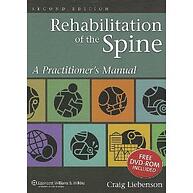
Dr. Liebenson is the first health care provider to receive a Certification of Recognition from the National Committee for Quality Assurance (NCQA) on Achievement of Recognition for Delivery of Quality Back Pain Care. He is actively engaged in ongoing research on the spinal stabilization system as a Visiting Scholar at Pr. Stuart McGill’s Spine Biomechanics Laboratory at the University of Waterloo. He regularly assists Pavel Kolar in his courses and has worked with both Dr. Karel Lewit and Pr Vladimir Janda beginning in 1987. Dr. Liebenson publishes extensively and is the editor of the book/DVD Rehabilitation of the Spine: A Practioner's Manual (2nd ed), 2007.
He has had books published into Spanish, Greek, Korean and Japanese. He was the team chiropractor for the N.B.A. Los Angeles Clippers from the 2006-2007 season until 2009-2010 seasons and is currently a consultant for the M.L.B. Arizona Diamondbacks and Athletes Performance International.
Topics: Art Horne, BSMPG, athletic training conference, Craig Liebenson, barefoot strength training, Andrea Hudy, Bruce Williams, Alan Grodin, Dr. DiMuro, dynamic neuromuscular stabilization
“The residents who live here, according to the parable, began noticing increasing numbers of drowning people caught in the river’s swift current and so went to work inventing ever more elaborate technologies to resuscitate them. So preoccupied were these heroic villagers with rescue and treatment that they never thought to look UPSTREAM to see who was pushing the victims in.”
Learn what is hurting your feet and your performance, and how to finally train your feet the way they were meant to be.