Boston Sports Medicine and Performance Group, LLC Blog

Predicting Performance and Injury Resilience in Collegiate Basketball Athletes : Part II

Posted by Boston Sports Medicine and Performance Group on Thu, Aug 30, 2012 @ 07:08 AM


by Art Horne


BSMPG Basketball Seminar


Just recently Dr. Stuart McGill, Jordan Andersen, and I published an article in the Journal of Strength and Conditioning Research examining the link between traditional pre-season strength, fitness, and sports medicine testing to overall on-court basketball performance and injury resilience throughout the course of two collegiate basketball seasons.  Although I would be the first to admit that there are some clear limitations to this study (number of participants for example), key performance predictors (points scored, ability to rebound, block shots, etc) were NOT associated with traditional strength or performance measures so often pursued in collegiate basketball strength programs.

Below is a summary of our most interesting findings followed by my thoughts and experiences from the last decade of both training and caring for the collegiate basketball athlete.  The two should not be confused as one and the same, although many of the findings in this study only strengthen my position when it comes to training and caring for the basketball athlete.  Findings are in bold, with narrative following in normal text.


1. A “stiffer” torso leads to better performance

This goes without saying. 

This is most evident when watching elite vs. novice athletes performing lateral shuffling followed by a change of direction.  In general, elite athletes will be able to “stiffen” their core/spine quickly providing a stable base from which their limbs may generate force against in preparation for the sudden stop and change in direction.  Novice athletes tend to take much more time to slow down and reverse directions.  This is a major contributor to the decreased lane agility times seen in elite athletes (see #4 below).  The ability to stiffen quickly however is not solely responsible for improved change of direction time and increased performance.  The ability to “relax” this same musculature is much more important – yet rarely trained in modern performance programs.   

This phenomenon has been studied at length by Leo Matveyev, one of the leading Russian sports scientist where he found an underlying theme among the top level of sports mastery in the Russian system of classification – those that achieved the highest level also had the highest speed of muscle relaxation.  The speed of relaxation following muscular contraction was nearly 200 percent faster than lower level athletes, and those that were classified just below “master of sport” demonstrated relaxation times of about 50% slower! (Dietz, 2012)

These findings mirror McGill’s work where he examined elite MMA fighters as they struck a punching bag and discovered a “double-peak” in muscle activity where initial muscle contraction was quickly followed by relaxation as the striking limb traveled through the air, followed again but a rapid increase in muscular tension as the limb contacted the bag.

“Muscle activation using electromyography and 3-dimensional spine motion was measured. A variety of strikes were performed. Many of the strikes intend to create fast motion and finish with a very large striking force, demonstrating a "double peak" of muscle activity. An initial peak was timed with the initiation of motion presumably to enhance stiffness and stability through the body before motion. This appeared to create an inertial mass in the large "core" for limb muscles to "pry" against to initiate limb motion. Then, some muscles underwent a relaxation phase as speed of limb motion increased. A second peak was observed upon contact with the opponent (heavy bag). It was postulated that this would increase stiffness through the body linkage, resulting in a higher effective mass behind the strike and likely a higher strike force. Observation of the contract-relax-contract pulsing cycle during forceful and quick strikes suggests that it may be fruitful to consider pulse training that involves not only the rate of muscle contraction but also the rate of muscle relaxation.” (McGill, 2010)

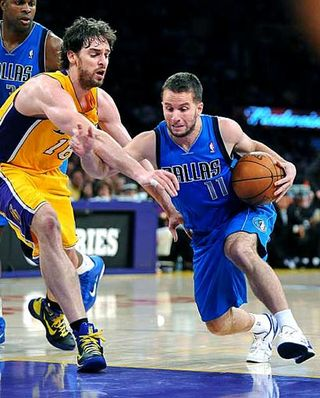
In personal conversations with McGill we both agree that this “double-peak” phenomenon, although not yet measured in basketball athletes, also occurs in elite level point guards during a cross-over maneuver as they blow by the opposition on the way to the basket and is a must at the highest level of basketball competition – think Derrick Rose, Chris Paul and JJB.  I first witnessed this contract-relax-contract mastery at Northeastern University while working with a young kid from Puerto Rico named Jose Juan Barea as he sliced up defender after defender on his way to becoming an NBA champion with the Dallas Mavericks most recently in 2011. 
 

basketball seminarbasketball conference

The LA Lakers and Miami Heat found out firsthand just how important spine stiffness and relaxation is during the 2011 NBA Playoffs - courtesy of one JJB.


Torso stiffness is paramount in the game of basketball and a must for those looking to change direction quickly on their way to the basket but also for those absorbing repeated bouts of body blows down on the blocks.


2. More hip range of motion was linked to better  performance

Appropriate hip range of motion is another no-brainer.  Its impact on low back and anterior knee pain are well documented in the literature from an injury perspective and should be evaluated both on initial contact with your athletes but also periodically throughout the competitive season as a simple check to ensure healthy tissue qualities and cooperation from joints above and below (tibio-femoral rotation along with SI position).


3. Bench Press correlated with blocks per game (r=.0.59)

We’ve all beaten the Kevin Durant bench press story to death and know that his inability to push 185 pounds off his chest during the NBA combine hasn’t impacted his ability to perform on the court. Now, I’m not ready to suggest that basketball athletes need to bench press, but if you’ve ever played basketball or at least watched a game, you know that the contribution from the upper body is immense when it comes to establishing position on the blocks and fighting through screens.  Although the actual “block” needs minimal upper body strength, the ability to position yourself for said block usually takes some pushing and shoving – both of which are aided by some impressive upper body strength.


4. Long Jump distance and Lane Agility Test were the most closely linked performance tests to actual performance

  1. Long Jump scores correlated with: minutes, rebounds, and blocks per game
  2. Lane Agility time correlated negatively with minutes played, points, assists and steals per game (meaning that a faster time was linked to more performance)
  3. Vertical Jump did not correlate with any variable below


  • Long jump is related to one’s ability to produce force into the ground and forward acceleration (Holm, 2008)
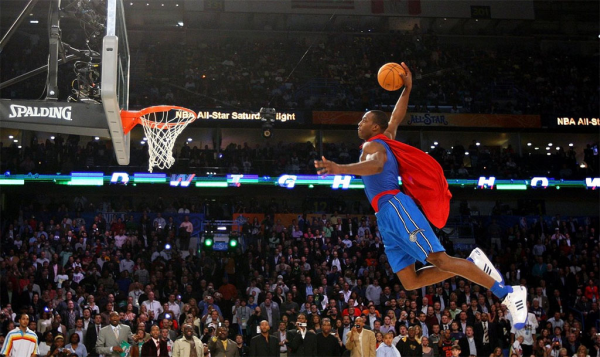
  • Vertical jump conversely is related to top end speed (and of course those highlight dunks on ESPN Sports Center)
  • Basketball courts measure 94 feet long from end to end.  Plays that result in scoring or prevent scoring almost always take place within the half court, with the majority of those occurring within the 3-point arc.  Therefore, if you were to choose between an athlete with incredible top end speed or incredible acceleration abilities, knowing that the majority of his productive (scoring or preventing scoring) minutes will take place within the 3-point arc, which would you choose?  My money is with the acceleration guy!  Although highflying dunks are popular in warm-up and during your morning Sports Center show, the rate at which this quality is utilized during an actual game is far less than qualities associated with acceleration, and as such, traditional strength training programming must reflect this end. 
  • If you have to choose, pick the guy with a huge horizontal jump – he’ll be able to cover more space more quickly over short distances and will be more valuable within the context of the game overall.


5. Back injured group had, on average played more games and more minutes per game and had a greater number of rebounds and steals per game but NOT more assists or points scored.

Only 5 injures were observed – those getting injured however played many more minutes per game, had double the rebounds and fivefold more blocks.
 

BSMPG Summer Seminar

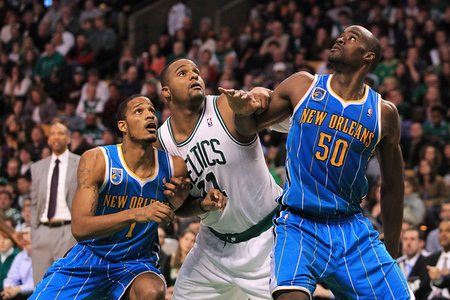
Oakafur was a beast in college, but battling bodies like Big Baby Davis' will take a toll on even the healthiest of backs.

Athletes that play more minutes simply have a greater chance of getting injured due to the higher exposure rate – plain and simple.  What’s interesting however is the number of rebounds and blocks tallied by those suffering more injuries, suggesting a willingness to get physically involved in the trenches and the not-so-glamorous side of the game.  These athletes in my opinion also have a much higher general risk behavior and are more often willing to take a charge or dive after a loose ball.  These are the guys that coaches and teammates love for their hustle play but usually end up injured more often.  Because of their increased opportunity for injury, these athletes should be evaluated more often throughout the season through physical examination, subjective questionnaires or other means such as HRV with appropriate recovery and treatment methods applied in an effort to keep nagging pains from becoming a missed games due to injury.


The next article will focus on how we can interpret these very preliminary results and address deficiencies in your athletes this fall prior to the start of the season in both the weight room and sports medicine clinic.


See the leaders in Sports Medicine and Performance at the BSMPG 2013 Summer Seminar including Stuart McGill, Marco Cardinale, Fergus Connolly and Adriaan Louw.

Register for the 2013 BSMPG  Summer Seminar Today

References


Dietz C, Peterson B. Triphasic Training: A systematic approach to elite speed and explosive strength performance. 2012.

Holm DJ, Stalbom M, Keogh JWL, Cronin J. Relationship between the kinetics and kinematics of a unilateral horizontal drop jump to sprint performance. J Strength Cond Res. 2008 Sept:22(5):1589-1596.

McGill SM, Chaimber JD, Frost DM, Fenwick CM. Evidence of double peak in muscle activation to enhance strick speed and force: an example with elite mixed martial arts fighters. J Strength Cond Res. 2010 Feb:24(2):348-57.


Topics: Basketball Related, Art Horne

Adriaan Louw - Course Description - 2013 BSMPG Summer Seminar

Posted by Boston Sports Medicine and Performance Group on Wed, Aug 29, 2012 @ 07:08 AM

Adriaan Louw

BSMPG Summer Seminar


A Neuroscience Approach to Low Back Pain in Athletes

Adriaan Louw, PT, PhD (c), M.App.Sc (Physio)

Course Description:

Low back pain (LBP) is common in athletes. Most therapeutic interventions focus on structural issues such and instability or hypermobility and result in treatment associated with spinal stabilization. This presentation, however, is designed to updated attendees on the brain’s processing of LBP in athletes, with an emphasis on LBP, brain processing and its potential effect on sports performance. New research into the brain’s processing of pain has shown that not only sensory areas of the brain processes pain, but key areas associated with sports performance, such as the motor, pre-motor, amygdala and more are significantly active when LBP is experienced. Given the brain’s priority of processing pain, many of these key areas associated with optimum performance is less likely to contribute to the athletes recovery and may play a significant role in potential performance loss and re-injury. The neuromatrix view of LBP is a true bio-psycho-social view of pain and essential for physical therapists treating athletes. Clinicians need to realize that addressing issues such as fear, anxiety, expectations and pain itself, are all important in delivering optimal recovery in athletes with LBP. This presentation will include discussion of motor control, endocrine system, and immune system and more, all in relation to a brain’s processing of pain in athletes.


Objectives:

Upon completion of this educational session the participants will be able to:


1. Understand how the brain processes low back pain

2. Understand how an athlete dealing with pain, ultimately utilizes areas of the brain associated with sports performance, thus impacting their recovery

3. Identify bio-psycho-social factors associated with the development of LBP in athletes

4. Develop strategies, based on the neuromatrix, on how the manage athletes with LBP

5. Apply the information from the educational session into clinical practice


Register for the 2013 BSMPG  Summer Seminar Today


Selected References:

  1. Baron R, Janig W. The role of the sympathetic nervous system in pain processing. In Villanueva L, Dickenson A, Ollat H eds. The Pain System in Normal and Patological States: A Primer for Clinicians. Seattle: IASP Press, 2004.
  2. Bono CM. Low-back pain in athletes. J Bone Joint Surg Am 2004;86-A:382-96.
  3. Butler D, Moseley G. Explain Pain.ed. Adelaide: Noigroup, 2003.
  4. d'Hemecourt PA, Gerbino PG, 2nd, Micheli LJ. Back injuries in the young athlete. Clin Sports Med 2000;19:663-79.
  5. George SZ, Delitto A. Management of the athlete with low back pain. Clin Sports Med 2002;21:105-20.
  6. George SZ, Dover GC, Fillingim RB. Fear of pain influences outcomes after exercise-induced delayed onset muscle soreness at the shoulder. Clin J Pain 2007;23:76-84.
  7. Hangai M, Kaneoka K, Hinotsu S, et al. Lumbar intervertebral disk degeneration in athletes. Am J Sports Med 2009;37:149-55.
  8. Hides JA, Stanton WR, McMahon S, et al. Effect of stabilization training on multifidus muscle cross-sectional area among young elite cricketers with low back pain. J Orthop Sports PhysTher 2008;38:101-8.
  9. Hind K, Truscott JG, Evans JA. Low lumbar spine bone mineral density in both male and female endurance runners. Bone 2006;39:880-5.
  10. Hodges PW, Moseley GL. Pain and motor control of the lumbopelvic region: effect and possible mechanisms. J ElectromyogrKinesiol 2003;13:361-70.
  11. Hodges PW, Moseley GL, Gabrielsson A, et al. Experimental muscle pain changes feedforward postural responses of the trunk muscles. Exp Brain Res 2003;151:262-71.
  12. Janig W, Chapman CR, Green PG. Pain and body protection: sensory, autonomic, neuroendocrine and behavioural mechanisms in control of inflammation and hyperalgesia. In Flor H, Kalso E, Dostrovsky JO eds. Proceedings of the 11th World Congress on Pain. Seattle: IASP Press, 2006.
  13. Kraft DE. Low back pain in the adolescent athlete. PediatrClin North Am 2002;49:643-53.
  14. Larsson SE, Cai H, Zhang Q, et al. Microcirculation in the upper trapezius muscle during sustained shoulder load in healthy women--an endurance study using percutaneous laser-Doppler flowmetry and surface electromyography. Eur J ApplPhysiolOccupPhysiol 1995;70:451-6.
  15. Lundin O, Hellstrom M, Nilsson I, et al. Back pain and radiological changes in the thoraco-lumbar spine of athletes. A long-term follow-up. Scand J Med Sci Sports 2001;11:103-9.
  16. MacDonald DA, Moseley GL, Hodges PW. The lumbar multifidus: does the evidence support clinical beliefs? Man Ther 2006;11:254-63.
  17. Moseley GL. Evidence for a direct relationship between cognitive and physical change during an education intervention in people with chronic low back pain. Eur J Pain 2004;8:39-45.
  18. Moseley GL. A pain neuromatrix approach to patients with chronic pain. Man Ther 2003;8:130-40.
  19. Moseley GL. Widespread brain activity during an abdominal task markedly reduced after pain physiology education: fMRI evaluation of a single patient with chronic low back pain. Aust J Physiother 2005;51:49-52.
  20. Moseley GL, Brhyn L, Ilowiecki M, et al. The threat of predictable and unpredictable pain: differential effects on central nervous system processing? Aust J Physiother 2003;49:263-7.
  21. Moseley GL, Hodges PW, Gandevia SC. Deep and superficial fibers of the lumbar multifidus muscle are differentially active during voluntary arm movements. Spine 2002;27:E29-36.
  22. Moseley GL, Nicholas MK, Hodges PW. Does anticipation of back pain predispose to back trouble? Brain 2004;127:2339-47.
  23. Nadler SF, Malanga GA, Bartoli LA, et al. Hip muscle imbalance and low back pain in athletes: influence of core strengthening. Med Sci Sports Exerc 2002;34:9-16.
  24. Nadler SF, Malanga GA, Feinberg JH, et al. Functional performance deficits in athletes with previous lower extremity injury. Clin J Sport Med 2002;12:73-8.
  25. Nadler SF, Moley P, Malanga GA, et al. Functional deficits in athletes with a history of low back pain: a pilot study. Arch Phys Med Rehabil 2002;83:1753-8.
  26. Ong A, Anderson J, Roche J. A pilot study of the prevalence of lumbar disc degeneration in elite athletes with lower back pain at the Sydney 2000 Olympic Games. Br J Sports Med 2003;37:263-6.
  27. Peyron R, Laurent B, Garcia-Larrea L. Functional imaging of brain responses to pain. A review and meta- analysis (2000). NeurophysiolClin 2000;30:263-88.
  28. Richardson C, Hodges P, Hides J. Therapeutic Exercise For Lumbopelvic Stabilization. Second ed. London: Churchill Livingstone, 2004.
  29. Standaert CJ, Herring SA, Pratt TW. Rehabilitation of the athlete with low back pain. Curr Sports Med Rep 2004;3:35-40.
  30. Takemitsu M, El Rassi G, Woratanarat P, et al. Low back pain in pediatric athletes with unilateral tracer uptake at the pars interarticularis on single photon emission computed tomography. Spine 2006;31:909-14.
  31. Trainor TJ, Wiesel SW. Epidemiology of back pain in the athlete. Clin Sports Med 2002;21:93-103.
  32. Watkins LR, Maier SF. Beyond neurons: evidence that immune and glial cells contribute to pathological pain states. Physiological Reviews 2002;82:981-1011.
  33. Watkins LR, Milligan ED, Maier SF. Immune and glial involvement in physiological and pathological exaggerated pain states. In Dostrovsky JO, Carr DB, Kolzenburg M eds. Progress in Pain Research and Management. Seattle: IASP Press, 2003:369-86.


Topics: Adriaan Louw, BSMPG Summer Seminar

BSMPG Summer Seminar Highlights - Chris Powers

Posted by Boston Sports Medicine and Performance Group on Mon, Aug 27, 2012 @ 07:08 AM

Click below to see highlights from our 2012 BSMPG Summer Seminar featuring Keynote Speaker, Chris Powers.

More highlights are set to come in the next few weeks so stay tuned!


Save the date for the 2013 BSMPG Summer Seminar - May 17th & 18th in Boston MA.


Keynote Speakers include: Dr. Stuart McGill, Dr. Marco Cardinale, Fergus Connolly, Adriann Louw and Marvin Chun.  Individual learning track speakers will be announced shortly. 


Register for the 2013 BSMPG  Summer Seminar Today 


This is sure to be the biggest Sports Medicine and Sports Performance Seminar to date!

A special thanks again to our SPONSORS!


Topics: Stu McGill, Adriaan Louw, Marco Cardinale, Marvin Chun, Fergus Connolly, Rob Butler, Chris Powers

Bill Knowles returns to BSMPG Summer Seminar Speaker list in 2013

Posted by Boston Sports Medicine and Performance Group on Wed, Aug 22, 2012 @ 06:08 AM

BSMPG is proud to announce the return of Bill Knowles as a speaker within the Sports Medicine & Rehabilitation Track at the 2013 BSMPG Summer Seminar - May 17th and 18th, 2013!  Bill joins keynote speakers, Dr. Stuart McGill, Marco Cardinale, Fergus Connolly, Adriaan Louw and Marvin Chun for this weekend event.  With the most thorough and integrated speaker line-up ever assembled, the 2013 BSMPG Summer Seminar will be the WORLD'S most sought after Sports Medicine & Performance Seminar to date!!

We are expecting the largest crowd in the history of BSMPG events with speakers and attendees traveling the globe to be in Boston in May of 2013, and thus have already made plans to move our main lecture hall to a newly renovated multi-tier auditorium.

Be sure to save the date now - hotels will fill fast with this event along with normal Boston traffic so start making plans now!

See you in Boston next May!!!

Watch highlights from Bill Knowles at the 2012 BSMPG Summer Seminar by clicking HERE


Bill Knowles

Bill Knowles

BILL KNOWLES

iSPORT Training

Athletic Development Coach and Sports Rehabilitation Specialist
Certified Athletic Trainer, Certified Strength and Conditioning Specialist

Experience:
• 21 years professional experience working with World-class, Olympic, Professional, Elite, & Nationally ranked athletes from around the world.
• Professional and World-Class sports include: Soccer (football), Rugby Union, Ice Hockey, Basketball, Football, Aussie Rules Football, Golf, Alpine and Freestyle Mogul Skiing, Snowboarding and Swimming
•Former Head Athletic Trainer and Director of Strength and Conditioning at Burke Mountain Academy (Vermont, USA) for 12 years. BMA is recognized historically as the best youth sports academy in the world for alpine ski racing.
The list of Olympic, World Cup, and World Junior success is unparallel in the Unites States and worldwide.
• Author of numerous articles on injury prevention and performance training in ski publications, strength and conditioning magazines and health journals.
• Featured speaker dozens of times around the United States, Canada, England and Scotland on topics related to injury reduction programs, rehabilitation/reconditioning, and performance training for all types of athletes.

For the past 21 years Bill Knowles has been working with elite level athletes from around the world. As a sports rehabilitation specialist, Bill has helped Professional and Olympic level athletes recover from season ending and career threatening injuries. His energy and enthusiasm keeps every training session educational and fresh, while his unique experiences allows a creative approach to address any injury situation. Bill’s rehab philosophy allows each athlete the opportunity to express their inherent athletic ability quickly following injury or surgery. This mean the “down time” is minimal and the athlete stays very active and motivated.

After receiving his education at Cortland State College in New York, Bill began his career at the world renowned sports academy for Alpine and Nordic ski racing; Burke Mountain Academy. As the Head Athletic Trainer and Performance Director Bill took care of countless knee injuries and developed his skills that began to attract world-class ski racers from Europe and North America. Since then athletes from England, Scotland, Ireland, and Australia have visited Bill in Killington, Vermont. Bill has also traveled extensively working with and visiting many of the top sports clubs in the world.

This success has evolved to designing and implementing rehab and performance programs that have placed athletes back into the English Premiership and Championship Football Leagues, The Rugby World Cup and Premiership Squads, Baseball World Series, Winter Olympic podiums and X-Game podiums.

As a former collegiate soccer player, ski racer, and coach, Bill delivers his training programs they way an athlete understands and respects.


Topics: Stu McGill, Bill Knowles, Joel Jamieson, Marco Cardinale, Marvin Chun, Fergus Connolly, BSMPG Summar Seminar

Dr. Alex Vasquez joins 2013 BSMPG Summer Seminar Sports Medicine Speaker Set

Posted by Boston Sports Medicine and Performance Group on Mon, Aug 20, 2012 @ 07:08 AM

BSMPG is proud to announce Alex Vasquez as a speaker within the Sports Medicine & Rehabilitation Track at the 2013 BSMPG Summer Seminar - May 17th and 18th, 2013!  Alex joins keynote speakers, Dr. Stuart McGill, Marco Cardinale, Fergus Connolly, Adriaan Louw and Marvin Chun for this weekend event.  With the most thorough and integrated speaker line-up ever assembled, the 2013 BSMPG Summer Seminar will be the WORLD'S most sought after Sports Medicine & Performance Seminar to date!!

We are expecting the largest crowd in the history of BSMPG events with speakers and attendees traveling the globe to be in Boston in May of 2013, and thus have already made plans to move our main lecture hall to a newly renovated multi-tier auditorium.

Be sure to save the date now - hotels will fill fast with this event along with normal Boston traffic so start making plans now!

See you in Boston next May!!!


Alex Vasquez


western states


DR. ALEX VASQUEZ

Director, Master of Science in Nutrition and Functional Medicine

Unversity of Western States

Alex Vasquez began his professional training at Texas Chiropractic College and later graduated from Western States Chiropractic College in Portland, Oregon. He then attended and graduated from the Naturopathic Medicine Program at Bastyr University near Seattle, Washington. Over the next few years, Dr Vasquez maintained a private practice (first in Seattle, then in Houston, Texas), taught Orthopedics and Rheumatology at Bastyr University, and pursued his constant review of Medline for the continuous compilation of his biomedicine, nutrition, and physiology database. From 2006-2010, Dr Vasquez attended University of North Texas Health Science Center Texas College of Osteopathic Medicine and graduated as Doctor of Osteopathic Medicine in May 2010. Dr Vasquez has published more than 75 articles and letters in magazines, newspapers, and peer-reviewed journals including Alternative Therapies in Health and Medicine, JAMA, The Lancet, British Medical Journal, Annals of Pharmacotherapy, Journal of the American Osteopathic Association, Integrative Medicine, Evidence-based Complementary and Alternative Medicine, Journal of Clinical Endocrinology and Metabolism, and Arthritis & Rheumatism--official journal of the American College of Rheumatology. Dr Vasquez has written at least five textbooks, including Integrative Orthopedics, Integrative Rheumatology, Musculoskeletal Pain: Expanded Clinical Strategies, Chiropractic and Naturopathic Mastery of Common Clinical Disorders, and Chiropractic Management of Chronic Hypertension. Dr Vasquez's current affiliations include National University of Health Sciences (Adjunct Professor), Institute for Functional Medicine (Faculty), University of Western States (Affiliate Faculty), and Biotics Research Corporation (Researcher and Lecturer). 

Save the Date: May 17 & 18th, 2013 - Boston MA.  This will be one conference that you will not want to miss!!

BSMPG 2012 Summer Seminar Highlights - Irving "Boo" Schexnayder

Posted by Boston Sports Medicine and Performance Group on Wed, Aug 15, 2012 @ 07:08 AM


Click below to see highlights from our 2012 BSMPG Summer Seminar featuring Keynote Speaker, Irving "Boo" Schexnayder.

More highlights are set to come in the next few weeks so stay tuned!


Save the date for the 2013 BSMPG Summer Seminar - May 17th & 18th in Boston MA.


Keynote Speakers include: Dr. Stuart McGill, Dr. Marco Cardinale, Fergus Connolly, Adriann Louw and Marvin Chun.  Individual learning track speakers will be announced shortly. 


This is sure to be the biggest Sports Medicine and Sports Performance Seminar to date!

A special thanks again to our SPONSORS!

Topics: Art Horne, BSMPG, athletic training conference, boston hockey conference, Bill Knowles, Marco Cardinale, Marvin Chun, Stuart McGill

World Pain Expert, Adriaan Louw Joins BSMPG 2013 Summer Seminar Keynote Speaker Set

Posted by Boston Sports Medicine and Performance Group on Mon, Aug 13, 2012 @ 06:08 AM

BSMPG is proud to announce Ariaan Louw as a keynote speaker at the 2013 BSMPG Summer Seminar - May 17th and 18th, 2013!  Adriaan joins keynote speakers, Dr. Stuart McGill, Marco Cardinale, Fergus Connolly and Marvin Chun for this weekend event.  With the most thorough and integrated speaker line-up ever assembled, the 2013 BSMPG Summer Seminar will be the WORLD'S most sought after Sports Medicine & Performance Seminar to date!!

We are expecting the largest crowd in the history of BSMPG events with speakers and attendees traveling the globe to be in Boston in May of 2013, and thus have already made plans to move our main lecture hall to a newly renovated multi-tier auditorium.

Be sure to save the date now - hotels will fill fast with this event along with normal Boston traffic so start making plans now!

See you in Boston next May!!!


Adriaan Louw


BSMPG Summer Seminar


ADRIAAN LOUW, PT, PhD (c), M.App.Sc (physio), GCRM, CSMT

International Spine and Pain Institute

Adriaan Louw attended the University of Stellenbosch in Cape Town, South Africa, where he graduated in 1992 from an extensive physiotherapy program, including a very stringent manual therapy based training. Adriaan is an adjunct faculty member at Rockhurst University in Kansas City, where he teaches spinal manipulative therapy. Adriaan maintains clinical practice and is a co-owner, part-time clinician and spine specialist at The Ortho Spine and Pain Clinic in Story City, Iowa. Adriaan has been teaching postgraduate spinal manual therapy and pain science classes throughout the US and internationally since 1996. Adriaan completed his Graduate Certificate in Research Methodology from the University of South Australia, followed by his Masters degree in research into spinal surgery rehabilitation at his alma mater, Stellenbosch University. Adriaan is a Certified Spinal Manual Therapist through International Spine and Pain Institute. Adriaan is in the final stages of his PhD, focusing on therapeutic neuroscience education and spinal disorders. Adriaan has presented at numerous national and international manual therapy, pain science and medical conferences and has authored and co-authored numerous articles and book chapters related to spinal disorders and pain science.


Save the Date: May 17 & 18th, 2013 - Boston MA.  This will be one conference that you will not want to miss!!

Topics: Art Horne, Brian McCormick, basketball conference, Craig Liebenson, Chronic Pain, Adriaan Louw, BSMPG Summer Seminar, Cal Dietz, Marco Cardinale, Stuart McGill

BSMPG 2012 Summer Seminar Highlights - Bill Knowles

Posted by Boston Sports Medicine and Performance Group on Wed, Aug 8, 2012 @ 07:08 AM


Click below to see highlights from our 2012 BSMPG Summer Seminar featuring Keynote Speaker, Bill Knowles.

More highlights are set to come in the next few weeks so stay tuned!

A special thanks again to our SPONSORS!


Save the date for the 2013 BSMPG Summer Seminar - May 17th & 18th in Boston MA.

Keynote Speakers include: Dr. Stuart McGill, Dr. Marco Cardinale, Fergus Connolly, Adriaan Louw and Marvin Chun.  Individual learning track speakers will be announced shortly. 

This is sure to be the biggest Sports Medicine and Sports Performance Seminar to date!


Topics: athletic training conference, BSMPG Summer Seminar, Bill Knowles, Stuart McGill

Fergus Connolly joins Dr. Stuart McGill and Marco Cardinale as Keynote Speakers at 2013 BSMPG Summer Seminar

Posted by Boston Sports Medicine and Performance Group on Mon, Aug 6, 2012 @ 06:08 AM


BSMPG is proud to announce Fergus Connolly as a keynote speakers at the 2013 BSMPG Summer Seminar - May 17th and 18th, 2013!  Fergus joins keynote speakers, Dr. Stuart McGill and Marco Cardinale and Marvin Chun for this weekend event.  With the most thorough and integrated speaker line-up assembled, the 2013 BSMPG Summer Seminar will be the WORLD'S most sought after Sports Medicine & Performance Seminar to date!!

We are expecting the largest crowd in the history of BSMPG events with speakers and attendees traveling the globe to be in Boston in May of 2013, and thus have already made plans to move our main lecture hall to a newly renovated multi-tier auditorium.

Be sure to save the date now - hotels will fill fast with this event along with normal Boston traffic so start making plans now!

See you in Boston next May!!!


Fergus Connolly


BSMPG Summer Seminar


FERGUS CONNOLLY

Performance Consultant: Liverpool FC and others

Fergus Connolly is regarded as one of the leading performance experts in elite team sport. His experience spans some of the most successful teams in NFL, NBA, Premiership Football, International Rugby, Professional Boxing and Special Operations. These experiences have refined pioneering protocols for the integrated optimisation (IO) of performance in Team Sport and Elite Athletes. Specialised knowledge working with some of the most successful coaches, academics and practitioners and research in computer optimisation and management, he is an original researcher in the development and application of unique effective monitoring, coaching, training recovery and regeneration approaches to winning in team sport.

Save the Date: May 17 & 18th, 2013 - Boston MA.  This will be one conference that you will not want to miss!!

Topics: Art Horne, Charlie Weingroff, Stu McGill, Bill Knowles, Marco Cardinale, Fergus Connolly, Rob Butler

Predicting Performance and Injury Resilience in Collegiate Basketball Athletes

Posted by Boston Sports Medicine and Performance Group on Wed, Aug 1, 2012 @ 06:08 AM


by Art Horne


basketball performance resized 600


Just recently Dr. Stuart McGill, Jordan Andersen and myself published an article in the Journal of Strength and Conditioning Research examining the link between traditional pre-season strength, fitness, and sports medicine testing to overall on-court basketball performance and injury resilience throughout the course of two collegiate basketball seasons.  Although I would be the first to admit that there are some clear limitations to this study (number of participants for example), key performance predictors (points scored, ability to rebound, block shots, etc) were NOT associated with traditional strength or performance measures so often pursued in collegiate basketball strength programs.

Over the course of the next few weeks I will review this article in detail and provide insight into how actual on-court basketball performance may be improved upon beyond simply finding better parents or recruiting.  


Predicting Performance and Injury Resilience From Movement Quality and Fitness Scores in a Basketball Team Over 2 Years

McGill, Stuart M.1; Andersen, Jordan T.1; Horne, Arthur D.2

Journal of Strength and Conditioning Research

July 2012


Introduction

The ability to successfully predict injury resilience and competition performance from preseason testing is a very wishful goal; however, questions remain regarding this objective: Do tests of fitness have a predictive ability for injury and are there other factors that can be assessed that may predict injury? Are there specific indicators that predict performance? This study was motivated by these questions.

Attempts to understand injury mechanisms and performance sometimes consider links to fitness. Traditionally, fitness testing, at least in occupational settings, has included the assessment of strength (13), joint range of motion (ROM) (23), and physiological variables such as heart rate, blood pressure, and oxygen uptake (2), but the performance scores in the occupational context are difficult to quantify. In contrast, there have been some studies relating fitness to sporting performance that are more tangible. In studies of ice hockey players (6,24), success could be more tangibly quantified from on-ice measures such as total minutes played and scoring chances. Green at al. stated that “goals scored” was not the best measure of hockey skill. Studies of football players suggest that those who score higher on movement quality tests have few injuries (11,12); however, preseason football combine testing is dominated by tests of strength and running speed. Recognizing that movement asymmetry and compromises to neuromuscular control have been linked to both future injury (11,12) and with having a history of back injury (17), movement assessments have been developed (3,4) and have been suggested to predict injury rates. Further, several fitness and movement tests have been implicitly assumed to predict “playing” performance by their inclusion into standard preseason tests. These include tests of endurance, strength, joint ROM, agility, and speed. The question remains as to the validity of these factors when attempting to predict injury resilience and performance.

Although links between moving well and injury resilience and performance seem intuitive, this notion remains controversial. Interestingly, some evidence suggests that fitness training alone may not ensure peak performance or injury resilience (8,20). In addition, movement quality has been suggested to predict future injury (12). A possible mechanism may be that injury changes the way a person moves as an accommodation to pain (consider, e.g., the changes in mechanics throughout the anatomical linkage when limping from foot pain). Having a history of injury, in particular back injury, appears to change movement patterns (17). Movement patterns determine important injury criteria, such as joint and tissue load, together with influencing the length of time and repetitions an individual is able to perform a task with uncompromised form. Compromised form exposes the tissues to inordinate load elevating the risk of injury. Several examples of this link are available, for example, not maintaining a neutral curve in the lumbar spine while bending and lifting decreases the tolerable load at injury (in this case tissue failure [18]); having restricted hip motion is linked to having more spine motion when bending (17). Movement competency has also been linked with anterior cruciate ligament (ACL) injury rates, for example, having larger knee abduction moments and angles when landing from a jump predicted higher ACL injury rates (9). Given the variety of considerations for interpreting the links between movement, fitness, performance, and potential injury, the goal of this study was to first evaluate some traditional fitness test scores in a controlled athletic group that has a variety of challenging movement demands and also perform an assessment of the quality of movement. It was hoped that following a test group for a period of time would reveal links between specific fitness scores and movement quality with variables to predict injury resilience and performance. If such links exist, they could form a rationale for specific tests to be included in preseason testing.

The purpose of this study was to see if specific tests of fitness, and movement quality, could predict injury resilience and performance in a team of basketball players over 2 years (playing seasons).

It was hypothesized that in a university basketball population, (a) Preseason movement quality and fitness scores would predict in-season performance scores. (b). Preseason movement quality and fitness scores would predict in-season injury resilience.


See Dr. Stuart McGill and other world authority in Sports Medicine, Science and Performance at the 2013 BSMPG Summer Seminar - May 17 & 18 in Boston MA

Topics: Art Horne, Brian McCormick, basketball performance, basketball conference, basketball training programs, athletic training conference, Craig Liebenson, Shawn Windle, Basketball Training, Stuart McGill, Keith D'Amelio